It’s Always You In My Big Dreams

I am a big believer in the importance and interpretation of dreams. I’m also a huge Something Corporate fan, and when Konstantine popped up on Pandora this morning I couldn’t help but feel both sentimental and excited – not pumped about the throwback itself necessarily, but thrilled about the path I’m on despite its ups and downs. My loves are truly at the heart of everything I do and are the focus of so many dreams.

I posted the below as part of a travel contest submission this month. Applicants were asked to creatively describe their favorite place in a video under three minutes. While mine was a no-brainer, I ironically accepted a new position within two weeks of my vid’s YouTube debut. In true form, I’d begun to grow restless; there had to be a way I could make an impact on a larger scale, beyond the walls of my casa di riposo and even Bergen County.

Today, I begin the next leg of my ever-winding journey toward fulfilling my dreams. While bittersweet, I feel simultaneously rejuvenated and calm.. a sort of peacefulness that comes only with knowing you’re exactly where you’re supposed to be. To my nonnos and nonnas in Paramus, I miss you always and I’ll see you for the next travel slide show. ❤

How To Drive Yourself Crazy Caring for Your Loved One with Dementia in 5 Easy Steps

Books, open forums, support groups, blogs: there are numerous platforms that offer advice on what to do when your loved one has dementia. A simple Google search alone yields over 1.5 million results in half a second. While often helpful and insightful, I’ve come to find that there’s a benefit to learning what not to do, as well, especially when given relatable examples that might just sound familiar. As promised, below are five easy steps to drive yourself crazy when caring for your loved one with dementia:

  1. Orient them to reality: Due to the nature of her disease, your nonna may revert back to another period of time in her life that she now believes to be the present. It’s possible that you’ll find her worrying about her parents who reside nearby, not in Heaven, or a job she’s still committed to, not retired from. When such situations arise and anxiety and confusion persist, comfort her by bringing her back to reality. Firmly remind her that it’s 2017, she’s 96 years old, and obviously completely losing it.
  2. Argue: On a similar note, once you’ve explained to your nonna that she does not, in fact, have to catch the 5:00 bus, listen to her rebuttal. Consider the points she’s made and quickly call attention to their absurdity. Laugh at the ridiculousness and respond accordingly, reminding her that she hasn’t lived in Hoboken in 35 years and her place of employment is now a parking garage. Oh, and the mom and dad she’s worried about? They’re dead. Duh!
  3. Repeat yourself: When brought back to the present, it’s not uncommon for your nonno to voice concerns. After all, he’s living in a totally different reality than that which was just described to him. He’ll have some questions, surely, and your answers are important. If and when he’s still perplexed, simply repeat yourself: seriously, say the exact same thing you just stated as if he didn’t hear you. Works every time!
  4. Rush them: Patience is to be practiced on naive children, not seniors who should know better. If your nonno seems to be having a difficult time following through with trivial, everyday tasks like getting dressed, try a tough-love approach. Put some pressure on him: set time limits and outline strict consequences. Stress can be a motivator, too!
  5. Expect them to be who they’ve always been (and take it personally when they’re not): In the same breath, keep in mind that older people are set in their ways. Not only does your nonna know what she’s doing, she’s also got a motive behind her actions. Know the games she plays and don’t feed into them; make it clear you’re not down for nonsense and encourage her to get it together or else (nursing home, anyone?!).

Seriously, I cringed just typing the above. Unless you simultaneously hate your nonno and love self-harm, please don’t practice anything on this list. In fact, do the opposite. My examples may read humorous and even a bit extreme, but it’s not uncommon for caregivers to find themselves in similar, equally frustrating situations. Always keep in mind that what you’re now experiencing is the disease, not the loved one you once knew. Be patient and be kind. To keep yourself from truly going crazy, just go with the flow; dementia’s demons foster arguments you will never win and changes you cannot control. The only one whose outlook can be altered is your own.

TSA, It’s Me Again…

hem

Hemingway was so wise. The above is one of my favorite excerpts from “For Whom the Bell Tolls,” and it’s a lesson of which I’m constantly reminded when spending time with my loves. Many of them were not as fortunate as I am to realize the validity of that quote at such a young age. Some, however, possess an inspiring “better late than never” attitude.

I met a woman this week who toured my community on behalf of her dad. I knew she had just returned from a European vacation, but it truthfully came as a surprise to hear that it was one her father not only attended, but booked and planned for his family.  At 87 years old, this determined nonno is simply not willing to leave items on his bucket list unchecked. He realizes now more than ever that the clock is ticking; if he doesn’t see the places he’s dreamt of now, he may never get to them at all. A bigger motivator/quasi-roadblock (depending on your outlook): he has dementia.

My spirit animal nonno (I’ll call him J) is in the earlier stages of the disease process. He sadly knows there are changes happening to his mind, and he’s terrified of their consequences. As is common in diseases like Alzheimer’s, short-term memory loss is one of the earlier symptoms one can recognize:

“The hippocampus takes our immediate thoughts and impressions and turns them into memories. Alzheimer’s attacks the hippocampus first, so short-term memory is the first thing to fail. Eventually, new memories become impossible to make and learning is a thing of the past. Without knowing what just happened, it’s difficult for people to judge things like time, place, and what’s going on around them.”

The Forgetting

In his case, J is constantly misplacing things. He’ll store his online banking passwords somewhere safe, for instance, only to be on the phone with his teller a day later to reset what’s now forgotten. Even more alarming IMHO: he’s lost his passport three separate times. His angel of a daughter has expedited new ones, knowing how important that document is to her wanderlusting father.

J is on a race against a clock with unmarked intervals. Dementia lays no clear path and gives no notice as it changes course. Imagine how terrifying it is, then, to know your days are numbered.. to recognize that sometime soon, you won’t be truly you anymore. How debilitating that fear must be:

“Alzheimer’s is a lot of stress, mainly because you know what you have been earlier and you know very well you’re not that good now and it’s real hard to reconcile. … We really do want to be like human beings. We have so many fears: the fear of forgetting things, the fear of tripping over something. Our speech is not too clear sometimes and our feelings are hard to sort out many times.”

-Cary Henderson, A Partial View

This month, J killed it in Europe. He walked the cobblestone streets of Rome, ate French bread in a Parisian café, and gambled in Monte Carlo. He was happy and he thrived. God willing, if he’s still able, he’ll visit Japan and Cuba next. Without a doubt, he’ll fiercely battle this disease and fight for what he loves – as long as that next passport’s expedited.

2016 Travel Recap

Honestly, I can’t say I’m sad to see 2016 go. I don’t remember ever hearing so many people talk about how awful an entire year was. For numerous reasons, I think it’s safe to say the world is looking forward to starting anew in 2017.

This year’s travels have been extra special to me. In the spring, I decided to make videos after each trip and take my loves on monthly digital vacations. The response has been overwhelming and as cliche as it sounds, I’m so thankful to be able to share my journeys with them.

Below is a recap of my 2016 weekend getaways. 2017 is already filling up, and I’m ecstatic for all that is to come. ❤

January: Philippines for LIG Marian Rose Mission Trip

February: Weekend in Rome

April: Weekend on Lake Como

June: Weekend in Peru to visit Machu Picchu

July: 24 short hours on the Amalfi Coast

August: Weekend in Norway and VV for my 2 year anniversary

September (trip 1 of 2): Weekend on the island of Ischia

September (trip 2 of 2): Weekend in Portugal

October: Weekend in Rome and Stockholm

November: Weekend in South Africa for a Kruger National Park safari

December: Weekend in Sweden and Poland for Christmas Markets

Young, Wild, and Free

IMG_0090.JPG

South Africa Video

What a cliché title for a post. Under normal circumstances, I wouldn’t even say it’s accurate – I may be free, but after this last birthday I’m not that young and I certainly wouldn’t describe my-9PM-bedtime-self as wild. This latest trip to South Africa, however, proved otherwise – the five of us were YW&F to the max.

A South African safari has been on my list for a while, but it was a trip I figured I’d have to wait until my thirties to take; from what I’ve heard and read, it’s super expensive and, one would assume, requires at least a week or two to really do right. So much for that. 😉 South African Airways had a crazy sale if you booked on Expedia’s New Zealand website, so we paid ~$500 direct round trip for flights to Johannesburg from JFK. I arranged it so we’d only have to miss three days of work, departing on a Thursday morning and getting back to New York at 7AM on Tuesday… just in time for morning meeting. Three days off naturally shot my anxiety and FOMO through the roof, but I got over it – we were going to South f’ing Africa.

Three of my four girlfriends were extremely nervous about the trip – not only were we traveling really far, but we’d also be amongst some serious wildlife. Oh, and there’d be no wifi or cell service. I had to talk two of them off the ledge – one two months out, the other two days before departure. Because of everyone’s nerves, I knew our usual DIY cross-country road trips and AirBnB apartments were out of the question. I opted to stick with Kruger National Park and searched for the most secluded, comfortable, safe place to stay that we’d be able to afford. I pushed the girls to start saving early, as we’d spare no expense. It was worth every penny.

At $1,000 each, we rented the old ranger’s quarters in northern Kruger’s Pafuri Camp. We had a four bedroom fenced in house to ourselves, equipped with a pool and our very own pride rock. You know how Bravo’s Real Housewives go on vacation in their luxury rentals with people catering to them like queens? That was us, minus the hair and makeup and plus a few unexpected visitors at night (spoiler alert: they weren’t boys). We literally didn’t need to leave that house for anything – the package I booked included private chefs and two open-jeep safaris a day. Pafuri also arranged for our airport transport, which ended up being over six hours each way. The ride paled in comparison to our 16-hour flight, so no one could complain.

From the moment we arrived at Baobab Hill Bush House, we were in love. Our safari guide Sarah, on the other hand, did not share our excitement; she was expecting to greet a nice, experienced, well-informed American family, so I’m pretty sure she was instantly disappointed – not only were we not a mature family of five, it was immediately apparent that we were wine drinking, bug killing, painfully ignorant (at least when it came to animal trivia) twenty-somethings who absurdly traveled to South Africa from the United States for two full days. Her disgust was neither concealed nor apologetic, especially after we doused our sheets with Deet. God, I miss that girl. ❤

Contrary to popular belief, a real safari is not comparable to, say, Six Flags Great Adventure’s Animal Kingdom. It can be f’ing terrifying. Imagine driving through a pitch-black jungle in an open jeep with no other humans in sight, the only lights to guide you being the moon and a spotlight you’re using to search for shiny eyes. Have you ever heard a lion’s roar IRL? Better yet, have you attempted to follow its sound and track down the king himself? My poor friend Chrissy spent one ride sobbing. Somehow, though, our girl Sarah made us feel at ease; I can honestly say I never felt unsafe, even when she shared some horror stories.

Incredible safaris aside, some of the greatest experiences in SA took place right at our cozy Real Housewives home. It was literally 100 degrees outside, so to say it was hot would be an understatement. Our pool was a Godsend for both us and our nightly visitors: the elephants! We’d tiptoe onto our patio before bed and gawk at their grace, shocked that something so huge could sneak so quietly into our yard for a drink. The next afternoon, we’d jump – without hesitation – into our lele spit oasis, leaving bathing suits behind as it was even too hot for them. Talk about wild, especially for the girl who’s too chicken to go topless in Italy (soon io).

Despite ever-present adrenaline, we’d all agree that South Africa was oddly the most calming, surreal experience to date. By our fourth and final safari, we’d grown on Sarah and become a bit braver. Surprisingly, we’d embraced (and enjoyed) a break from cell service, soaking up every moment of just being with each other. We pushed our limits to the max and leapt from our comfort zones. If only for two short days, the five of us were the epitome of young, wild, and free.

One Day


I find myself constantly in awe of the stories I hear from my loves. The wisdom and experience they share are immeasurable, and I sincerely feel honored to have the opportunity to learn from them every day. Most intriguing, however, are the stories that seem to truly stay with them forever.. the ones they carry with them their entire lives, regardless of circumstance or cognition. Unfortunately, these aren’t always the fairy tales or happy endings – sometimes, they crush you.

beau

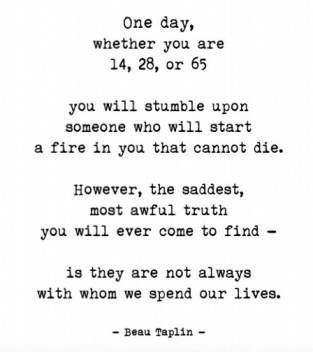
The above is a widely circulated quote by author Beau Taplin, whose Instagram page boasts over 400,000 followers. I’ve always found it to be depressing, but in a way that was relative to my short 28 years of life (or, even more narrowly, to my ~10 years of “real” relationships). After some more recent conversations, though, it’s taken on an entirely different, insanely powerful, heart shattering meaning.

It blows me away what my loves not only hold on to, but what they so effortlessly reveal after decades of self-imposed suppression. A traditional, super conservative nonna in our dementia unit recently divulged to her children that she’d come extremely close to marrying a different man prior to their father (who, btw, is still living and had no idea of his predecessor’s existence). It was their families who kept them apart, being that they were of different social classes and therefore held to certain marital expectations. While it’s apparent she loves her husband and she speaks so fondly of their life together, it’s obvious she’s carried this with her forever: a passion that’s subsided, but never died.. a haunting memory of young love lost against her will.

Even more f’ing heart wrenching was a narrative shared with me directly. A widowed nonna, lonesome and depressed, spoke regretfully of her first love. A very motivated young woman, she wished to focus on a career before taking the plunge and getting married. Her boyfriend begged her, but she stood firm; their passion for each other coupled with unwavering (& very different) life goals resulted in a many-years-long tumultuous relationship. As much fun as they had together, they’d also blow up at one another – he’d storm out, she’d yell to never speak to her again… but like clockwork, he always would:

This went on for years until they both began dating other people, her relationship more serious than his. Her soon-to-be husband was a good, safe bet when she was finally ready to settle down (at almost 30 mind you, my kinda girl <3). When nonno #1 got word of their engagement, however, he simply wouldn’t accept it:

Despite his threats and her movie-like daydreams (cue the Life is Beautiful scene where horse-riding Roberto Benigni “rescues” Nicoletta Braschi from her boring fiancé), N1 let them be; if she was truly happy, he was happy for her. Over the next several years, he wrote tirelessly to his love, each letter addressed to Miss Nonna MaidenName, as he refused to acknowledge the fact that she was married. She eventually answered, and a few times they even met up (relax, she assured me there was “no monkey business”). He married three times, blaming her for his restless heart, while she was with nonno #2 for nearly 70 years.. a marriage that was, in more or less words, nice, comfortable, mediocre:

At this point, I wasn’t just moved by her words – I was sobbing. Several years ago, relentless N1 arranged for his Miss Nonna MaidenName to be looked after by a local family member (he himself had settled down south decades prior). In 2014, on a day she was particularly preoccupied with thoughts of her first love, she decided to call hm. The very next day, he passed away.

There is no comparison between that which is simply taught and those lessons learned through experience. Scrolling Beau Taplin’s feed can’t hold a candle to the wisdom gained from such conversations. It is these interactions I’m perhaps most thankful for – these opportunities to seek their guidance, these narratives so drenched with insight. One day, the stories will be ours to tell. I pray mine is laced with passion, fun, and confident choices.. rid of pride, regret, and mis-labeled letters.

What Time’s Supper?

This afternoon, one of my loves frantically stopped me in the hallway as I passed her apartment: “Chris, can you help me? Please, please help me for a minute?!” She was visibly panicked as she reached for a notebook and pencil from her rollator. Shakily, she wrote down 4:45. “Supper is at 4:45. 11:45 is lunch.” She repeated and re-wrote, “4:45, 11:45.”

While this behavior was without a doubt concerning and definitely out of character, I can’t say that I was completely surprised; yesterday, I affectionately reminded her of my 3PM program, to which she replied, “I just have to get to supper first, then I’ll be there!” A little strange, but I assumed hoped she was having a late lunch and simply slipped and called it dinner. To my (and her) disappointment, she was shooed away by the wait staff – supper was not for another two hours. Oh, and to be clear, this nonna is not a dementia resident. 😦

With a lump in my throat and a heavy heart, I spent the next half hour drawing clock faces and timetables. She was able to without hesitation read me the time displayed on her watch, yet she had no idea what those numbers meant. She confidently (and accurately) explained which hand was for minutes and which for the hour, and repeated her seating times and the meals served at each. When it came to tying the two together, however – that clear number and its obscure meaning, she simply was not able. Understandably so, she was an overwhelming mixture of scared, upset, confused, and mortified.

It’s pretty widely understood that people with dementia have a warped sense of time; their reality orientation may be off by several years. In other words, they might think they’re decades younger than they actually are, in turn mistaking adult children for siblings or a frightening, unrecognizable mirror reflection for someone else’s. We also get that they lose sense of the passage of time, therefore experiencing a shorter attention span and not comprehending how long it’s been since some event occurred. Seemingly less implicit, however, is the fact that the ability to read a clock may be lost early in the course of the disease: Even when a person can look at the clock and say, “It is 3:15,” he may be unable to make sense of this information. Could you imagine? Obviously, my love was distraught today, and I don’t blame her one bit:

“Not being able to keep track of time can worry the forgetful person. Many of us, throughout our lives, are dependent on a regular time schedule. Not knowing the time can make a person worry that he will be late, be forgotten, miss the bus, overstay his welcome, miss lunch, or miss his ride home. The person who has dementia may not know just what he is worried about, but a general feeling of anxiety may [occur].”

– The 36-Hour Day

There’s no one-size-fits-all when it comes to these difficult situations; everyone is unique and will respond differently to your approach. In our case this afternoon, I felt a new watch was a solid first step. It took just minutes to find one on Amazon with daily alarms and a large display. She’ll be alerted every mealtime and, given her current cognitive state, should hopefully make her way to the dining room with less anxiety and much more confidence. And if she arrives at 11:45 for lunch but calls it supper, I’ll *still* consider it a win and cheerfully escort her to her seat.

Hi, This is My Grandmother!

Spoiler alert: this post has nothing to do with my grandma. It’s not a sappy account of how I consider my residents to be my stand-in nonnas, either (though that is obviously the case). It is, however, in reference to a “role” I guess I could say I’ve happily assumed: One of my favorite residents constantly introduces me as her grandmother. I’ll get the occasional “daughter” or “neighbor,” but a solid 97% of the time I’m her grandma.

I joke about my laugh lines and how I have an old lady bedtime, but I can confidently say I don’t look like my 80-year-old love’s grandmother. Regardless of her reality orientation, there’s no way she would visually mistake me for her, as even if she believes herself to be ten years old, her grandma would not be pushing 30. Why does she call me that, then? Though demented, this seemingly offensive (wrinkle cream regimen starts TONIGHT) introduction has nothing to do with her memory; she has aphasia.

Aphasia refers to the inability to understand and formulate language due to impairments in specific neurological regions. In other words, it’s an f’ing nightmare. They say there are four communication modalities: auditory comprehension, verbal expression, reading & writing, and functional communication. Aphasia significantly impairs at least one at a time, and its symptoms range from the occasional difficulty finding words to losing the ability to speak, read, or write. However, it has zero impact on intelligence or episodic memory. Semantic memories, on the other hand, are compromised; while an aphasic individual will retain their experiences and remember life events, their comprehension of words, pictures, objects, and environmental stimuli is destroyed. This means that as the disease progresses, they lose not only the ability to name things, but also the meaning or conceptual knowledge of those things they’re trying to recall.

As if the above wasn’t scary enough, it’s important to understand that aphasia doesn’t always go hand-in-hand with dementia. Sadly, it’s way more common than one might imagine: according to Robin Straus of the Adler Aphasia Center, 1 in 250 people experience the disease. That’s more than Parkinson’s, Cerebral Palsy, and Muscular Dystrophy. It’s most often the result of a stroke, but any damage to the left hemisphere of the brain can cause aphasia – think brain tumors, traumatic brain injuries, and progressive neurological disorders like dementia itself. Oh, and there’s no age limit.

But if it’s not my laugh line wrinkle, how am I a grandma to my aphasic love?! If they can’t think of the correct name, nonnas with the disease may substitute a word with a related meaning, such as saying “wedding” for “ring” or “music thing” for “piano.” Her grandmother was an important person in her life – a source of comfort, joy, and love. Her brain can’t remember what to call me, but it knows we share a unique bond (cue my cliché tears..) and that I make her feel at ease. That’s evident not necessarily in the words I speak, for they’re not understood; it’s in the laughs, the playful shrieks, the overly affectionate hugs, and the kisses every morning. That her mind remembers, her heart won’t let her forget.

While she talks a mile a minute, my love –to be completely blunt– makes no sense at all. It’s extremely difficult for her to communicate her thoughts and to understand those of others that are relayed to her. Repeating something to her, even slowly and with clear enunciation, will make no difference; the issue does not lie in whether or not she hears you, but rather deep within the wiring of her brain. As Dr. Taylor so frankly put it:

“Their current dilemma continues to be to figure out just why I am not complying with their requests. Is it because it hasn’t registered in my brain? Is it because I can’t figure it out? Is it because I forgot it? Is it because I don’t believe them? Is it because I don’t want to do it?

Old strategies that worked for years – say it again and say it louder – just don’t work any more. I’m glad I’m not a caregiver who has to figure me out every day.”

– Dr. Taylor

Instead of asking the same question twice, try rephrasing it. Use short words and simple sentences, avoiding multipart requests. Do speak slowly and be patient when awaiting a response; the act of processing and replying to a demand may take much longer than what is natural to us. Use other signals besides spoken words: point, touch, write, etc. Most importantly, be empathetic and have patience. Don’t take things personally and expect the unexpected: even if your nonno’s never muttered a curse word in his life, you may be compelled to wash his mouth out with soap. Unfortunately, increased cursing just seems to be a quirk of language skill diseases. Don’t feel embarrassed or, worse, embarrass him; laugh about it! Just last week, my beloved “granddaughter” called me a skinny b*tch. Naturally, I took it as a compliment ;), as I most certainly do her usual nickname for me. I’ll gladly be her grandma any day. ❤


*note* This post was written prior to the extremely unfortunate passing of the love I mention above. It is dedicated to her and aphasia awareness. Please don’t hesitate to email me or comment below for more detailed information or additional resources. Our lives will be sadder and our days duller without you, D.


Favorite Spots in Italy by Season: SUMMER

To say I’m partial to Italy in the summertime would be an understatement. The very first time I traveled to the motherland was in August of 2002, and I returned to study abroad in Rome five summers later. My initial experiences with the country I’d been relentlessly trying to visit were in the summer months, and as cliché as it sounds, they changed my life forever. As much as I love going back at this time of year, there are huge deterrents: June thru August is unbearably crowded, hot, and expensive in Italy, a country that’s still on the fence about deodorant BTW. There are a few spots, however, that simply must be visited in the summertime, with Sicily being numero uno.

Sicily

Of the 21 times I’ve traveled to Italy, I’ve only been to Sicily once and it was just in 2014. One time is all it took, though, and I honestly had no idea what I was in for. I tend to liken the island to Greece, as it has a much more Greek feel to me and is loaded with breathtaking beaches and well-preserved ruins. The food and gelato are the best I’ve had thus far in my life, no exaggeration, and prices are unbeatable. Those things pale in comparison, however, to the culture, hospitality, and pure enjoyment you’ll experience. Ferragosto and feasts of patron saints bring late-night beach parties and parades. Entire towns come out to celebrate from dusk until dawn – I’m talking babies in strollers to 90 year old couples parading the streets and hanging at outdoor bars until 3:00 in the morning. Oh, and everyone knows each other.

Two must-see spots from my stay include Agrigento, home of awe-inspiring Greek ruins, and Scala dei Turchi. There are countless more for sure, but I can’t speak for what I haven’t personally experienced; I just did a little bit of the southern coast over a long weekend in August. Scala dei Turchi is essentially a white, rocky cliff overlooking the insanely beautiful Mediterranean Sea. It’s a little scary to climb as there are no railings, but it’s totally worth it. Agrigento is one of Italy’s UNESCO World Heritage Sites and apparently a class-trip staple in Sicilian schools. It’s home to spectacular Greek temple ruins and actually isn’t far from Scala if you want to hit both in the same day. Be warned, however, that you will sweat profusely: there’s no shade and it’s insanely hot here in the summertime.

To sum Sicily up in one word, I’d have to say it’s surreal. I fell in love with the island for so many reasons, and I definitely hope to return to explore some more. While my photos don’t do it justice, this video is an awesome representation of the region and its attractions.

  • How to arrive: I traveled to Sicily from Rome, so I flew into Catania on a cheap Ryanair flight. You can literally get there nonstop for $19, it’s amazing. I actually see deals pop up frequently from NYC to CTA, as well, but there are always connections. From there, renting a car is your best bet to maximize your stay.

Vittorio Veneto

My beloved VV! Vittorio Veneto is the tiny town that I lived in during my 2014 volunteer trip. I’m hesitant to even broadcast it here, as it’s truly the epitome of a “hidden gem” and I want it to stay that way forever! VV is so unassuming that my coworkers would jokingly ask if I closed my eyes and pointed on a map to find it, and that’s basically what I did: when searching for an apartment on Airbnb, my criteria included price range and the keywords “tiny, historic village.” Mission accomplished

As it’s nestled in the Dolomites of Northern Italy, VV doesn’t get unbearably hot in the summertime (in my opinion, at least, though I’m chilly when it’s a brisk 80o). It’s a popular spot for cyclists but otherwise doesn’t house many tourists. Because of that, you won’t find many Americans or crowded attractions. The landscapes and architecture more than make up for the extra effort you’ll need to communicate, though. The town itself has two sections: Serravalle and the more modern Ceneda. Serravalle is right out of a movie.. in fact, In Love and War with Sandra Bullock was filmed there in the ‘90s. 🙂

There are a few incredible hikes with starting points throughout VV, my favorite being that which leads to the Santuario di Sant’Augusta; the views from the top are breathtaking! The Sant’Augusta steps at the bottom are a great spot to relax and read, as I spent a lot of time doing (for research) while in VV. The park is also a perfect spot for this, though nothing tops sitting along the River Meschio with your feet in the water. Every Monday morning, there’s a big market along Viale Camillo Cavour/Viale della Vittoria where they sell basically anything you can f’ing think of, from home décor and clothes to even fresh flowers and foods. Prices are beyond reasonable and it’s all so unique! One of my favorite things about living in VV, amongst countless others, was my Monday morning market routine.

  • How to arrive: You’d be happy to finally read that VV is one place you don’t need a car. The closest airports are the northeast group (VCE, TSF, TRS), but the only one with direct flights from NYC is Venice and it’s never cheap. Milan’s Malpensa (MXP) is a less expensive alternative, though it’s not exactly convenient; the train from the airport will require four changes and take over four hours start to finish. That from Venice, however, is less complicated and less than two hours door to door.

San Gimignano

Choosing a specific season for San Gimignano was difficult to say the least – it is absolutely breathtaking every month of the year. It’s so spectacular, in fact, that it’s brought me (and my friends!) to tears on more than one occasion. I am especially blown away by Guardastelle, an incredibly charming family-owned agriturismo outside the city walls.

San Gimignano itself is a tiny medieval town atop the hills of Italy’s Tuscan region. Surrounded by three walls, it overlooks endless vineyards packed with grapes and lined with olive trees. It is saturated with history, culture, and towers; it’s not called “The Town of Fine Towers” for nothing! While certainly touristy, it’s much less crowded than the ever popular nearby Siena, even in the summertime.

Agriturismo Guardastelle is one of the most surreal places I’ve ever visited, and one I will return to for as long as I possibly can. Fausto, Barbara, and the rest of the staff are beyond welcoming and accommodating; you truly feel at home when in their presence. Though I can’t speak for the homemade wine, the meals prepared on-site are out of this world. I’ll never get sick of their 25 euro wine tours, equipped not only with fascinating winemaking info but also some of the best local dishes in the region (doused in homemade olive oil, of course!). The experience and stay as a whole are unmatched.

  • How to arrive: Sorry, having a car is essential here! There’s honestly no better way to see the Tuscan hills. The closest airport is in Florence, but there are unfortunately no cheap, direct flights. I typically include San Gimignano as part of a longer trip to other Italian destinations. For instance, I love exploring nearby Florence via Piazzale Michelangelo, where you can park for free and enjoy incredible views of the city, especially at sunset. Rome is just about an hour away by train, as well!

I Care: A Handbook for Care Partners of People with Dementia

41-RvX1ceJL._UY250_

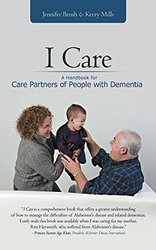
No book review in over a year ≠ no books read in over a year. However, none have truly moved me enough to write about them… until I Care: A Handbook for Care Partners of People with Dementia. Though well over 100 pages, I Care is a quick, easy, engaging read that I honestly couldn’t put down. Its co-authors are well known in the field and offer not only insight and guidance, but also real-life stories of caregivers navigating the world of dementia.

One of my favorite things about I Care is the way the authors explain dementia and exactly how it can affect various parts of the brain. They’ve written in a manner that is both informative and easily understood. An awesome analogy, for example:

“[the brain] is a communication network, with neurons being the computers and phones, and the axons and dendrites being the wires and radio signals that allow them to share information.”

Why didn’t our bio professors explain it this way?! Find I Care on Amazon here.