Senti

Just over a month ago, I began a new job at an elder law firm. Our attorney works primarily with seniors and specializes in things like estate planning and guardianships. He’s the one you consult when it’s time to make those difficult decisions about what your end of life wishes may be and how you hope to have them carried out. Disheartening, I know, but also necessary and so, so important.

Coincidentally, these past few weeks I’ve learned a considerable amount about hospice and palliative care. Most interesting, in my opinion, have been experiences shared regarding reactions to one’s own impending death: just as an individual draws up documents to ensure their affairs are in order, you often find they’ll tie up loose personal ends, as well. An article in Clearly Caring Magazine points out:

“Admittedly, the dying often use a level of candor and boldness once they are given a few months to live. They use the time to mend fences, bury hatchets, heal family wounds, and bring closure to their brief time remaining on earth. Most speak with wonderful frankness; even the most silent become bold and courageous.”

Of course, loved ones are also affected and must likewise prepare for the impending loss. Together, they’ll frequently experience what is known as “anticipatory grief,” or the dread and emotional preparation felt prior to the actual death of the patient. Though it has been postulated that going through the stages of grief while someone is still alive may lessen its impact upon death, the entire experience can still be incredibly taxing and unbearably sad.. one you wouldn’t wish upon your worst enemy, especially not more than once.

People with dementia die twice. They gradually recede from their loved ones while still living, and their family loses the person they knew and loved slowly over time. Depending on the circumstances, they’re most likely unable to achieve that closure we so desperately crave toward end of life. At minimum, they’re not able to do so as effectively as someone whose cognition remains unimpaired. Don’t think for a second they don’t try, though. As our attorney must do to ensure that one’s most intimate concerns are outlined and understood, it is essential that you listen:

Naomi Feil, the originator of Validation Therapy, “believes that the healer’s job is to listen to the patient, to give speaking time to the patient, to not interrupt, to not correct, and to not be judgmental. Responding in this way validates the patient’s existence, which means that the healer must accept the world in which the patient is living. … The rationality behind the irrational, demented talk is that patients are “tying up loose ends” before death; they want to reconcile the events of their lives so that they can conclude that their lives made a difference, that the world is better because they were here. This can only happen if the healers give up their dominant positions and take the time to listen. The nonverbal time variable is key.”

They say hindsight is always 20/20. Looking back, I can recall several instances in which my loves were likely cleaning slates toward end of life. A favorite nonno was particularly inspiring, as he was so tender and affectionate toward his wife of nearly 60 years. He recounted memories with great lucidity, held her hand while they slept, and professed his love relentlessly (“You know I love you Rosie, right? You know how much I adore you?!”). When reflecting on her parents’ relationship, their daughter shared with me that her father was nothing like this before. In fact, he very rarely spoke about his feelings. I like to think that, despite his dementia, he was determined before he passed to make sure his sweetheart knew. Perhaps the most beautiful part of all, she listened to him (and she reciprocated).

How To Drive Yourself Crazy Caring for Your Loved One with Dementia in 5 Easy Steps

Books, open forums, support groups, blogs: there are numerous platforms that offer advice on what to do when your loved one has dementia. A simple Google search alone yields over 1.5 million results in half a second. While often helpful and insightful, I’ve come to find that there’s a benefit to learning what not to do, as well, especially when given relatable examples that might just sound familiar. As promised, below are five easy steps to drive yourself crazy when caring for your loved one with dementia:

  1. Orient them to reality: Due to the nature of her disease, your nonna may revert back to another period of time in her life that she now believes to be the present. It’s possible that you’ll find her worrying about her parents who reside nearby, not in Heaven, or a job she’s still committed to, not retired from. When such situations arise and anxiety and confusion persist, comfort her by bringing her back to reality. Firmly remind her that it’s 2017, she’s 96 years old, and obviously completely losing it.
  2. Argue: On a similar note, once you’ve explained to your nonna that she does not, in fact, have to catch the 5:00 bus, listen to her rebuttal. Consider the points she’s made and quickly call attention to their absurdity. Laugh at the ridiculousness and respond accordingly, reminding her that she hasn’t lived in Hoboken in 35 years and her place of employment is now a parking garage. Oh, and the mom and dad she’s worried about? They’re dead. Duh!
  3. Repeat yourself: When brought back to the present, it’s not uncommon for your nonno to voice concerns. After all, he’s living in a totally different reality than that which was just described to him. He’ll have some questions, surely, and your answers are important. If and when he’s still perplexed, simply repeat yourself: seriously, say the exact same thing you just stated as if he didn’t hear you. Works every time!
  4. Rush them: Patience is to be practiced on naive children, not seniors who should know better. If your nonno seems to be having a difficult time following through with trivial, everyday tasks like getting dressed, try a tough-love approach. Put some pressure on him: set time limits and outline strict consequences. Stress can be a motivator, too!
  5. Expect them to be who they’ve always been (and take it personally when they’re not): In the same breath, keep in mind that older people are set in their ways. Not only does your nonna know what she’s doing, she’s also got a motive behind her actions. Know the games she plays and don’t feed into them; make it clear you’re not down for nonsense and encourage her to get it together or else (nursing home, anyone?!).

Seriously, I cringed just typing the above. Unless you simultaneously hate your nonno and love self-harm, please don’t practice anything on this list. In fact, do the opposite. My examples may read humorous and even a bit extreme, but it’s not uncommon for caregivers to find themselves in similar, equally frustrating situations. Always keep in mind that what you’re now experiencing is the disease, not the loved one you once knew. Be patient and be kind. To keep yourself from truly going crazy, just go with the flow; dementia’s demons foster arguments you will never win and changes you cannot control. The only one whose outlook can be altered is your own.

TSA, It’s Me Again…

hem

Hemingway was so wise. The above is one of my favorite excerpts from “For Whom the Bell Tolls,” and it’s a lesson of which I’m constantly reminded when spending time with my loves. Many of them were not as fortunate as I am to realize the validity of that quote at such a young age. Some, however, possess an inspiring “better late than never” attitude.

I met a woman this week who toured my community on behalf of her dad. I knew she had just returned from a European vacation, but it truthfully came as a surprise to hear that it was one her father not only attended, but booked and planned for his family.  At 87 years old, this determined nonno is simply not willing to leave items on his bucket list unchecked. He realizes now more than ever that the clock is ticking; if he doesn’t see the places he’s dreamt of now, he may never get to them at all. A bigger motivator/quasi-roadblock (depending on your outlook): he has dementia.

My spirit animal nonno (I’ll call him J) is in the earlier stages of the disease process. He sadly knows there are changes happening to his mind, and he’s terrified of their consequences. As is common in diseases like Alzheimer’s, short-term memory loss is one of the earlier symptoms one can recognize:

“The hippocampus takes our immediate thoughts and impressions and turns them into memories. Alzheimer’s attacks the hippocampus first, so short-term memory is the first thing to fail. Eventually, new memories become impossible to make and learning is a thing of the past. Without knowing what just happened, it’s difficult for people to judge things like time, place, and what’s going on around them.”

The Forgetting

In his case, J is constantly misplacing things. He’ll store his online banking passwords somewhere safe, for instance, only to be on the phone with his teller a day later to reset what’s now forgotten. Even more alarming IMHO: he’s lost his passport three separate times. His angel of a daughter has expedited new ones, knowing how important that document is to her wanderlusting father.

J is on a race against a clock with unmarked intervals. Dementia lays no clear path and gives no notice as it changes course. Imagine how terrifying it is, then, to know your days are numbered.. to recognize that sometime soon, you won’t be truly you anymore. How debilitating that fear must be:

“Alzheimer’s is a lot of stress, mainly because you know what you have been earlier and you know very well you’re not that good now and it’s real hard to reconcile. … We really do want to be like human beings. We have so many fears: the fear of forgetting things, the fear of tripping over something. Our speech is not too clear sometimes and our feelings are hard to sort out many times.”

-Cary Henderson, A Partial View

This month, J killed it in Europe. He walked the cobblestone streets of Rome, ate French bread in a Parisian café, and gambled in Monte Carlo. He was happy and he thrived. God willing, if he’s still able, he’ll visit Japan and Cuba next. Without a doubt, he’ll fiercely battle this disease and fight for what he loves – as long as that next passport’s expedited.

One Day


I find myself constantly in awe of the stories I hear from my loves. The wisdom and experience they share are immeasurable, and I sincerely feel honored to have the opportunity to learn from them every day. Most intriguing, however, are the stories that seem to truly stay with them forever.. the ones they carry with them their entire lives, regardless of circumstance or cognition. Unfortunately, these aren’t always the fairy tales or happy endings – sometimes, they crush you.

beau

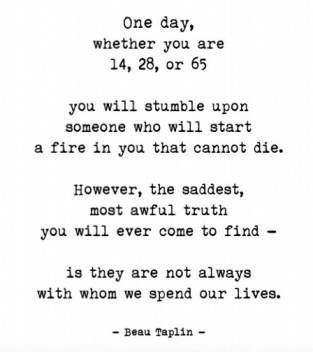
The above is a widely circulated quote by author Beau Taplin, whose Instagram page boasts over 400,000 followers. I’ve always found it to be depressing, but in a way that was relative to my short 28 years of life (or, even more narrowly, to my ~10 years of “real” relationships). After some more recent conversations, though, it’s taken on an entirely different, insanely powerful, heart shattering meaning.

It blows me away what my loves not only hold on to, but what they so effortlessly reveal after decades of self-imposed suppression. A traditional, super conservative nonna in our dementia unit recently divulged to her children that she’d come extremely close to marrying a different man prior to their father (who, btw, is still living and had no idea of his predecessor’s existence). It was their families who kept them apart, being that they were of different social classes and therefore held to certain marital expectations. While it’s apparent she loves her husband and she speaks so fondly of their life together, it’s obvious she’s carried this with her forever: a passion that’s subsided, but never died.. a haunting memory of young love lost against her will.

Even more f’ing heart wrenching was a narrative shared with me directly. A widowed nonna, lonesome and depressed, spoke regretfully of her first love. A very motivated young woman, she wished to focus on a career before taking the plunge and getting married. Her boyfriend begged her, but she stood firm; their passion for each other coupled with unwavering (& very different) life goals resulted in a many-years-long tumultuous relationship. As much fun as they had together, they’d also blow up at one another – he’d storm out, she’d yell to never speak to her again… but like clockwork, he always would:

This went on for years until they both began dating other people, her relationship more serious than his. Her soon-to-be husband was a good, safe bet when she was finally ready to settle down (at almost 30 mind you, my kinda girl <3). When nonno #1 got word of their engagement, however, he simply wouldn’t accept it:

Despite his threats and her movie-like daydreams (cue the Life is Beautiful scene where horse-riding Roberto Benigni “rescues” Nicoletta Braschi from her boring fiancé), N1 let them be; if she was truly happy, he was happy for her. Over the next several years, he wrote tirelessly to his love, each letter addressed to Miss Nonna MaidenName, as he refused to acknowledge the fact that she was married. She eventually answered, and a few times they even met up (relax, she assured me there was “no monkey business”). He married three times, blaming her for his restless heart, while she was with nonno #2 for nearly 70 years.. a marriage that was, in more or less words, nice, comfortable, mediocre:

At this point, I wasn’t just moved by her words – I was sobbing. Several years ago, relentless N1 arranged for his Miss Nonna MaidenName to be looked after by a local family member (he himself had settled down south decades prior). In 2014, on a day she was particularly preoccupied with thoughts of her first love, she decided to call hm. The very next day, he passed away.

There is no comparison between that which is simply taught and those lessons learned through experience. Scrolling Beau Taplin’s feed can’t hold a candle to the wisdom gained from such conversations. It is these interactions I’m perhaps most thankful for – these opportunities to seek their guidance, these narratives so drenched with insight. One day, the stories will be ours to tell. I pray mine is laced with passion, fun, and confident choices.. rid of pride, regret, and mis-labeled letters.

What Time’s Supper?

This afternoon, one of my loves frantically stopped me in the hallway as I passed her apartment: “Chris, can you help me? Please, please help me for a minute?!” She was visibly panicked as she reached for a notebook and pencil from her rollator. Shakily, she wrote down 4:45. “Supper is at 4:45. 11:45 is lunch.” She repeated and re-wrote, “4:45, 11:45.”

While this behavior was without a doubt concerning and definitely out of character, I can’t say that I was completely surprised; yesterday, I affectionately reminded her of my 3PM program, to which she replied, “I just have to get to supper first, then I’ll be there!” A little strange, but I assumed hoped she was having a late lunch and simply slipped and called it dinner. To my (and her) disappointment, she was shooed away by the wait staff – supper was not for another two hours. Oh, and to be clear, this nonna is not a dementia resident. 😦

With a lump in my throat and a heavy heart, I spent the next half hour drawing clock faces and timetables. She was able to without hesitation read me the time displayed on her watch, yet she had no idea what those numbers meant. She confidently (and accurately) explained which hand was for minutes and which for the hour, and repeated her seating times and the meals served at each. When it came to tying the two together, however – that clear number and its obscure meaning, she simply was not able. Understandably so, she was an overwhelming mixture of scared, upset, confused, and mortified.

It’s pretty widely understood that people with dementia have a warped sense of time; their reality orientation may be off by several years. In other words, they might think they’re decades younger than they actually are, in turn mistaking adult children for siblings or a frightening, unrecognizable mirror reflection for someone else’s. We also get that they lose sense of the passage of time, therefore experiencing a shorter attention span and not comprehending how long it’s been since some event occurred. Seemingly less implicit, however, is the fact that the ability to read a clock may be lost early in the course of the disease: Even when a person can look at the clock and say, “It is 3:15,” he may be unable to make sense of this information. Could you imagine? Obviously, my love was distraught today, and I don’t blame her one bit:

“Not being able to keep track of time can worry the forgetful person. Many of us, throughout our lives, are dependent on a regular time schedule. Not knowing the time can make a person worry that he will be late, be forgotten, miss the bus, overstay his welcome, miss lunch, or miss his ride home. The person who has dementia may not know just what he is worried about, but a general feeling of anxiety may [occur].”

– The 36-Hour Day

There’s no one-size-fits-all when it comes to these difficult situations; everyone is unique and will respond differently to your approach. In our case this afternoon, I felt a new watch was a solid first step. It took just minutes to find one on Amazon with daily alarms and a large display. She’ll be alerted every mealtime and, given her current cognitive state, should hopefully make her way to the dining room with less anxiety and much more confidence. And if she arrives at 11:45 for lunch but calls it supper, I’ll *still* consider it a win and cheerfully escort her to her seat.

Hi, This is My Grandmother!

Spoiler alert: this post has nothing to do with my grandma. It’s not a sappy account of how I consider my residents to be my stand-in nonnas, either (though that is obviously the case). It is, however, in reference to a “role” I guess I could say I’ve happily assumed: One of my favorite residents constantly introduces me as her grandmother. I’ll get the occasional “daughter” or “neighbor,” but a solid 97% of the time I’m her grandma.

I joke about my laugh lines and how I have an old lady bedtime, but I can confidently say I don’t look like my 80-year-old love’s grandmother. Regardless of her reality orientation, there’s no way she would visually mistake me for her, as even if she believes herself to be ten years old, her grandma would not be pushing 30. Why does she call me that, then? Though demented, this seemingly offensive (wrinkle cream regimen starts TONIGHT) introduction has nothing to do with her memory; she has aphasia.

Aphasia refers to the inability to understand and formulate language due to impairments in specific neurological regions. In other words, it’s an f’ing nightmare. They say there are four communication modalities: auditory comprehension, verbal expression, reading & writing, and functional communication. Aphasia significantly impairs at least one at a time, and its symptoms range from the occasional difficulty finding words to losing the ability to speak, read, or write. However, it has zero impact on intelligence or episodic memory. Semantic memories, on the other hand, are compromised; while an aphasic individual will retain their experiences and remember life events, their comprehension of words, pictures, objects, and environmental stimuli is destroyed. This means that as the disease progresses, they lose not only the ability to name things, but also the meaning or conceptual knowledge of those things they’re trying to recall.

As if the above wasn’t scary enough, it’s important to understand that aphasia doesn’t always go hand-in-hand with dementia. Sadly, it’s way more common than one might imagine: according to Robin Straus of the Adler Aphasia Center, 1 in 250 people experience the disease. That’s more than Parkinson’s, Cerebral Palsy, and Muscular Dystrophy. It’s most often the result of a stroke, but any damage to the left hemisphere of the brain can cause aphasia – think brain tumors, traumatic brain injuries, and progressive neurological disorders like dementia itself. Oh, and there’s no age limit.

But if it’s not my laugh line wrinkle, how am I a grandma to my aphasic love?! If they can’t think of the correct name, nonnas with the disease may substitute a word with a related meaning, such as saying “wedding” for “ring” or “music thing” for “piano.” Her grandmother was an important person in her life – a source of comfort, joy, and love. Her brain can’t remember what to call me, but it knows we share a unique bond (cue my cliché tears..) and that I make her feel at ease. That’s evident not necessarily in the words I speak, for they’re not understood; it’s in the laughs, the playful shrieks, the overly affectionate hugs, and the kisses every morning. That her mind remembers, her heart won’t let her forget.

While she talks a mile a minute, my love –to be completely blunt– makes no sense at all. It’s extremely difficult for her to communicate her thoughts and to understand those of others that are relayed to her. Repeating something to her, even slowly and with clear enunciation, will make no difference; the issue does not lie in whether or not she hears you, but rather deep within the wiring of her brain. As Dr. Taylor so frankly put it:

“Their current dilemma continues to be to figure out just why I am not complying with their requests. Is it because it hasn’t registered in my brain? Is it because I can’t figure it out? Is it because I forgot it? Is it because I don’t believe them? Is it because I don’t want to do it?

Old strategies that worked for years – say it again and say it louder – just don’t work any more. I’m glad I’m not a caregiver who has to figure me out every day.”

– Dr. Taylor

Instead of asking the same question twice, try rephrasing it. Use short words and simple sentences, avoiding multipart requests. Do speak slowly and be patient when awaiting a response; the act of processing and replying to a demand may take much longer than what is natural to us. Use other signals besides spoken words: point, touch, write, etc. Most importantly, be empathetic and have patience. Don’t take things personally and expect the unexpected: even if your nonno’s never muttered a curse word in his life, you may be compelled to wash his mouth out with soap. Unfortunately, increased cursing just seems to be a quirk of language skill diseases. Don’t feel embarrassed or, worse, embarrass him; laugh about it! Just last week, my beloved “granddaughter” called me a skinny b*tch. Naturally, I took it as a compliment ;), as I most certainly do her usual nickname for me. I’ll gladly be her grandma any day. ❤


*note* This post was written prior to the extremely unfortunate passing of the love I mention above. It is dedicated to her and aphasia awareness. Please don’t hesitate to email me or comment below for more detailed information or additional resources. Our lives will be sadder and our days duller without you, D.

Was Your Husband Jealous?

jealous

I’m admittedly a very here-and-now kind of girl, neither a planner nor nostalgic. There’s something about both the honesty and spontaneity of living in the present that just draws me to it. That and I 1) have an awful memory and 2) was brainwashed by Dr. Yalom as a grad student. :/ When it comes to my loves, however, I’m finding more and more that there is an incredible benefit to reminiscing.
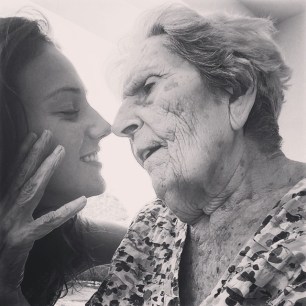
Reminiscence therapy involves recalling personal experiences from one’s past. Its purpose is to improve functioning by decreasing demands on impaired cognitive abilities and capitalizing on those that are preserved. The most prominent memories I have of my early RT days are centered on the question, “Tuo marito era geloso?” Obviously, I had my first taste of reminiscence therapy in Italy.

Often used to help treat depression, RT is particularly beneficial for the elderly for a number of reasons:

  1. Reminiscing doesn’t demand some new or complicated skill. It doesn’t put you on the spot or require you to think on your feet. Because of this, it’s suitable for those experiencing some sort of cognitive decline or deficiency.
  2. Those participating in RT are the main actors in their stories. They’re able to feel comfortable, involved, and in control.
  3. Even when confined to one’s own mind, nostalgia is social in nature. It stimulates feelings of connectedness to others; sharing stories cultivates a sense of universality or togetherness. It helps people let their guard down and become better acquainted with one another.
  4. Reminiscing about the past can foster a great deal of satisfaction and understanding. For my loves, it’s a means of affirming who they are and what they’ve accomplished, as well as a chance to relive happier times. Despite their cognitive state, it’s a way to talk easily about the things they do remember.

So, where does the jealous husband fit into all of this?! & how do I implement RT on a daily basis here negli Stati Uniti? In Italy, I didn’t know my nonnas’ backgrounds. For the most part, I hadn’t met their families and I had no idea how they grew up. What I quickly learned I could assume, however, was that their nonno counterparts were extremely (and stereotypically!) jealous. Asking a question as simple as, “Was your husband jealous?” was enough to spark responses filled not just with detail, but with life. It triggered shared laughs and parallel memories. It got my loves talking, smiling, and feeling close to one another.

It’s one thing to stir up recollections, but another to remember them:

“As a result of feeling shaken up and beaten down, a resident experiences low self-esteem. Part of the rebuilding of a resident’s sense of personal worth comes from my spending time with her, giving her attention, listening to her, and making the effort to help her. Making regular visits to a resident, remembering the content of previous conversations, and offering assistance are generally experienced as caring concern and can help to restore her sense of worth.

The primary factor that promotes loving care in [assisted living] is that the caretaker must get to know the resident personally. … Personal knowledge is likely to engender empathy and connection.”

Simple Lessons for a Better Life

I always want to know the whole scoop. When I meet potential residents and their family members, I ask a thousand questions; I want to know how they met their spouse, what they did for a living, what they loved to do most, etc. This information may seem trivial or unnecessary being that they’re looking for a solution to a problem that is very much in the here-and-now, not related to their past, but this is the most important part of our conversation. It is their story that’s essential, not their diagnoses, med list, or cognitive state. That’s all valuable, but it is no doubt secondary to who they are as an individual and how they came to be.

If I see a nonno crying in his bedroom, I want to know it’s because this would have been his anniversary, not to assume he’s sundowning. I want to hold his hand as we talk about his wife and reflect on the winters they spent in Boca. I want to make each nonna feel heard.. to show her that she’s loved and listened to, her stories appreciated. And when she could use a laugh, I want to bust her about her feisty husband, swearing I don’t envy her yet fawning over his timeless, passionate, inspiring (albeit fiery) love for her.

Kiss Me Like You Mean It

widget4

Full disclosure: I am not a PDA kind of girl. The above title is actually a direct (and frequently used) quote from a college boyfriend who was contrarily very into public displays of affection. He was super huggy and kissy regardless of where we were or who was around, and the fact that I wasn’t drove him nuts; a quick peck to appease him was clearly insufficient, hence the “kiss me like you mean it.” Don’t get me wrong, behind closed doors is a completely different story – I am beyond affectionate, playful, and even huggy-kissy. There are only two instances in which you’ll witness that side of me in public, however: with dogs (surprise, surprise 😉 ) and with my loves.

I am a huge advocate for touch. Numerous studies have proven that it’s not only essential for our development, it is also necessary for us to grow, learn, and literally survive and thrive. From infancy, touch is used to both communicate and to heal; a loving caress releases oxytocin and instantaneously boosts one’s mood, strengthens the immune system, and reduces stress. It’s not one-sided, either: there is evidence that the person doing the touching gets just as much benefit as he or she being touched. Incorporating even the simplest pats with other forms of communication increases connectedness, improves attitudes, and calms nerves. We are biologically wired to the need to connect with others on a basic physical level, and it’s something we don’t grow out of.

I’m not alone in being anti-PDA; we are a seriously touch-phobic society. The resultant touch deprivation in the elderly is alarming, especially for those who are frail or demented. Such deficiency leads to feelings of isolation, anxiety, poor trust in caregivers, a greater decrease in sensory awareness, and insecurity – the last thing they f’ing need. As if dementia didn’t leave one feeling frightened and alone enough, our lack of intimacy just kicks a nonna while she’s down, as to deny it is to deprive her of one of life’s greatest joys and deepest comforts.

It’s not just our nonnos we’re depriving, either: a study from the 1960s looked at café conversations all over the world. In France, friends touched each other 110 times per hour. Puerto Ricans beat them by 70 – a whopping 180 touches were recorded in the span of 60 minutes. In the US? Twice. In “bursts of enthusiasm,” we touched each other twice. 😐

Touch is the universal language of compassion. When words are no longer understood, there is no better substitute than a gentle hug or holding hands. In old age especially, the need for physical affection is more powerful than ever, for it is one of the only sensuous experience that remains. It is one of the few persisting methods of communicating with a nonna of limited cognitive function, and its effects are both physically and emotionally favorable. In a study that examined the impact of touch on appetite in picky elderly eaters, all participants had a significant increase in caloric intake when given a gentle touch and spoken to during mealtime. Additionally, a study on dementia patients proved that touch is calming; all residents who received hand massages presented significantly less agitated than those who did not.

Sources of proof are endless; there is no question that affection is insanely beneficial to seniors (and to the rest of us!). How we choose to implement it in our daily practice is subjective. In my own experiences, I have found that while being huggy-kissy with boys makes my eyes roll, doing so with my loves is invaluable. I greet nearly every resident with a kiss.. I don’t care if they’ve got half their lunch on their lap or if they’ve had a cold for days, I’m wrapping my arms around them and kissing their cheeks (don’t worry Dad, I wash my hands). If a nonno’s in a wheelchair, I crouch beside him and rest my hand on his knee. I’ll walk arm-in-arm with nonnas and cozy up on the edge of their recliner when we rest. I’ll sit right on that hospital bed, my fingers locked with theirs, regardless of cognizance or how tightly they grasp back. If there are tears (God, I hate when there are tears), I softly wipe them dry. I kiss them like I mean it, and honestly, the impact is immeasurable.

You Know You Work in Assisted Living When…

  • you have an immense appreciation for your should-be-canonized, superhero front desk receptionists
  • you engage in regular conversations about things like back aches and bowel movements
  • you can recite the names, without thought or hesitation, of each resident’s children and grandchildren (and likely those of their spouses and everyone’s latest accomplishments) because you hear about them constantly
  • despite your actual role, your job responsibilities include fixing/teaching TV remotes, cell phones, and “the computer”
  • your “inside voice” is audible outside (and possibly across the street)
  • you’ve learned that affectionate pats on the butt are not just a sports thing (*note* this is a signature nonna move, don’t worry)
  • your relationship status is a daily topic of discussion
  • on a similar note, you’re also not-so-subtly told about single, tall, dark, & handsome grandsons.. and by “told about” I mean “pressured into an arranged marriage with”
  • you’re well-versed in acronyms (ADL, PPD, DNR, SNF, etc.)
  • you’ve witnessed genuine, lifelong, awe-inspiring true love – the kind that takes your breath away and brings you to [secret] tears
  • you’ve learned the value of positivity and how therapeutic it can be (which is why you cry those sappy love tears in private, you big baby!)
  • you know what Depends look like IRL and you’ve fully accepted the fact that we’ll likely all be in them one day
  • …actually, you know what a lot of stuff you read about and see illustrated on funny birthday cards looks like IRL
  • you’ve mastered the art of going with the flow, even if it’s more of recurring wave than a fleeting stream
  • you’ve gotten crucified at Resident Council for things like two-ply toilet paper
  • hand sanitizing is part of your daily (hourly?) routine
  • …but so are kissing, hugging, arm-locking, and hand-holding ❤
  • you’re regularly floored by how much you’ve yet to learn and blown away by the wisdom that surrounds you
  • patience pulses through your veins (& if it doesn’t, this post likely won’t apply to you for long)
  • you call your nonna. Not only because you love her, but because you see firsthand how a mere “Thinking of you” can be so powerful
  • you can always count on honest, filter-free opinions and advice, the kind you wish you had the guts to give yourself
  • you’re unavoidably kissed smack on the lips pretty regularly (and you’re okay with that)
  • your source of #inspiration and #goals (relationship & otherwise) is not the Instagram popular page – it’s your incredible residents
  • you have a blast. Of course you will be busy and some days sad or stressed, but a lot of the time, you’ll have the most playful, affectionate, fulfilling, heartfelt f’ing fun.
  • you learn to truly live your life. Not necessarily by inference, either – I’ve found that this kind of lesson can be taught (and is explicitly encouraged).
  • that love you witness? The unconditional, nonjudgmental, unwavering adoration? You feel it every single day.

Assisted Living: An Insider’s Guide to Tours

Having officially been in the field for just over a year, I’d hardly call myself an expert on senior living. I would, however, confidently say I’m an insider. Aside from working in the sales department of two assisted living communities, I’ve lived and volunteered in Alzheimer’s facilities in Italy. In addition, I traveled to the Netherlands *by myself* for the sole purpose of touring and spending time at Dementia Village. Though still a rookie, I’d like to use what I’ve learned and experienced thus far to offer some advice on what to consider when exploring AL options.

  1. Schedule a tour. I know, I know: “Let’s catch them off guard so they can’t warn everyone we’re coming and put on a show.” While I’m all for the authenticity that comes with unexpected surprises, I think making an appointment is in this case important; you want to be sure you’re able to spend time with your tour guide and not feel rushed.
  2. Stay for lunch. Does free food even need an explanation? 😉 Not only are you being fed, you’re also meeting and observing current residents, dining room staff, and the general vibe in the community. Plus, mealtime is huge for residents, so you want to be sure that what they’re served is tasty, nutritious, and presentable.
  3. Take note of the details. Speaking of presentable, how are the residents dressed? Are they neat and well-groomed? What about the community itself – is it clean? Do the caregivers look tidy? Do they greet those they pass? & my biggest pet peeve: anyone on their phone?!?! Honestly, having to even consider moving your nonna into AL is so disheartening and stressful that I just know I would look for any excuse to rule a place out, and that’s okay. Be picky…
  4. …But don’t be selfish. Ugh, this one’s essential. I know you probably prefer granite countertops, stainless steel appliances, and crown molding, but does your nonno care about any of that? Is that even his style? I think we can safely assume it’s not.
  5. Like, not even a little selfish please. Location is of course important, but please take distance into consideration within reason. Don’t choose a community based on convenience alone; if you have to travel an extra twenty minutes or pay a Parkway toll to visit your nonna at a truly good, honest place, make that sacrifice for her. Per favore, focus on what matters most…
  6. … & Don’t lose sight of what’s important. If you’re touring ALs in the first place, it’s obvious that there’s a reason: your loved one needs help (that or you’re broke and want the free food, in which case I totally support you and you can stop reading after tip #2). While those fancy salons and in-house theatres are awesome, remember that they’re a bonus, not a necessity. The only thing that truly matters is care. Seriously, I cannot stress that enough.
  7. Ask questions. Unfortunately, your two-hour tour can only offer so much insight into how a community runs. Asking questions, then, is extremely important. Do residents wear emergency pendants around their necks? What about their apartments – are there pull cords by the bed and in the bathroom? When a call button is pressed or an emergency cord pulled, what’s the average response time? Don’t just ask your guide, either; chat with residents. When you’re sitting at lunch, engage with them. See how they like the community and what, if anything, they’d change. Do they feel safe? Are they happy? **Disclaimer, nonnos and nonnas love to complain, so it won’t be all rainbows and butterflies. Pay attention to what they complain about, though; does their food take too long or are they rushed in the shower? Is the toilet paper rough or are their call bells unanswered?
  8. Then ask a few more. You can never ask too many questions! Or make too many observations, for that matter. Notice some caregivers out of uniform? Ask your tour guide what their deal is. Do residents have private aids? How come, and how many? While we’re at it, what’s the staffing ratio? If you’re able to make a decent connection with your sales rep and some trust has been established, ask them honestly, “Would you move your loved one here?” Gage their response and, as a general rule, go with your gut.
  9. Bring your loved one back. Finally, once you’ve narrowed your choices, return for a visit with your nonno himself. Let him have a say and, more importantly, try the food. B-) Don’t expect certainty or full-blown enthusiasm, because they’re unfortunately unrealistic; trust me, nobody arrives high-fiving us on move-in day. However, it’s important to include your loved one on such a huge decision, and to be sure they feel secure and their opinion valued. After all, it’s their last stop, not yours.
  10. Take the plunge. Your nonna’s 97 but still not ready? Your nonno broke one hip but is still kicking with the other? To reiterate, if you’re even looking into AL, there’s a reason. It is alarming how many people I’ve spoken to who had excuses to wait and whose loved one ended up seriously hurt or in a nursing home. Please, please, please have their safety and best interests at heart, even if that means making tough decisions.


*7/2016 Edit* I realize that I made no mention of $$ in the above, and while the cost of senior living can take up a post and a half on its own, I’d like to at least bring up one point: I tell every single tour that unless they’re a multi, multi millionaire, a question they should always ask is, “Does this community accept Medicaid at all?” There are many misconceptions regarding the way in which residents pay for AL, and Medicaid is an important factor to consider. Once all of your money runs out and you’re eligible, it’s not a guarantee that your facility will let you stay. Make sure you ask about the “spend-down period” if there is one, as you’ll otherwise be forced to move if and when you run out of funds. This isn’t information that’s presented without prompting, as those communities who don’t accept Medicaid of course won’t want the thought of having to move twice deter you from joining them! See, I wasn’t kidding with numbers 7 and 8.. ask as many questions as you can possibly think of!