Was Your Husband Jealous?

jealous

I’m admittedly a very here-and-now kind of girl, neither a planner nor nostalgic. There’s something about both the honesty and spontaneity of living in the present that just draws me to it. That and I 1) have an awful memory and 2) was brainwashed by Dr. Yalom as a grad student. :/ When it comes to my loves, however, I’m finding more and more that there is an incredible benefit to reminiscing.

Reminiscence therapy involves recalling personal experiences from one’s past. Its purpose is to improve functioning by decreasing demands on impaired cognitive abilities and capitalizing on those that are preserved. The most prominent memories I have of my early RT days are centered on the question, “Tuo marito era geloso?” Obviously, I had my first taste of reminiscence therapy in Italy.

Often used to help treat depression, RT is particularly beneficial for the elderly for a number of reasons:

  1. Reminiscing doesn’t demand some new or complicated skill. It doesn’t put you on the spot or require you to think on your feet. Because of this, it’s suitable for those experiencing some sort of cognitive decline or deficiency.
  2. Those participating in RT are the main actors in their stories. They’re able to feel comfortable, involved, and in control.
  3. Even when confined to one’s own mind, nostalgia is social in nature. It stimulates feelings of connectedness to others; sharing stories cultivates a sense of universality or togetherness. It helps people let their guard down and become better acquainted with one another.
  4. Reminiscing about the past can foster a great deal of satisfaction and understanding. For my loves, it’s a means of affirming who they are and what they’ve accomplished, as well as a chance to relive happier times. Despite their cognitive state, it’s a way to talk easily about the things they do remember.

So, where does the jealous husband fit into all of this?! & how do I implement RT on a daily basis here negli Stati Uniti? In Italy, I didn’t know my nonnas’ backgrounds. For the most part, I hadn’t met their families and I had no idea how they grew up. What I quickly learned I could assume, however, was that their nonno counterparts were extremely (and stereotypically!) jealous. Asking a question as simple as, “Was your husband jealous?” was enough to spark responses filled not just with detail, but with life. It triggered shared laughs and parallel memories. It got my loves talking, smiling, and feeling close to one another.

It’s one thing to stir up recollections, but another to remember them:

“As a result of feeling shaken up and beaten down, a resident experiences low self-esteem. Part of the rebuilding of a resident’s sense of personal worth comes from my spending time with her, giving her attention, listening to her, and making the effort to help her. Making regular visits to a resident, remembering the content of previous conversations, and offering assistance are generally experienced as caring concern and can help to restore her sense of worth.

The primary factor that promotes loving care in [assisted living] is that the caretaker must get to know the resident personally. … Personal knowledge is likely to engender empathy and connection.”

Simple Lessons for a Better Life

I always want to know the whole scoop. When I meet potential residents and their family members, I ask a thousand questions; I want to know how they met their spouse, what they did for a living, what they loved to do most, etc. This information may seem trivial or unnecessary being that they’re looking for a solution to a problem that is very much in the here-and-now, not related to their past, but this is the most important part of our conversation. It is their story that’s essential, not their diagnoses, med list, or cognitive state. That’s all valuable, but it is no doubt secondary to who they are as an individual and how they came to be.

If I see a nonno crying in his bedroom, I want to know it’s because this would have been his anniversary, not to assume he’s sundowning. I want to hold his hand as we talk about his wife and reflect on the winters they spent in Boca. I want to make each nonna feel heard.. to show her that she’s loved and listened to, her stories appreciated. And when she could use a laugh, I want to bust her about her feisty husband, swearing I don’t envy her yet fawning over his timeless, passionate, inspiring (albeit fiery) love for her.

Favorite Spots in Italy by Season: FALL

It’s no secret that I’m in love with Italy. Come August, I will have visited a total of 21 separate times. Excessive, I know, but one should not deprive themselves of the things they love. 😉 I’m often asked about “the best” place to visit, and my response is always the same: What time of year are you going? Do you like cities or the country? Do you prefer beaches or lakes? Are you a wine connoisseur or more of a foodie? There’s no way I could choose one location to recommend to everyone; Italy is incredibly diverse, and certain spots are best during particular seasons. In my opinion, they are as follows for fall:

Amalfi Coast

The famous Amalfi Coast is, without a doubt, all it’s cracked up to be. However, I wouldn’t recommend that anyone travel there in the summertime. Personally, I’m not a fan of “tourist traps,” and that’s exactly what you’ll find Positano to be from June thru August; it’s insanely expensive, everyone’s speaking English, and food is cooked to foreigners’ tastes (in other words, it stinks). You’re elbow-to-elbow in the streets and traffic is horrific. Full disclosure: I once hit a person on via Cristoforo Colombo with my car. We were crawling and I just bumped him with a side view mirror, but still!

September on the coast is incredible. The weather’s still amazing, prices are more reasonable, and towns are way less crowded. If you’re looking to stay in Positano, Albergo California is hands down the best I’ve come across thus far. Its views and location are unmatched; it’s a short walk down to the beach, shops, and restaurants, with no mountainous hill to scale on your way back up with a belly full of pasta and gelato.

The well-known isle of Capri is a short boat ride away, but I honestly prefer to do something different: right next door in Praiano, you can rent a boat for way cheaper and even be your own captain! As a plus, you’ll spend time on a more secluded beach and jump from tiny cliffs into the Tyhrrenian Sea. Check out La Sabilla for rentals and Il Pirata for the inevitable appetite you’ll build up swimming through grottos.

  • How to arrive: The best way, if you can stomach it, is by car. The airport in Naples (NAP) is super close, and the ride is like nothing you’ve ever experienced before. Windy, narrow roads scale the cliffs overlooking the sea and even on the cloudiest day will leave you breathless. There are no quick, convenient public transportation routes for most of the hot-spots, and transit in and around Naples is unfortunately shady anyway. 😦 *I can say that because I’m Napolitana*

Piedmont Region

One of the reasons I love autumn so much is that I’m obsessed with its colors. Two of the best places I’ve been for fall foliage are those I’m writing about here: the vineyards in Piedmont and forests in Veneto. Both regions are breathtaking at any time of year, but September and October are particularly stunning in my opinion. Though Piedmont is much further north than its well-known Tuscan counterpart, it is also known for its wine and vineyards. La Morra is one of my personal favorite towns to day-trip to; not only is it beautiful, it’s a mere 20 minutes from the annual October Truffle Festival in Alba.

Wine and truffles aside, Piedmont is also known for its hot chocolate, though it’s likely not what you’re imagining; it’s basically the exact opposite of our powder/water mix. Think melted, thick, mind-blowing hot fudge. :-O

  • How to arrive: I promise I’m not totally biased, but renting a car is often the way to go. Nothing beats driving through Italy, especially amongst vineyards and tiny villages! You can arrive in Torino (TRN), which is also a great city to explore, or Milan (MXP) if you’re strapped for cash – Torino usually requires layovers and is at least a few hundred dollars more expensive than further-away MXP.


Veneto: Dolomites & Lakes

Place #2 I’m most in love with for fall foliage as mentioned above: i Dolomiti. Words cannot express how absolutely breathtaking the Dolomite section of the Alps can be in autumn. The mountains themselves are tinted pink, and the forests and lakes that surround them are spectacular. To get the best views, I recommend either hiking or taking long drives. One of my favorite routes is Passo Giau, which is most easily accessible by, you guessed it, car. Many cyclists often take this route as well, and they’re obviously out of their f;ing minds – it’s insanely steep! :-O There’s a restaurant at the top of the mountain that’s pricey but a nice place to stop. The drive itself is stunning and there are plenty of photo-ops along the way, so take your time if you can.

Of the Venetian lakes, Sorapiss is of the most spectacular: surrounded by now-colorful fall trees, its sky blue tint is striking. The journey there is brutal, though, as discussed in previous posts. The only way to arrive is by trekking and while it’s totally worth it, the experience was so frightening that I would never attempt it again. Sorapiss is not for the faint of heart or out of shape! :-O

Though just outside the Veneto region and into Trentino, Lago di Braies is too incredible to not be included, especially in the fall. This one’s easy and can be reached by car or bus, so it’s safe to leave your trekking stick at home (Grazie a Dio). Unlike sky blue Sorapiss, Braies is the most incredible shade of green. Honestly, it’s indescribable, and the photos don’t even do it justice. It’s an easy walk around the perimeter; I’ve seen plenty of people with dogs and strollers navigate it with no problem. Bring your jacket, though; as this lake is further north and nestled in the mountains, it’s likely much chillier than where you’ve arrived from!

  • How to arrive: As you probably got by now, Milan is the cheapest, most convenient airport to fly into when visiting Northern Italy. Its convenience is due to the fact that there are tons of direct flights, but MXP is not necessarily super close to where you want to end up, especially if traveling to Veneto. Venice (VCE), Treviso (TSF), and Trieste (TRS) are much nearer, but VCE is the only airport with direct flights and all three are consistently way more expensive than Milan. If you’d rather not drive so far from MXP, you can hop on a fast train to Venice and jump in a Fiat500 there. B-)

Kiss Me Like You Mean It

widget4

Full disclosure: I am not a PDA kind of girl. The above title is actually a direct (and frequently used) quote from a college boyfriend who was contrarily very into public displays of affection. He was super huggy and kissy regardless of where we were or who was around, and the fact that I wasn’t drove him nuts; a quick peck to appease him was clearly insufficient, hence the “kiss me like you mean it.” Don’t get me wrong, behind closed doors is a completely different story – I am beyond affectionate, playful, and even huggy-kissy. There are only two instances in which you’ll witness that side of me in public, however: with dogs (surprise, surprise 😉 ) and with my loves.

I am a huge advocate for touch. Numerous studies have proven that it’s not only essential for our development, it is also necessary for us to grow, learn, and literally survive and thrive. From infancy, touch is used to both communicate and to heal; a loving caress releases oxytocin and instantaneously boosts one’s mood, strengthens the immune system, and reduces stress. It’s not one-sided, either: there is evidence that the person doing the touching gets just as much benefit as he or she being touched. Incorporating even the simplest pats with other forms of communication increases connectedness, improves attitudes, and calms nerves. We are biologically wired to the need to connect with others on a basic physical level, and it’s something we don’t grow out of.

I’m not alone in being anti-PDA; we are a seriously touch-phobic society. The resultant touch deprivation in the elderly is alarming, especially for those who are frail or demented. Such deficiency leads to feelings of isolation, anxiety, poor trust in caregivers, a greater decrease in sensory awareness, and insecurity – the last thing they f’ing need. As if dementia didn’t leave one feeling frightened and alone enough, our lack of intimacy just kicks a nonna while she’s down, as to deny it is to deprive her of one of life’s greatest joys and deepest comforts.

It’s not just our nonnos we’re depriving, either: a study from the 1960s looked at café conversations all over the world. In France, friends touched each other 110 times per hour. Puerto Ricans beat them by 70 – a whopping 180 touches were recorded in the span of 60 minutes. In the US? Twice. In “bursts of enthusiasm,” we touched each other twice. 😐

Touch is the universal language of compassion. When words are no longer understood, there is no better substitute than a gentle hug or holding hands. In old age especially, the need for physical affection is more powerful than ever, for it is one of the only sensuous experience that remains. It is one of the few persisting methods of communicating with a nonna of limited cognitive function, and its effects are both physically and emotionally favorable. In a study that examined the impact of touch on appetite in picky elderly eaters, all participants had a significant increase in caloric intake when given a gentle touch and spoken to during mealtime. Additionally, a study on dementia patients proved that touch is calming; all residents who received hand massages presented significantly less agitated than those who did not.

Sources of proof are endless; there is no question that affection is insanely beneficial to seniors (and to the rest of us!). How we choose to implement it in our daily practice is subjective. In my own experiences, I have found that while being huggy-kissy with boys makes my eyes roll, doing so with my loves is invaluable. I greet nearly every resident with a kiss.. I don’t care if they’ve got half their lunch on their lap or if they’ve had a cold for days, I’m wrapping my arms around them and kissing their cheeks (don’t worry Dad, I wash my hands). If a nonno’s in a wheelchair, I crouch beside him and rest my hand on his knee. I’ll walk arm-in-arm with nonnas and cozy up on the edge of their recliner when we rest. I’ll sit right on that hospital bed, my fingers locked with theirs, regardless of cognizance or how tightly they grasp back. If there are tears (God, I hate when there are tears), I softly wipe them dry. I kiss them like I mean it, and honestly, the impact is immeasurable.

You Know You Work in Assisted Living When…

  • you have an immense appreciation for your should-be-canonized, superhero front desk receptionists
  • you engage in regular conversations about things like back aches and bowel movements
  • you can recite the names, without thought or hesitation, of each resident’s children and grandchildren (and likely those of their spouses and everyone’s latest accomplishments) because you hear about them constantly
  • despite your actual role, your job responsibilities include fixing/teaching TV remotes, cell phones, and “the computer”
  • your “inside voice” is audible outside (and possibly across the street)
  • you’ve learned that affectionate pats on the butt are not just a sports thing (*note* this is a signature nonna move, don’t worry)
  • your relationship status is a daily topic of discussion
  • on a similar note, you’re also not-so-subtly told about single, tall, dark, & handsome grandsons.. and by “told about” I mean “pressured into an arranged marriage with”
  • you’re well-versed in acronyms (ADL, PPD, DNR, SNF, etc.)
  • you’ve witnessed genuine, lifelong, awe-inspiring true love – the kind that takes your breath away and brings you to [secret] tears
  • you’ve learned the value of positivity and how therapeutic it can be (which is why you cry those sappy love tears in private, you big baby!)
  • you know what Depends look like IRL and you’ve fully accepted the fact that we’ll likely all be in them one day
  • …actually, you know what a lot of stuff you read about and see illustrated on funny birthday cards looks like IRL
  • you’ve mastered the art of going with the flow, even if it’s more of recurring wave than a fleeting stream
  • you’ve gotten crucified at Resident Council for things like two-ply toilet paper
  • hand sanitizing is part of your daily (hourly?) routine
  • …but so are kissing, hugging, arm-locking, and hand-holding ❤
  • you’re regularly floored by how much you’ve yet to learn and blown away by the wisdom that surrounds you
  • patience pulses through your veins (& if it doesn’t, this post likely won’t apply to you for long)
  • you call your nonna. Not only because you love her, but because you see firsthand how a mere “Thinking of you” can be so powerful
  • you can always count on honest, filter-free opinions and advice, the kind you wish you had the guts to give yourself
  • you’re unavoidably kissed smack on the lips pretty regularly (and you’re okay with that)
  • your source of #inspiration and #goals (relationship & otherwise) is not the Instagram popular page – it’s your incredible residents
  • you have a blast. Of course you will be busy and some days sad or stressed, but a lot of the time, you’ll have the most playful, affectionate, fulfilling, heartfelt f’ing fun.
  • you learn to truly live your life. Not necessarily by inference, either – I’ve found that this kind of lesson can be taught (and is explicitly encouraged).
  • that love you witness? The unconditional, nonjudgmental, unwavering adoration? You feel it every single day.

Assisted Living: An Insider’s Guide to Tours

Having officially been in the field for just over a year, I’d hardly call myself an expert on senior living. I would, however, confidently say I’m an insider. Aside from working in the sales department of two assisted living communities, I’ve lived and volunteered in Alzheimer’s facilities in Italy. In addition, I traveled to the Netherlands *by myself* for the sole purpose of touring and spending time at Dementia Village. Though still a rookie, I’d like to use what I’ve learned and experienced thus far to offer some advice on what to consider when exploring AL options.

  1. Schedule a tour. I know, I know: “Let’s catch them off guard so they can’t warn everyone we’re coming and put on a show.” While I’m all for the authenticity that comes with unexpected surprises, I think making an appointment is in this case important; you want to be sure you’re able to spend time with your tour guide and not feel rushed.
  2. Stay for lunch. Does free food even need an explanation? 😉 Not only are you being fed, you’re also meeting and observing current residents, dining room staff, and the general vibe in the community. Plus, mealtime is huge for residents, so you want to be sure that what they’re served is tasty, nutritious, and presentable.
  3. Take note of the details. Speaking of presentable, how are the residents dressed? Are they neat and well-groomed? What about the community itself – is it clean? Do the caregivers look tidy? Do they greet those they pass? & my biggest pet peeve: anyone on their phone?!?! Honestly, having to even consider moving your nonna into AL is so disheartening and stressful that I just know I would look for any excuse to rule a place out, and that’s okay. Be picky…
  4. …But don’t be selfish. Ugh, this one’s essential. I know you probably prefer granite countertops, stainless steel appliances, and crown molding, but does your nonno care about any of that? Is that even his style? I think we can safely assume it’s not.
  5. Like, not even a little selfish please. Location is of course important, but please take distance into consideration within reason. Don’t choose a community based on convenience alone; if you have to travel an extra twenty minutes or pay a Parkway toll to visit your nonna at a truly good, honest place, make that sacrifice for her. Per favore, focus on what matters most…
  6. … & Don’t lose sight of what’s important. If you’re touring ALs in the first place, it’s obvious that there’s a reason: your loved one needs help (that or you’re broke and want the free food, in which case I totally support you and you can stop reading after tip #2). While those fancy salons and in-house theatres are awesome, remember that they’re a bonus, not a necessity. The only thing that truly matters is care. Seriously, I cannot stress that enough.
  7. Ask questions. Unfortunately, your two-hour tour can only offer so much insight into how a community runs. Asking questions, then, is extremely important. Do residents wear emergency pendants around their necks? What about their apartments – are there pull cords by the bed and in the bathroom? When a call button is pressed or an emergency cord pulled, what’s the average response time? Don’t just ask your guide, either; chat with residents. When you’re sitting at lunch, engage with them. See how they like the community and what, if anything, they’d change. Do they feel safe? Are they happy? **Disclaimer, nonnos and nonnas love to complain, so it won’t be all rainbows and butterflies. Pay attention to what they complain about, though; does their food take too long or are they rushed in the shower? Is the toilet paper rough or are their call bells unanswered?
  8. Then ask a few more. You can never ask too many questions! Or make too many observations, for that matter. Notice some caregivers out of uniform? Ask your tour guide what their deal is. Do residents have private aids? How come, and how many? While we’re at it, what’s the staffing ratio? If you’re able to make a decent connection with your sales rep and some trust has been established, ask them honestly, “Would you move your loved one here?” Gage their response and, as a general rule, go with your gut.
  9. Bring your loved one back. Finally, once you’ve narrowed your choices, return for a visit with your nonno himself. Let him have a say and, more importantly, try the food. B-) Don’t expect certainty or full-blown enthusiasm, because they’re unfortunately unrealistic; trust me, nobody arrives high-fiving us on move-in day. However, it’s important to include your loved one on such a huge decision, and to be sure they feel secure and their opinion valued. After all, it’s their last stop, not yours.
  10. Take the plunge. Your nonna’s 97 but still not ready? Your nonno broke one hip but is still kicking with the other? To reiterate, if you’re even looking into AL, there’s a reason. It is alarming how many people I’ve spoken to who had excuses to wait and whose loved one ended up seriously hurt or in a nursing home. Please, please, please have their safety and best interests at heart, even if that means making tough decisions.


*7/2016 Edit* I realize that I made no mention of $$ in the above, and while the cost of senior living can take up a post and a half on its own, I’d like to at least bring up one point: I tell every single tour that unless they’re a multi, multi millionaire, a question they should always ask is, “Does this community accept Medicaid at all?” There are many misconceptions regarding the way in which residents pay for AL, and Medicaid is an important factor to consider. Once all of your money runs out and you’re eligible, it’s not a guarantee that your facility will let you stay. Make sure you ask about the “spend-down period” if there is one, as you’ll otherwise be forced to move if and when you run out of funds. This isn’t information that’s presented without prompting, as those communities who don’t accept Medicaid of course won’t want the thought of having to move twice deter you from joining them! See, I wasn’t kidding with numbers 7 and 8.. ask as many questions as you can possibly think of!

The Jump

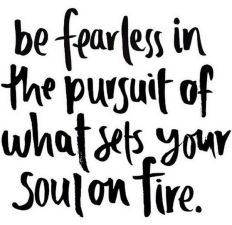
As I reflect on the past few weeks, there are two quotes I’ve come across to which I most relate. The first reads:

1d97bfb6118d0a6b04a6446b1e1560f5

I can’t seem to find its author, but I love this saying. It is both relevant and encouraging as I say goodbye to Il Sogno. After much consideration, I made the decision to resign from my current position as Director of Sales and Marketing. My choice was not in response to a better offer, nor another opportunity to live abroad (I wish!). It had nothing to do with my long hours or monthly weekend shifts, and was especially unrelated to my teammates. It did, however, have everything to do with following my heart.

Leaving a job without a definitive plan B is not only risky, it’s terrifying – especially when you’re entirely on your own and have some serious expenses! There exists an extraordinary comfort, however – an overwhelming peacefulness, even – when your abandonment of plan A is so powerfully driven by your dreams. It is my loves who set my soul on fire, and their wellbeing that keeps me brave.

When announcing my departure, I couldn’t help but cry as I assured our residents I adore them. I tear up recalling their reactions and my painfully sincere “You are the best part of my day.” I can only hope that I’ve made a fraction of the impact on them that they’ve had on me.. that they have no doubt that I love them, and that they’ve felt it every day.. and that if even in fleeting moments, I was able to make their days a little brighter and their hearts filled with contentment.

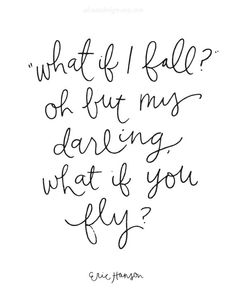
Doubt is unavoidable and fear can be commanding, but both pale in comparison to the courage of ambition. As Erin Hanson, author of my second new favorite quote, writes:

deec3b9464f79f168d1a89f16c9c29d6

In true form, I plan to fly.

Robin Williams & Dementia

A little over a year ago, in August 2014, hearts ached everywhere for Robin Williams. All the way in Italy, just days into my volunteer trip, news stations covered the story of his suicide from morning until night. It’s an incredible thing to see firsthand the impact a person can have on the world; Robin’s language was English, but his passion, excitement, warmth, and humor universal. All were shocked and saddened to learn that someone so outwardly cheerful, so loved and admired, felt so down and alone. Depression is a cripplingly powerful illness.

Just this week, there’s been a new onslaught of media attention thanks to an interview People Magazine conducted with Robin’s wife. Speaking out for the first time, Susan confirmed that while her husband did suffer from depression, his post-mortem diagnosis indicated that he had Diffuse Lewy Body Dementia, as well, an illness responsible for the alarming symptoms he was quietly experiencing. I, like the rest of the world, am surprised by this diagnosis… but not at all by his actions.

The disease is named after Lewy bodies, or abnormal protein deposits on the brain. It affects not only a person’s memory, but also their mood, thoughts, behavior, and ability to move. It is the third most common cause of dementia and its symptoms, which cannot be cured, worsen over time. According to Susan, in the year leading up to his death, Robin “struggled with unexplained mental symptoms including anxiety and delusions. The disease also manifested itself physically, burdening him with muscle rigidity and impaired movement. It wasn’t until he died and his body was autopsied, however, that doctors were able to pinpoint the cause of his symptoms.”

How f’ing horrifying. Can you imagine being diagnosed first with Parkinson’s, then experiencing symptoms that literally drive you crazy?

“This personal change phenomenon is, in my humble opinion, the most powerful and devastating symptom of dementia I have thus far experienced. There is little written about it, other than to say, “There may be personality changes.” I may become a tad “more confrontational, paranoid, confused” than I was before [onset]. Where are the studies of these phenomena? Where are the books, the papers, the programs on what to expect, how to deal with it, what pills to take to reverse it? Who is researching “[dementia] personalities syndromes?”

Dr. Taylor

The diagnosis alone of something like Parkinson’s disease, which his often accompanied by dementia, is – in my opinion – enough to push someone over the edge.

“There is a very practical explanation as to why individuals with end-stage [dementia] do not take their own lives, nor do they ponder or plan the act. They simply lack the intellectual capacity, and the physical ability, to end their lives. However, what are individuals diagnosed with the disease to think when they are staring at a video of an individual in the end stage? What are we to think as we stare down the gun barrel of death, but have yet to crawl into it?

– the insanely powerful words of Dr. Taylor

Similarly, fellow dementia sufferer Dr. Cary Henderson writes:

“I really sincerely believe that if somebody wants to go ahead and die from [dementia], if life has become that bad for them, I think anybody who can quietly assist them to die, I think, would be a [godsend].

This Dr. Kevorkian, this doctor way up North who helped people to kill themselves – I think he did the right thing. Apparently all of these people had wanted to die, and had a very, very good reason for it.

When your mind is dead or dying and there’s no recourse, and the best you can do is spend the rest of your life in pure stupidity and unknowing stupidity… I think that is one of the biggest travesties of what sometimes is called “medicine” that we have ever heard of. It seems like fairly commonly, we do read about people who die from [dementia], but we can also speculate about people with [dementia] who – they’re ready to die. I would think it’s just overwhelming them to the point where there’s no place to go, no place to hide.”

As a society, we feel and say things like, “Suicide is selfish.” We’re quick to judge and make assumptions. We “put ourselves in others’ shoes” when we truly have no clue. My heart aches more for Robin Williams now than it has since the news broke of his death. I hope above all else that he is at peace, and that his wife’s statements shed light on this disease.. that they fuel the too-dull fire that is the importance of dementia research and awareness, and that together we make strides toward finding cures.

Time Flies

I cannot believe the post entitled “Conversational in Italian, Fluent in Pavarotti” was written over a year ago. As we wrapped up one of our awesome parties at Il Sogno last night (this one featured a belly dancer :-O), I can’t help but reflect on the truly remarkable effects music has on people. I just had to repost (while listening to Pavarotti, of course)!

Since I recently left the kennel ( </3 ), I’ve decided to update my resume to be sure it’s reflective of where I’m at now. I have a “Skills” section at the bottom where I mention that I’m “Conversational in Italian,” and I’m impatiently waiting for the day that I can confidently change it to “Fluent.” I probably have a solid 10 years before I’m close, so Conversational is staying for now. I am, however, tempted to include “Fluent in Pavarotti” below my subpar Italian skills, and I have my loves and this trip to thank for that.

According to Paula Spencer Scott:

“The arts have an amazing power to reach people with dementia. When rational language begins to erode, symbolic emotional communication remains. That is what art is, symbolic emotional communication – sharing a vision of the world through gestures, words, sounds, images. Shared communication of any kind can bring people suffering from loneliness and isolation into community.”

She goes on to specify that “lyrics can stay in the brain even after language skills are lost; music can be a real source of joy.” How nuts, right?! We’ve all of course experienced this to some degree – an old favorite pops up on shuffle and we’re able to excitedly recite every word. Songs often evoke memories, too. I always make playlists for my trips so that when I’m home, I can be reminded of that vacation and how it made me feel.

If it hasn’t been apparent already, I truly value and appreciate what Dr. Taylor writes in his essays (being that he is battling Alzheimer’s himself):

“Singing something, anything, from children’s songs to hymns, from the Hallelujah Chorus from Handel’s Messiah (I can still recall the first note for tenors) to any and all Beatles songs, helps me feel that I am feeling okay and, in fact, good.”

It’s no secret that music is an incredible therapeutic tool. My only dilemma initially was that I am not, in fact, a ninety-something year old nonna; I didn’t grow up here, I understand next to nothing when I hear different dialects, and the closest thing I’m familiar with to an old Italian song is “Dominick the Donkey.” While my site doesn’t offer formal music therapy, a few patients are avid (and loud) singers. I began to decipher as much of what they were belting out as I could, then searched Google for the rest of the lyrics and to find the title. The clouds parted and God presented Luciano Pavarotti, one of the most successful operatic tenors of all time. Thankfully for me, he’s covered almost every top hit amongst my audience.

Our day to day has changed. While not a music therapist, I am a self-proclaimed Pavarotti cover artist and enthusiast. My laptop speakers blare songs with all their might, and w e g o n u t s; we f’ing scream those lyrics, thanks in part to the advice of Dr. Taylor:

It is best to sing out loud and loudly. Thinking about singing is like thinking about sex. It is much, much more satisfying if done with all of your body instead of just between your ears. It is much, much more satisfying if others can and do join in.”

What has this incorporation of music done besides wake our neighbors? It’s allowed us to let loose, have fun, and simply enjoy each other. A loud singer is a lot less aggravating to others if they themselves have joined in too. It has also, and most importantly, facilitated communication and elevated mood. There are nonnas who I actually believed to be unable to speak that have since blossomed into some of the most caring, outgoing, and affectionate patients that I have the pleasure of loving every day. One in particular hadn’t smiled or spoken once in the weeks that I’d known her; I had ignorantly assumed her to be either shy or too far cognitively impaired to converse. She is one of my most passionate (and vocal!) back-up singers today, and she does not stop hugging, kissing, or smiling.

I cannot forget my nonnos, some of whom can often be particularly cranky (am I the only person who adores cranky old men?!). One of my favorites enjoys sharing stories about his hometown (my Roma ) but becomes more forgetful and likely disinterested when in an unfavorable mood. Though not a singer himself, after our concerts he is without fail more cheerful and able to recall that which he had difficulty remembering only hours before. It is truly remarkable what music can do. Grazie Pavarotti

*note: our fav https://www.youtube.com/watch?v=UNmT7UswM7E

Rainbows & Tornadoes

Last week, I had a nightmare so vivid that it woke me from my sleep. On a normal afternoon, an eerily calm friend warned me of a fast-approaching tornado. When he brought me to the window and I saw it for myself, I knew time was of the essence: this monster storm, equipped with lightning bolts and roofless homes, was tearing through the streets. As quickly as I could, I grabbed every nonno and nonna in sight and hurried to the elevator. Once safely in the basement, I slid into the crawlspace and peaked out its tiny opening. When the twister hit our building, it was so loud I panicked IRL. How horrifying is that?

My nightmare does not go with the compassionate, encouraging, optimistic theme of this blog. It is neither comforting nor hopeful. It is, however, an indisputable metaphor for an unfortunate reality: despite its infinite rewards, caring and advocating for the elderly can burnnnn youuuu outttt.

Is this burnout inevitable, or is it felt only by the weak? I was fortunate enough to meet Dr. Charles Dodgen, author of Simple Lessons for a Better Life, this month. Dr. D has posed a similar question:

“Is the capacity for love, compassion, and caring for others finite? … Do the burdens of human service necessarily result in exhaustion of caretakers so that they either have limited careers or become emotionally debilitated?”

Respite and self-care, I’m learning, are a lot like trekking sticks: no matter what we’ve got to offer or how in shape we think we are, we all need them:

“There is no limit to the depths of these reserves or the number of people one can love or care about. However, there are certain basic conditions that I believe must exist in order to maintain the supply of compassion.”

Dr. Charles Dodgen

To care for someone you love, particularly someone older, frail, and vulnerable, is both an honor and a duty. Advocating on their behalf will be equal parts rewarding and disheartening.. hopeful and discouraging.. empowering and humbling. It is simultaneously one of the most fulfilling and draining things you’ll ever have the strength and courage to accomplish.

The ultimate loving act, however – the ultimate selfless act is to first love yourself enough to care for you:

“Think of it as an investment that will allow you to love and support the person who’s sick. When I felt my reserves were depleting, I’d remind myself to stop achieving and start receiving.”

Paula Spencer Scott

As Dr. D reiterates, “Another major factor that affects a caretaker’s ability to give positive, loving care to residents is the general condition of his own life.” We must secure our oxygen masks before attending to a child, and blow up our life vest before assisting a companion (sorry not sorry for the flight references 😉 ). The point is, if we do not take care of ourselves first, we will not be in a position to love and care for others. Get your nonna to the basement, but make sure the crawlspace is vacant.

You Don’t Live Here?

After having spent this past weekend revisiting my beloved VV, I’ve been thinking a lot about the incredible people I encountered during the months I lived there last year. There were nonnos and nonnas I cared for, mentors that became friends, and landlords that made me feel beyond welcomed. In addition, there were acquaintances I’ll never forget. One in particular was the owner of a tiny newsstand I’d pass on my morning walk to the train station. We never actually had a conversation, but every single day without fail we’d smile and wave to one another.. we’d exchange a quick, warm “Buongiorno!” that I still think about frequently. No matter the weather or how busy he was, I made sure to stop as I passed until we’d both said our hellos. It sounds so silly, but it was the perfect start to my day; without so much as knowing his name, this friendly, compassionate nonno became a source of comfort and happiness – a man I truly looked forward to seeing as I began my commute to work. Naturally, I cried my eyes out when it was time to say goodbye (slash actually introduce myself :O ).

What was it about this stranger that touched me so deeply? How was our AM ritual even initiated? Why did I crouch down to make sure he saw my wave through the awning, and why did he look for me in the first place? The answer, I’ve determined: I have no idea. Perhaps I found comfort in the fact that he so enthusiastically greeted me, a foreigner who was completely alone and who didn’t even buy his newspapers. Maybe it was his smile and the warmth it exuded. Who knows? There’s not always an explanation as to why people make us feel the way that they do. This is especially true for those who have dementia:

“A rose is still a rose, and smells as sweet, even if you don’t know what that pretty pink fragrant thing that cheers you up is called.” – Surviving Alzheimer’s

I’ve quoted that excerpt before, but I’m even more in love with it now. Scott stresses that even after names and relations are lost, your presence itself remains a source of cheer, comfort, and de-stress. Six months have passed, and to say I adore my residents at Il Sogno is an understatement. From the moment I walk in the door, before I even put down my keys, I’m kneeling beside them at breakfast. I’m greeting them one at a time, playfully eyeing what’s on their plates. I’m complimenting their bouffants (do old ladies all sleep on their faces?! WHAT IS THEIR SECRET???) and kissing their cheeks.

Despite our encounters, I would confidently say that a solid 70% of them have no idea what my name is. No matter how much we interact, I’m pretty sure they’ve got no clue why I’m there. As I was reminded of this evening, I don’t think anyone knows where I live (“You’re driving home? You don’t live here in the building?” O Dio!). What I do know, however, is that our faces light up when we see each other.. that we laugh like crazy (often at my expense).. that we confide in each other, and we embrace like we’re old friends. As eagerly as I run to them in the morning, I know in my heart that they’re waiting for me.

“People with dementia are particularly attuned to the care partner’s tone of voice, facial expression, volume, and hand gestures. Body language counts! It is as if you are speaking to someone who doesn’t speak the same language as you – he or she is looking for cues and clues from the encounter and not relying completely on your spoken words.

The person may not understand your words and may not always recognize you, but he or she still recognizes the positive intent of a smile, a handshake, or even an inviting and open posture.” – A Dignified Life

My newsstand nonno and I did not speak the same language, so we obviously didn’t rely on spoken words. We did feed off each other’s compassion. We conveyed mutual excitement and met one another with kindness. I don’t know his name, I have no clue where he lives, and I’m not sure why he was so nice to me, but I will never forget him or how he made me feel. I hope the same holds true for my loves. ❤