Most Memorable Days of 2020

With ringing in a new year comes a time of reflection and, normally, a ton of gratitude. Today hits a little different. I’m still thankful for a ton (I got married this year, after all!), but professionally, it’s been nothing short of brutal. A few days in particular stand out most; each one feels simultaneously like yesterday and forever ago. My top five, in chronological order:

  1. February 28, 2020: The day I was quarantined. I had returned from a trip to Rome four days prior when our company issued a new policy: any recent travel to Asia or Italy would warrant 14 days of self-isolation. Even though I’d been back at work all week, I was out of luck (being away from the community for so long is my nightmare). Our weekend in Italy was coincidentally that of their infamous outbreak, and truthfully the first time I’d ever really heard about/looked into COVID-19.
  2. March 11, 2020: The day we decided to ban visitors in our community. It wouldn’t have been right to make it effective immediately in case anyone planned on showing up that afternoon, but we knew time was of the essence. We stayed late that night to call every single family member and alert them of the precautions we’d be taking, effective the very next day. One of my favorite residents had dinner plans with her son that evening but wasn’t in the mood to go out (it was freezing!). I begged her to take the opportunity, explaining that I didn’t know the next time they’d be able to see each other in person. To this day, I’m so glad she went.. and grateful for the others that took my advice and snuck in one last embrace. We knew the ban wouldn’t be as short as they were predicting (two weeks, HAH!), but we could’ve never anticipated it’d last this long.
  3. March 12, 2020: The day of our COVID-19 open forum. It ended up becoming the first of weekly update meetings (though those were in much smaller groups and at a safe distance), but we hadn’t yet stopped large gatherings – little did we know, it’d be the last time we were all together. I remember typing up a coronavirus FAQ list to distribute and it was the first time most residents had ever even heard the word. They had questions, I did my best to provide answers, and we were all a combination of scared/confused/aggravated/skeptical.
  4. April 8, 2020: The day of our first positive. I’ll never forget answering that call from the hospital. A resident had gone out for seemingly unrelated symptoms, so when they called and told me “the test was positive” my immediate response was, “What test?!” As if life hadn’t changed enough in four short weeks, the rug was really pulled from under us on April 8th.
  5. April 10, 2020: The day of the FaceTime funeral. One of my residents lost her adult son suddenly (unrelated to COVID), and her poor family couldn’t even grieve appropriately. From what I recall, only eight people could attend his services, and bringing their mom in the midst of an outbreak was not a risk they were willing to take (I still don’t blame them). I helped her join them via FaceTime and it was nothing short of devastating.

Wow, my most memorable days (professionally, at least) all happened in the span of a month and a half. The rest of 2020 has been a complete blur – a terrifying, sad, helpless, rollercoaster of a blur.
Bridge the Gap Podcast

This month, I had the pleasure of (virtually) sitting down with Joshua Crisp and Lucas McCurdy, co-hosts of Bridge the Gap. The senior living podcast aims to help shape the culture of the industry by being an advocate and positive voice of influence. Hearing about their mission and values was like music to my ears, so when they asked me to join them for an episode, I was ecstatic. Full interview (which is about more than our wedding, I promise ;)) in the attached video!

Marital Advice: Resident Edition

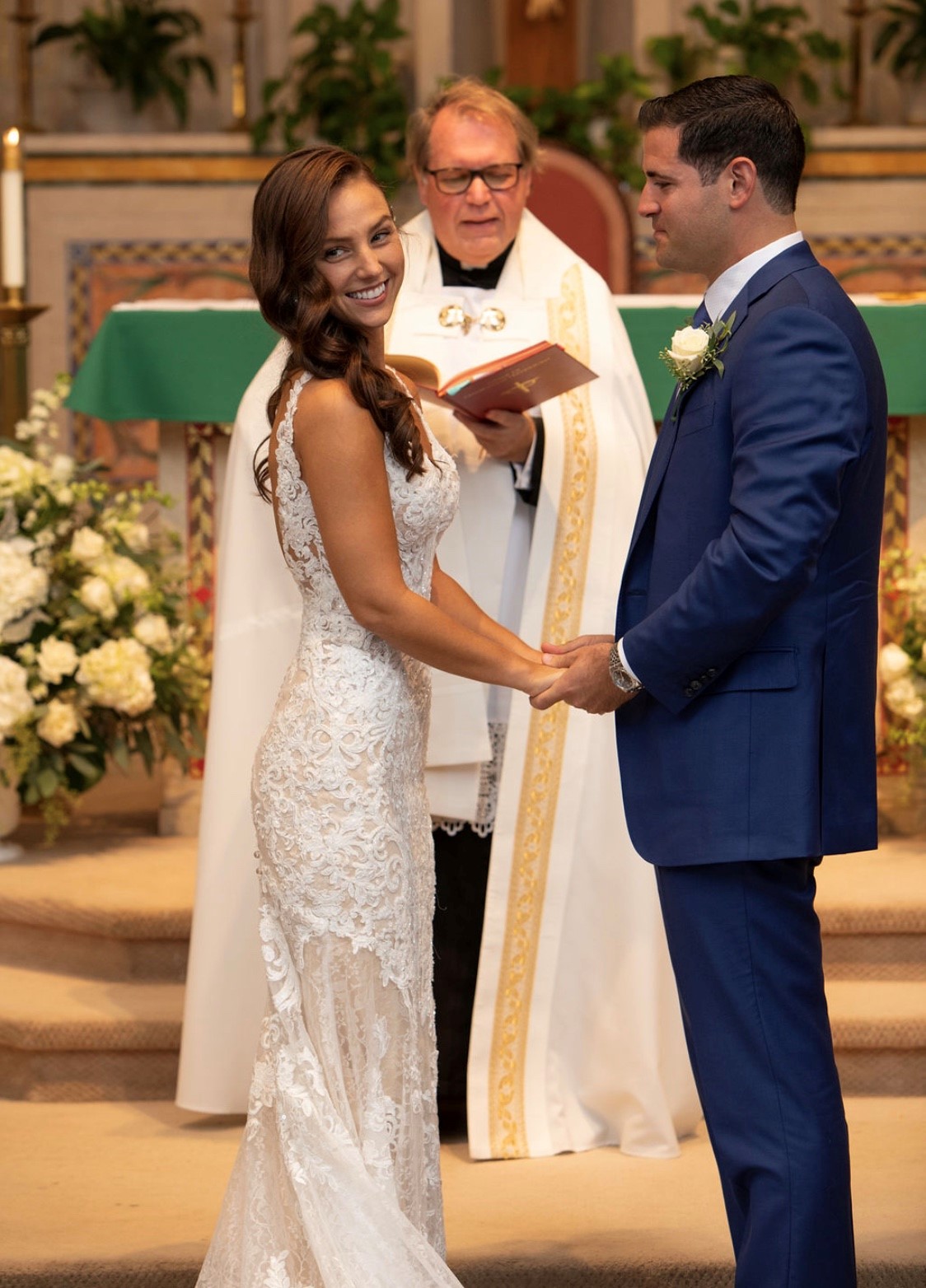
On September 20th, in front of our families and closest friends, my now husband (!!) and I were married. Being engaged as an assisted living administrator (me) & physician (him) during a global pandemic was the worst. Cancelling our dream wedding in Italy (and the ceremony at my ALF for the residents) was the worst. Pulling a small domestic wedding together last minute was the worsttt – I even half hoped my weekly swab would come back positive so we could nix it and secretly elope. 😉 But that day.. it was the best.

My residents couldn’t be there, but in true form I took no time off (sorry husband) and showing them photos the following week was the [second] best. I laminated them and disinfected in between suite visits, of course. Along the way, I solicited some marital advice that was too good not to share:

  1. First and foremost, put the ring on the correct finger at the altar (I at first thought this one was funny, until I learned I had to wear my engagement ring on my right hand down the aisle!)
  2. The classic “never go to bed angry”; make sure to hash things out before you go to sleep, even if it keeps you up late
  3. When you have children, remember that your spouse was there first 
  4. Speaking of children, wear a girdle immediately after you give birth. Oh, and lay on your stomach as much as possible, “even when you eat dinner”.
  5. Marry someone whose interests are similar to yours
  6. However, if you want to do something and your spouse doesn’t, make sure you do it anyway – even if it’s without them. Be sure to keep your own identity, as well.
  7. Be a united front to your kids, even if you disagree
  8. Never do your husband’s laundry. If you start and do it once, you’ll be doing it for the rest of your life.
  9. Don’t give up and throw in the towel when it gets hard, because it undoubtedly will
  10. It’s not always going to be 50/50; make sure to compromise

Noted. ❤

The Virus is Dead, but It’s Still Killing Us

Just when I thought the ever-evolving COVID directives were as outrageous as they could possibly be, this month’s reached a whole new level. To put it lightly, September’s road blocks made August’s essential caregiver nonsense seem reasonable. While those who already had and recovered from the virus were previously exempt from re-testing, they’re now required to be swabbed weekly, too, and the results are killing us (no pun intended).

Everything we do depends on the results of our weekly COVID tests. As I’ve shared, we were thankfully able to welcome loved ones back to the community for outdoor visits this summer. They were limited to once weekly, half hour, supervised appointments, but they were something. They’ve since been “temporarily suspended” thanks to dead, dormant coronavirus. To clarify, we’ve had a handful of nonnas who beat COVID-19 a few months ago come back positive during mandatory swabs. They had no symptoms, and according to the infectious disease docs we consulted, the virus was not active; it was dead. Latent. Not multiplying. Morto.

Our governing body, though? Not quite in agreement. Despite epidemiology and ID reports, for all intents and purposes, these were new outbreaks. My loves were even issued a second set of E-numbers (lucky them!). As for everyone else: they’re paying the price. Our temporary suspension remains in place, and that’s the tip of the iceberg. In order to resume outdoor visits, we’re required to be two weeks COVID-free; no none can test positive, regardless of history or symptoms. Dead virus counts. To begin communal dining, small group activities, and indoor appointments, we need 28 days clean. Twenty-eight more days, on top of the over 200 they’ve already spent in isolation.

How? How can this possibly be the way we’re expected to operate? How is it not glaringly obvious that this is killing people? That it’s breaking spirits? That it’s ripping hearts out? That it’s destroying hope? In a slow, lonely, sad, confusing way, it’s killing people. I’m at a loss.

Are You Essential?

Another month has passed, and it feels simultaneously like everything has changed and nothing at all. In the senior living world, we’ve received new guidelines to follow and are in the process of dissecting a complex, verbose, somewhat disheartening 41-page Executive Directive. It outlines what each stage of our phased-in approach to reopening will look like, as well as what parameters must be met in order to advance. At first glance, I was thrilled to see that indoor visits would again be permitted; as nice as the outdoor ones have been, they’re completely dependent on weather and it’s so hard for residents to hear their loved ones from 6ft apart and with all the background noise. As I read on, though, my excitement faded.

Indoor visits are to be limited to “essential caregivers”. In other words, there are very specific people who will be able to enter the community (and for very specific reasons). Each resident can have up to two adult ECs total, regardless of how big their family is. In order to be considered, one must apply and explain why they feel they are essential. Once accepted, they can visit up to twice a week for two hours per visit. Of course, they’ll have to be pre-scheduled, screened, COVID negative, and in full PPE.

So, what does it take to be considered essential? According to our governing body, an EC is someone who was “previously actively engaged with the resident or committed to providing assistance with activities of daily living”. Some examples provided by the DOH include a family member who visits twice a week to assist a resident with a shower, an individual who visits weekly to fill the resident’s pill box, and the like. Oh, you know, just the stuff they moved in with us to get help with in the first place. The things their family could no longer manage, hence them ending up in assisted living. Makes sense.

ECs can’t come just to hang, either; there must be an essential reason for the visit, which is forbidden from being social in nature. They have to be providing assistance with a task that they helped with prior to COVID, like cleaning hearing aids or shampooing the carpet. Changing sheets and cleaning out refrigerators count, too. Again, these are actual examples provided by the DOH.

You know what’s essential? Human touch. Hugging your family, including your great grandkids who are under 18 and can’t make the cut. Socializing with your friends is pretty important, too, while we’re at it. Sharing a meal together. Stepping foot outside of the same apartment you’ve been trapped in for 5½ months (without being told to turn around & go back). Having the right to choose which risks you’ll take. Living out the rest of your life with dignity and love, on your own terms. All essential. Not one on the list.

I feel more helpless now than I have this entire pandemic.

Operation Green Sheets

greensheets

One of my favorite nonnos of all time passed last week. He was hands down the most spirited, loyal, fun-loving resident I’ve had the pleasure of serving, and he adored his wife. No matter the circumstance, he’d support her blindly. They’d dance to any song and, if separated, he was beside himself. During a brief stint in the hospital (for her), he sat in the lobby from morning until night awaiting her return. Literally, he didn’t move (except to yell into my office every hour for an update).

My “boyfriend” was also extremely headstrong, and he and his beautiful wife both lived with dementia. When she had an idea in her head, she’d rile him up and they would fixate on it. Dementia is so f’ing weird – they’d forget that they ate breakfast but despite my prayers and redirection, they’d remember every detail of these delusions. I’m cracking up at the thought and at the memory of them standing in my office, him raising his voice (& sometimes his middle finger) and her egging him on.

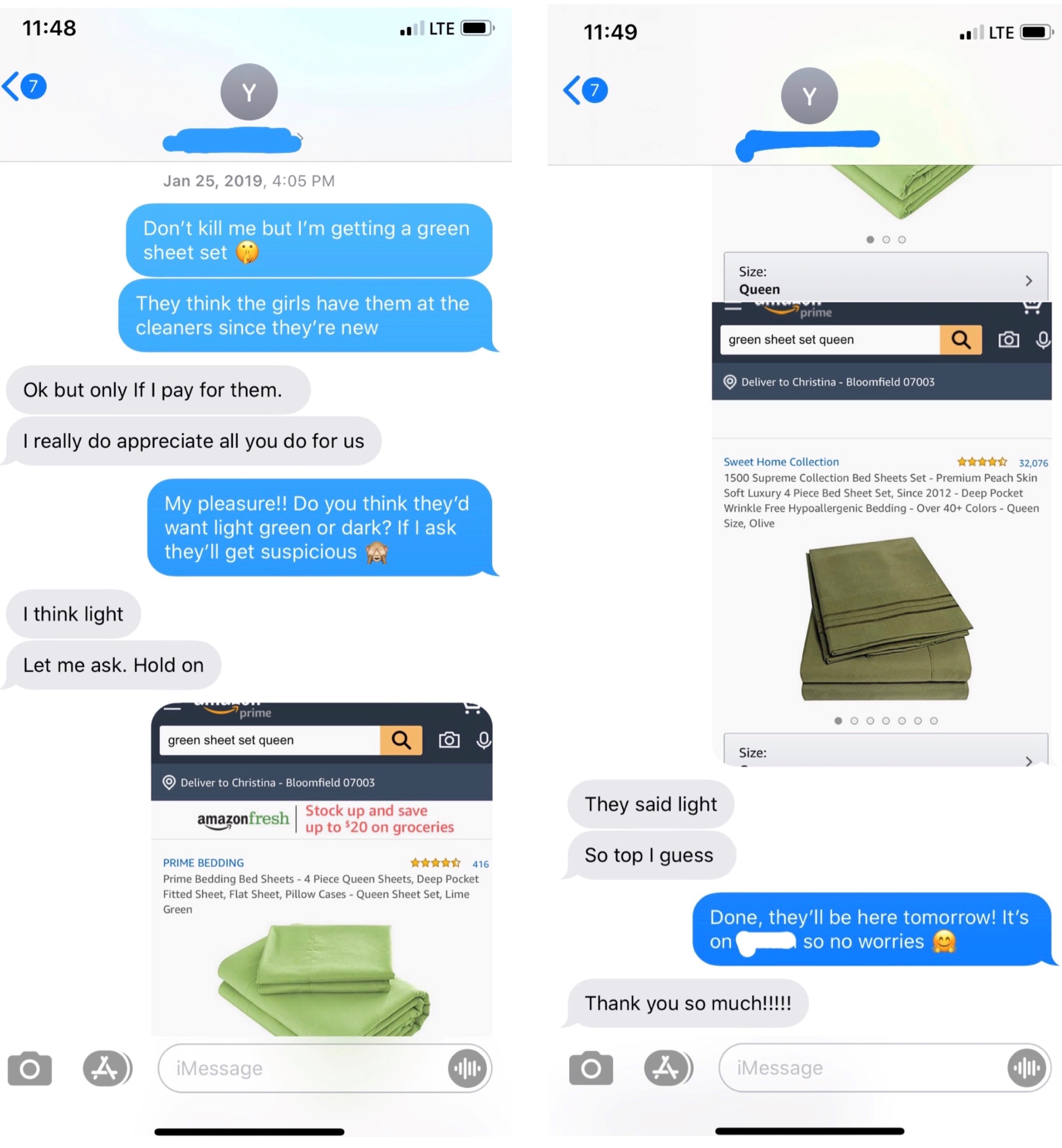
One of my favorite stories of Mr. & Mrs. M came to be fondly referred to as “Operation Green Sheets”. One morning, they came to alert me of a probable theft: their daughter-in-law had bought them a set of green sheets, which were now missing. Thankfully, I had a great relationship with their two sons, who were insanely understanding and supportive. I know it’s horrible to say (but I always say it anyway) – I’ve seen a lot of amazing, involved daughters, but those really good, patient, helpful sons.. they’re a dime a dozen (sorry, boys). These two are exceptional. A quick text confirmed there was not, in fact, a green sheets delivery. We laughed it off, reassured them that they were in the laundry, and hoped they’d be forgotten by morning.

To our disappointment, these were the most memorable made-up sheets in the history of fake bedding. A few days passed with constant calls, visits, and middle fingers. I was out of excuses and there was no appeasing them. I sent the boys two shades of green and by the grace of God, they picked the right color – they arrived via Amazon Prime the next morning and when delivered, my loves shouted in unison, “That’s them!”. Crisis averted, and this time without the help of the police (I’ll save that story for another post 😉).

I was only lucky enough to spend a brief time with Mr. M. However, I don’t need to have known him forever to be certain the world will be a duller place without him. I will be always grateful for his lessons, laughs, love, and even middle fingers. May he rest in the sweetest peace. ❤

Outdoor Visits: Expectation vs Reality

What an insanely hectic week it’s been. Last Tuesday, after 103 days, our residents were finally able to see their families again. After careful thought, preparation, and State-approved plans, we announced that visits could be scheduled once a week (per resident) for a half hour at a time. Appointments were to take place outside (at six feet apart, of course) and masks would be a must. We had it down to a science and couldn’t wait to hit the ground running. Many visits would be a surprise (!!), and we excitedly imagined how our loves would react. In true form, the reality of what transpired did not quite match our expectations:

  • Expectation: At first glance, residents will burst into tears of joy.

Reality: Masks really make it hard to recognize somebody, especially if your vision’s poor. Of the countless visits we hosted this week, one resident spotted her daughter and cried. She also knew ahead of time that she was coming.

  • Expectation: A half hour will be way too short; when the timer goes off, they’ll still be mid-conversation, having barely scratched the surface of all there is to catch up on.

Reality: Awkward silence after about seven minutes (at least for most, others made it a bit longer). When you’ve done nothing for three months, it turns out there’s not much to talk about!

  • Expectation: Families will be so careful not to potentially expose their loved one to illness – they will abide by all rules, no questions asked.

Reality: Um, did anyone actually read the guidelines? Also, how old are we? Take your eyes off visitors for one second and suddenly masks become chinstraps & butts leave their seats.

  • Expectation: I will be a silent chaperone; I’ll supervise each visit from my post but will not otherwise be involved.

Reality: I’ve done more cardio in each half hour time slot than I do with my new personal trainer in a week. When not jumping from my chair to enforce social distancing, I’m “translating” messages from soft-spoken visitors who seem to have forgotten that they must shout (especially when six feet apart).

  • Expectation: One visit per week will not be nearly enough.

Reality: One visit per week will not be nearly enough. Although they haven’t lived up to our expectations, they’re absolutely perfect, and my God, are they worthwhile.

I Wish

Well, another month has passed and unfortunately not much has changed. Our residents remain confined to their apartments, safe from COVID but increasingly depressed, deconditioned, and restless. Toward the end of May, the State mandated that NJ facilities swab all residents and employees twice; once as a baseline, then again within 3-7 days of the first test. We were given very little notice and even less support. By less, I mean none: we were required to obtain our own tests and come up with a plan for administration. Labs are drowning and errors are inevitable. The expectation was that insurance would cover tests (fingers crossed), but if someone didn’t have benefits, our facilities were expected to front the cost.

While the amounts of time and money spent aren’t irrelevant, they pale in comparison to some other implications. Take fear, for instance. Our anticipatory dread was not only for the odd sensation and subsequent pain you feel when a plastic rod is swabbed so far up your nose it scrapes your throat, but also for the outcome; we were terrified of the results.

As an employee, if you refuse to be tested, you’re off the schedule. No exceptions. Residents, on the other hand, “can decline” but there’s a catch – they’ll have to remain on total isolation, regardless of how and when we start opening up. We at least knew what we were in for – when I explained to the team what to expect, they understood. They braced themselves. Some needed to take a seat, others took a few tries before their specimen was collected. But we knew what we had to do and got it done. The residents were another story.

I’m grateful to have been present for every single swab. I informed my loves of what was coming and cheered them on, making every attempt to ease their nerves. Most were troopers (some didn’t even flinch!), but overall, it was brutal. As we went room to room, we were met with screams, cursing, and confusion. Some begged for it to end. As tears welled in their eyes, some pushed the swab away. Absolutely brutal, and that was only round one. Rumor has it there’ll be several more.

As I hosted my weekly hallway meetings on Friday, I informed residents that it’s likely we’ll be required to continue testing weekly. In true form, I remained positive and hopeful. I stressed the importance of regular swabs and commended the health department’s intentions. “This is part of their plan to let us open up”, I assured them, “sooner rather than later”. I totally f’ing lied, and honestly, no one’s buying it anymore.

I wish whoever makes these rules would spend one day in a facility. I wish they had a clue what total isolation feels like to people who – at this point – would rather die than drag out such a painful version of their end of life. I wish I had better news for the residents and families hanging on my every word.

The Balancing Act

april

I know there are tons of memes floating around about how long the month of April’s felt, but truthfully, it’s flown by for us. Having been on lockdown for 7 full weeks, we’ve settled into a new normal – it’s a heartbreaking, scary, never-ending punch to the gut normal, but normal nonetheless. We’ve got it down to a science: meals and activities in apartments, weekly update calls to families, Friday hallway meetings, and alllllll the PPE. All things considered, we’re doing okay: less than 5% of our residents have tested positive (*knocks on wood*) and only one employee’s been sick. We’re working our butts off and doing everything in our power to keep corona out.

Behind closed doors (as in, the doors of my Civic where I sob on the ride home), it’s been a rollercoaster. Managing a senior living community during this pandemic requires an emotional balancing act:

  • Fear vs. Courage: Fear isn’t exactly motivating and leading with it does not empower others. It also disrupts our ability to think rationally. As terrified as we are every single day, from the moment we step foot in the community, we put up a brave front. We comfort residents (& each other!) and foster hope. Business is carried on as usual – with dignity and love – regardless of exposure.
  • Failure vs. Success: We’ve had three positive residents. In comparison to nearby facilities who’ve reported over 100, we’re killing it (no pun intended). But the truth is, even one is too many – one is enough to make you feel like you’re a total failure. It’s nothing short of devastating and is impossible to not take personally.
  • Denial vs. Acceptance: When we got the call about our first case, the local health department assured me it was never a matter of IF – it was WHEN. In my heart, I know that’s true; COVID is spreading among our elderly population like wildfire. That doesn’t make it any easier of a pill to swallow. Every day, I ask myself how it could’ve happened – we have no sick team members! We screen employees before they walk through the door! Residents haven’t left their apartments in over a month. HOW?!
  • Physical Safety vs. Emotional Wellbeing: God, this one’s tough. I truly believe we’ve kept ~95% of our residents COVID-free because of the extreme precautions we’ve taken. We were one of the first to lock down and have been sporting our N95s since March (long before we were advised to). I know we’re doing what’s necessary to keep my loves physically healthy, but what about emotionally? I’m notorious for weak moments and ridiculous ideas: this week, I’m seriously considering roping off our front porch and sneaking them out a side door so they can feel the sun and get a whiff of spring. They need it so badly.

We may not be able to get back to our old normal anytime soon, but I’m certainly over this one. Here’s to hoping May brings good health, joyful reunions, and some emotional stability.

Silver Lining

img_6629

I am so sick of Coronavirus. Not only do we eat, sleep, and breathe it at work, it’s also all over social media. There’s no escaping its emotional, anxiety-inducing wrath. Tonight, however, I’m focusing on the positives – the silver lining. Despite the restrictive, isolating precautions we’ve taken to keep our residents safe, in many ways, we’re all thriving (*knock on wood*): morale is up, falls are down, and, thank God, we remain in our COVID-free bubble. Below are my top five positive takeaways so far:

  1. Our residents are not afraid. In fact, some think we’re being “soft”. Feedback as to why seems to vary: on one hand, many of them have experienced much worse. While this war is invisible, they physically fought in theirs. On the other, they’re over it (and by it, I mean life). They’ve chased dreams and accomplished goals. All of them are tired, most are ready.
  2. They’re making the best of it. I’m continuously amazed at how well our residents are adapting, regardless of the changes we spring on them. New developments are reported daily and, as a result, stricter precautions are implemented. Though essentially quarantined to their apartments, our nonnos and nonnas are finding creative ways to have fun: they’re bonding with neighbors from their doorways, belting out oldies, and learning to FaceTime with family. Like giddy college kids with a curfew, they’re even sneaking around (which we as RAs enforcing social distancing don’t appreciate).
  3. I’m learning a ton. Having worked for a company that was pennies from bankruptcy, I’m used to getting by with limited resources. What I’ve never had to do, though, is hair. When one of my favorite nonnas insisted our beautician was “essential”, I couldn’t contend; when you look good, you feel good, and we’re committed to keeping spirits high. All I can say is thank God for YouTube and Aqua Net.
  4. We’re connecting more deeply. As much as I make it a point to spend time with my loves when things are “normal”, nothing holds a candle to the bonding we’ve done this month. Research suggests that traumatic experiences may actually have positive social consequences, acting as a sort of social glue that fosters cohesion within groups. We totally support that hypothesis. ❤
  5. Similarly, the love and support are overwhelming. From our residents and their families to our corporate team and local officials, I feel thankful beyond words. Our Police Chief checks in almost daily, the mayor biweekly. We’ve received countless donations and infinite praise. To say we’re committed to fighting this virus together would be an understatement.

To be clear – despite the above, I’m still f’ing sick of this. Looking forward to recounting all the silver linings and celebrating our return to normalcy very soon.