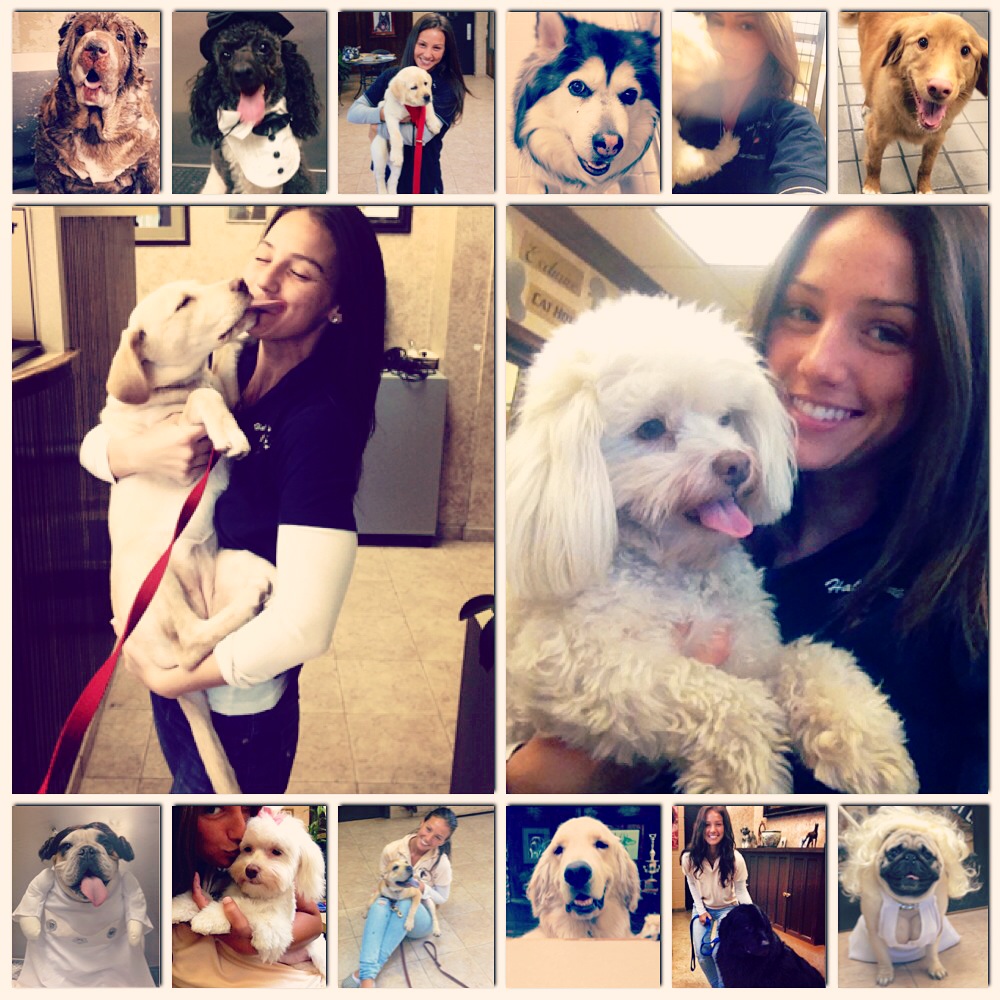
Can I Still be the “Kennel Girl” ?! Please

HW for life <3

      I know I nonchalantly mention in my “About Me” that I quit my job to come here like it was an easy, almost impulsive decision, but I totally played it down to sound like a baller. It was honestly one of the hardest things I’ve ever done and I cried like a baby. Just this weekend, I woke myself up in the middle of the night because I was dreaming of the kennel and crying so hard that I actually began sobbing IRL. Poor me, leaving my job where I’d get peed on regularly to move to Italy, right?!

      There’s so much more to it than that, though. I worked at Hal Wheeler’s for seven years; I grew there. Within that time, I graduated college, went out (and broke up) with my first real boyfriend, attended grad school, watched my parents separate and divorce, moved three times, struggled with figuring out what I wanted to do with my life…I became more of who I am today, and much of my identity was shaped around and influenced by my years there. Hal’s wasn’t just my job, but part of who I was – I snuck my phone number to worried customers and chatted with them late-night so that they’d feel better about leaving their pups (sorry Mike! My boss hated this!!), I took pictures and videos to assure that they were safe, and I kissed and cuddled with them as if they were my Maxi ❤ so that everyone felt more at ease. I was the “kennel girl,” and I cared so deeply about those dogs and their parents.

      Though it’s more than a quarter of my life, seven years is nothing compared to the time my patients have spent investing in and growing from their roles, professional and otherwise. I can’t imagine how much more of a baby I’d be had I hit the ten-year mark, let alone something like forty. I honestly feel sad when I think about my replacement and how now if I leave Max to go away she’ll be sending me pictures and talking me down from the ledge that is my irrational nervousness. I cannot begin to fathom, then, the emotions that must be sparked in the face of role confusion (and often reversal) after so many years of perfecting one’s identity.

“Everyone needs a philosophy of life. Mental health is based on the tension between what you are and what you think you should become. You should be striving for worthy goals. Emotional problems arise from being purposeless.” – Viktor Frankl

      Frankl’s right, and there is no expiration date on what he said. Imagine being treated as a child by your kids and supervised like an entry-level intern in your own home. Picture having your words spoken for you and a constant presence over your shoulder, for reasons foreign and unfathomable to you. Imagine!! I’m sick at the thought, and I’m only 26; the nonnas and nonnos probably laugh with each other at my so-called independence and unwavering sense of self (lovingly, of course).

      Dr. Taylor, a father and former professor, stresses in his essays:

“Actually, what I need is to feel that I am still taking care of something. Something that returns love, that gives itself away without expecting anything back…”

      David Troxel reiterates:

“People with dementia still need to feel productive – arranging flowers, sorting and organizing, folding clothes, hammering nails. When my mother was in assisted living, I’d keep rolls of wrapping paper, bows, and supplies in her room. I kept buying new things for her to help me wrap – for a friend, I’d tell her. She had so much fun, picking the paper, holding the ribbon while I tied the bow…

I’d bring my mom half a dozen dress shirts and neckties, and ask for her help. She loved matching the shirts with the best neckties. It’s empowering to feel you have a say in things.”

      I see this constantly; nonnas especially love to offer input and provide assistance. After all, they’ve run the show for far longer than I’ve attempted to, and there’s much to be learned from them and their experiences. It is because of this (and so many other reasons) that I approach each patient not with the attitude that they require my help, but that ours is a mutually beneficial relationship. I admire them outwardly and without shame, seeking guidance and offering praise for even the most trivial tasks. I look up at them when we are talking, not down, and kiss their hands when we’re not. I speak properly (Lei, not tu) and show respect. Most importantly, I embrace, encourage, and solicit their guidance and their nurturance, as it has been not only their “job” to provide them but part of who they are for so, so many years.


[Awkward] Silence

      Upon being accepted to grad school, I remember immediately mapping out my schedule for the next year and a half to start prepping for what was ahead (I’m a full blown nerd, I know). There were course titles that grabbed my attention, like Psychopathology and Human Development, and naturally some that did not, like Group Counseling. Truthfully, my disdain for Group was rooted in pure ignorance; though I’d interned in the field as an undergrad, I had never actually witnessed or participated in group sessions; any assumptions I made about its effectiveness (& fun-ness =P) were without basis.

      As it often turns out, Group ended up being one of the best classes I’ve ever taken. In addition to teaching me a ton, it was actually very therapeutic (I miss my T-Group!). I pitifully confess that my most dreaded course has even proven to be one of the most valuable in my current practice with Alzheimer’s patients. Like a puppy with its tail between its legs, I admit defeat and surrender to the pro-Group team – thank you Dr. Burkholder! 😉

      One of the concepts I am most grateful to have practiced in Group is that of embracing silence. As an outgoing, chatty, 20-something girl (not ready to admit I’m almost 30 and a “woman” :-O stick with “girl” for me please), this was painfully uncomfortable. I don’t know if it’s an American thing, but I feel as though we typically find silence to be awkward. Whether face-to-face, talking on the phone, or exchanging texts, a longer-than-usual pause drives us crazy; even if we’ve spoken the last word, we’re compelled to fill that cringe-worthy gap.

      Sometimes, however, our fillers do more harm than good; interruptions are quieting, but silence inviting. I had the pleasure of watching the king of Group Therapy himself, Dr. Irvin Yalom, in action (on YouTube, at least). I remember taking notes in class and being surprised at how nonresponsive he seemed, both verbally and nonverbally. What kind of group leader was this so-called expert?! Even when there were pauses, he embraced the silence and allowed members to speak up when ready, which they did (he’s a sneaky one!). I grew to realize the importance of making a conscious effort to be an active listener and not attempt to fill conversational voids.

      Dr. Taylor, who I’ve mentioned in previous posts and who is battling the effects of Alzheimer’s himself, has said:

“Answers to my questions which are provided by others sound and feel to me like the answerer didn’t understand my question. Most people offer answers to their own questions, not mine…Perhaps too much time is spent trying to answer and question each other, when what I really need is to feel like I am being heard. I know you don’t have all the answers. You also don’t have all the questions! Neither do I! And the unanswerable questions keep coming and coming with each new symptom of the disease.”

      It’s often common practice to repeat questions to patients who have yet to offer a response. Usually, such recurrences differ only in volume or tone; we’ll ask the exact same question again, only louder as if it wasn’t heard and with more force as patience wears thin. There seems to be a direct correlation between response time and angst, no matter the conversers!

“My family will ask me to do something, and I don’t do it. Early in the disease process, they assumed I didn’t hear them. They would tell me again. This got old after a while. They became annoyed at having to tell me the same thing over and over again. Later on, they realized there was a possibility that my twisted brain fibers actually didn’t understand their words.” – Dr. Taylor

      As the semester progressed and I myself acted as a leader, I was delighted to recognize my first Yalom moment: I had welcomed a silent pause in one group member’s testimony, which led her to elaborate and share more deeply. Had I quickly tried to fill that gap, I would have interrupted her thought and she may not have continued. Similarly, I’ve worked with patients here who have mastered the ultimate awkward silence: they’ve frozen. Their affects have turned flat, their eyes glazed over, and I swear for a minute they’ve actually stopped breathing. Before I wipe the sweat from my forehead and the color is drained from my face, though, they surprise me and respond; my patience is rewarded and the painful reluctance to intervene pays off.

      Touché Yalom, touché.

Driving in Italy

Though I’m a CartaFreccia member and swear by TrenItalia, I must admit that I’m partial to having a car in Italy. If not staying in or exploring a city, I love having the freedom to pull over wherever and take in the incredible sights seen right from the Autostrade. My friend Natalie and I are notorious for waking up in the morning, looking at our iPhone maps, and choosing a place that sounds cool to visit that day! It’s actually how we discovered Portofino, one of our favorite spots on the Italian Riviera.

Driving in Italy, however, is of course different from driving at home in the US; it’s more fun 😉


  • Luckily, one thing that remains the same is the side of the road Italians drive on
    • No need to make adjustments there! They’re on the right side, like us
  • The majority of cars (probably like 95%, with the remaining 5% reserved for tourists) are stick-shift, not automatic (o Dio)
    • If you’re renting, be sure to specify that you need automatic and not manual!
  • They’re also much tinier than our cars, and at least attempt to be more fuel efficient
    • You may notice that your car turns off when you come to a full stop at a red light or to pay a toll. This happens automatically to preserve gas, and it’ll turn back on once you let your foot off the brake
  • Speaking of tolls, they can be paid in one of three ways: Telepass (their version of our EZ-Pass), in cash, or with credit/debit cards
    • In many cases, you’ll pull up to a tollbooth and take a ticket
      • Before you exit the highway, you’ll go through another tollbooth where you’ll insert your ticket and be given the price you’re required to pay
      • Though there are illustrations to help, if you’re paying with a credit card look for “CARTE” on the signs up top to know which lane to stay in
    • You won’t see many cops on the road, but Italians are definitely [sneakily] watching your speed!
      • There are cameras all over, so be sure to stay at a reasonable speed or you’ll come home to a speeding ticket in the mail! I get one every single time I’m here… you’d think I’d have learned by now (sorry Dad!!)!
    • Their road signs are different than ours, so it can be confusing to decipher what’s a one-way, where you can and cannot park, etc. Some of the more important ones include:
      • Screen Shot 2014-09-09 at 4.35.49 AM and Screen Shot 2014-09-09 at 4.35.58 AM may look like “Do Not Enter,” but they actually signify “No Parking” and “No Stopping,” respectively
      • Screen Shot 2014-09-09 at 4.37.30 AM means “Do Not Enter,” whereas Screen Shot 2014-09-09 at 4.38.23 AM denotes “Restricted Access”
        • Natalie and I have also gotten tickets in the mail months later for driving in restricted areas in Rome, so this would have been helpful to know!
      • Screen Shot 2014-09-09 at 4.40.07 AM is “One-Way Traffic”
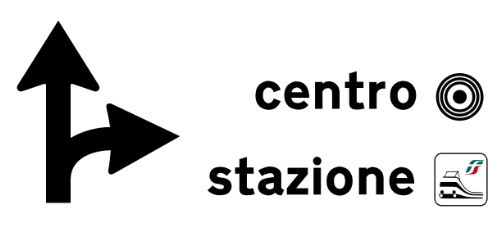
      • When headed into town/a city, you’ll see signs like these Screen Shot 2014-09-09 at 4.43.08 AM to indicate where the center (“Centro”) is (probably where you’re looking to go!) as well as the main train station (Stazione)
      • Luckily, their stop signs are the same as ours
    • As with everywhere else on Earth aside from the United States, Italy uses the metric system
      • Distances are given in meters/kilometers, as is speed/speed-limit signs (km/hr)
        • 1km/hr is a little more than half a mile per hour, so if you’re driving 100km/hr you’re going about 62miles/hr
      • Just as Jersey loves jughandles, Italians are all about traffic circles
        • They’re everywhere!
      • They also love driving fast in the left lane
        • I have a heavy foot and love being number one on the road (especially on the Parkway), but Italians take it to an entirely different level
        • If you’re driving in the left lane and are not going well above the speed limit, they will tailgate and flash you with zero hesitation
          • It is considered extremely rude and unnecessary to stay in the left if you aren’t going very fast, so your safest bet is to stay out of that lane
          • Don’t expect dirty looks or middle fingers as they pass, though – this is simply common practice and etiquette on Italian roadways (so don’t take it personally) 🙂
        • Passing is common even in residential areas and on smaller roads
          • It is acceptable to move into the lane for oncoming traffic (if all clear, of course) to pass the person in front of you if you’re traveling faster than them
          • Italians have no fear! I’ve seen this done on windy, narrow, cliff-scaling roads along the Amalfi Coast as if it was nothing
        • AutoGrills can be found all over when driving on the highway/Autostrade
          • They’re awesome rest stops that are similar to our 7-11s but better
          • If you’re hungry or need coffee, they have tons of amazing snacks in addition to a “bar” with coffee, drinks, sandwiches, etc.


Good luck, have fun, and be careful!

Learning the Language(s)

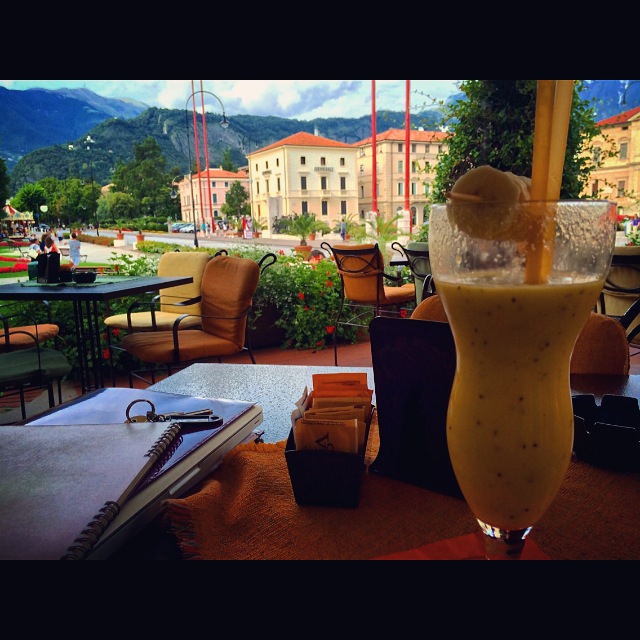
As I’m taking notes from work today, I can’t help but sneak a picture of where I’m writing:

IMG_7641

I am so in love with this town (& with Italy in general)! Though I studied abroad in Rome and have been back since, I still find myself struggling with the language; when you don’t use it for a while, you definitely start to forget! Thank God for iPhone apps and Google translate :-O

Working with my loves, I’m realizing, requires me to learn and practice two languages: that of Northern Italy and of Alzheimer’s disease. The latter is more complex and multifaceted than even the most ridiculous Italian verb conjugations.

In one of many insightful essays, Dr. Taylor writes:

“If I call you “Mom” or “Dad,” I am probably not confusing you with my mom or dad; I know they are dead. I may be thinking about the feelings and behaviors I associate with mom and dad. I miss those feelings; I need them. It’s just that I so closely associate those feelings with my mom and dad that the words I use become interchangeable when I talk about them. I don’t take the time or I can’t or won’t make the distinction between the people and the feelings.”

Similarly, Dr. Robbins goes on to stress that:

“Almost always, though, what’s said in the moment does NOT reflect how the person with dementia has always thought.”

Not only are we listening to (and, in my case, translating) what’s being said, we must also attempt to decipher its true meaning. Much like learning Italian, this requires patience and practice coupled with both empathy and understanding.

My phone can help me hold a conversation, but not to interpret unspoken messages. Aside from the always-entertaining hand gestures, most of what I’ve had to learn in Italian is verbal/written. The language of Alzheimer’s, however, is often primarily unspoken.

According to Bob DeMarco, when spending time with his mom it’s important for him to “speak the local language.”

“Eventually I realized I was drowning my mother with too many words. Sometimes, all I needed to do was smile. Or put my arm around her shoulder and my head on her head. Instead of a long explanation about what we were going to do (like go to the bathroom before lunch), I’d stick out my hand and say, ‘Let’s go.’ And she’d come along willingly, even before asking, ‘Where are we going?’ To which I’d just smile and say, ‘To have fun.’”

In my experience, it’s the nonverbal that has been most powerful. It’s the smiling, hugging, kissing (often on the mouth 😐 why do Italian nonnas and nonnos LOVE to kiss on the mouth?!?!), and just being together that have sparked incredible responses and opened seemingly glued-shut doors. It’s the respect, patience, and empathy.. the looking up instead of talking down.. the face-to-face instead of over-the-shoulder.. these are what I’ve seen to brighten days and open flood gates.

MileagePlus Program (iLOVEYOU)

After doing some mileage program research, I decided to go with the Chase United MileagePlus Explorer card a few years ago. There is an annual fee, but it’s minimal and you more than make up for it if you use the card wisely and take advantage of its benefits!


Generally, the way it works is that you build “miles” according to how much you’re spending and what you’re buying. Every dollar is equivalent to at least one mile, though shopping at certain places earns you more. For instance, Nordstrom is typically at least 4 miles to the dollar. FTD is another favorite of mine – a $100 bouquet of flowers can earn you thousands of miles! I send flowers to everyone for the most random occasions (it’s a win-win)! 😉 Magazines.com is another huge one; a magazine subscription can earn you ridiculous amounts of miles, and I’m an avid Cosmo reader so this one’s huge for me; I get the US, Italy, and UK versions delivered to my apartment.


When you actually travel, you earn not only on the ticket price but also on the distance flown. It’s great!


Once you’ve accumulated points and are ready to book, it’s important to keep in mind that “miles earned” is not equivalent to “miles you want to fly.” In other words, if you’re trying to go from NYC to Rome, you’ll unfortunately need more than ~4,300 miles (which makes sense considering you can accumulate that many from one bouquet of flowers alone!). Instead, a one-way ticket from NYC to Rome is 30,000 miles (round-trip is 60,000). Domestic flights are way less!


Using the United MileagePlus card, I’ve managed to have almost every other flight completely paid for in miles. In other words, zero dollars. When I do spend on flights, I spend hours looking for deals – I try different combinations of airports (out of Newark but back into JFK, for instance) and dates. I credit my psych background for these incredibly valuable research skills B), and I spend on average $600 for round-trip flights to Europe when I pay out of pocket.


It’s safe to say that miles are more valuable than money for me at this point in my life, and I’m not even ashamed to admit it. ❤

Budgeting

Any time I talk to someone new about my “galavanting” as my grandma puts it (she’s the one who’s so lovingly called me a gypsy my whole life, too), they’re convinced that either a) my dad pays my rent (HAHA!), b) I have a rich boyfriend in Italy (another joke.. I’m Miss “Don’t Even Say the R Word in My Presence”), or c) I’m in insane debt and spend beyond my means.


Obviously, none of these are true (& thank GOD c isn’t). Truthfully, I’m just careful. When I get paid each week (or got paid, since I’m now solely volunteering), my direct-deposit check was automatically split into three accounts:

  • Rent Checking: $300
    • This amounts to $1,200/month, which is enough to cover both my rent and utilities
    • I don’t even see this money, so I never have to worry about being tempted to spend it or about scrambling at the end of the month to come up with rent
  • Savings: $100
    • It’s probably not a lot, but for me this is huge
    • I started my automatic savings deposits small ($20) and had them gradually increase to where they are now
    • Up until embarrassingly recently, a “savings account” to me was one I drained when I wanted to buy something big or go somewhere extra far.. I definitely wasn’t saving to save (& would’ve been screwed in the event of a full-blown emergency for sure)
  • Regular Checking: the rest
    • It’s from this account that I pay my credit card and other bills (lease, insurance, etc.)

BIG checks from real estate deals are split in a similar manner, though only between savings and regular checking. The majority goes to savings and to pay a chunk of my school loans.


Automatic payments are lifesavers for me! As I’ve said, I’m constantly going in 73 different directions at once – between work and school alone I’m swamped, and if something isn’t in my iPhone calendar, it’s not happening. Automatic, recurring payments save me from having to remember certain bills (& spare me from ever being late!).

  • Car: my lease payment is automatically taken out of my checking account at the end of the month
  • Student Loans: these payments break my heart when I see them constantly withdrawn L but it has to be done
    • I didn’t defer my loans/put off payments until after graduation, so I’ve always paid as I’ve attended classes
    • I make these a devastating once a week (even now while I’m unemployed.. posso vomitare)
      • I think the minimum is like $40/month, but I end up paying about $300/month because I’m neurotic


I’m sure you could make automatic payments for credit card bills, but I don’t. As neurotic as I am about school loan payments, I’m way worse with my card! I only have one: the Chase United MileagePlus Explorer Card. I am obsessed. I use Chase for my checking/savings/rent accounts, as well, and I can’t say enough good things about them or their app. I’ve heard it’s good to keep a small balance on a credit card, but I literally would lose sleep at night – I immediately pay off any charges I make directly on my iPhone through the Chase app. I always saw my parents pay early and in full, and I guess I’ve picked it up from them!


Budgeting aside, the MileagePlus program associated with my card has allowed me to travel like the gypsy I am and then some. It changed my life! It even has its own separate post, that’s how f’ing valuable it is to me! 😉 Check that out for more info.

Travel List (2012 – Present)

IMG_8209

Below is a list of relatively recent travel destinations & lengths of stay.

At the beginning of of 2013, I thought for sure I’d have to stop going away as often as I’d become accustomed to. I rented a new apartment alone (miss my roomies!), started my Master’s, and leased a new car all in the same month – my bank account hated me. When you want something bad enough, though, you make it happen; it ended up being an incredible year travel-wise.

Though I’m not proud of it, I am notorious for being impossible to get in touch with (let alone face-to-face! e` uno scherzo!).. These past few years, I’ve worked full-time at a kennel and part-time as a realtor and tutor, in addition to being a full-time grad student and interning once a week. However, I feel like if I waited until I “have more time,” I may never do the things I want to do or see the places I’m dying to visit (some over and over, like my Italy ;)). I’d rather travel often and in small doses than not at all; I’ll take what I can get!

I don’t make a lot of money by any means, but I like to think I’m smart with what I have. There’s a separate post offering budgeting tips that have at least worked well for me!

2012:

  • January/February: Italy (1 month)
  • April: Costa Rica (4 nights)
  • June: Italy (3 nights)
  • October: Italy (3 nights)
  • November: Florida (2 nights) & St. Maarten (3 nights)
  • December: Czech Republic & Germany (2 nights)

2013:

  • March: Italy & France (4 nights)
  • June: Ireland (2 nights)
  • July: Italy (3 nights)
  • August: Chicago (1 night)
  • September: Norway (2 nights)
  • October: Italy & Switzerland (1 night!)
  • December: Italy, Austria, Switzerland, Liechtenstein (2 nights)

2014:

  • February: Italy (2 nights)
  • March: Iceland (2 nights)
  • April: North Carolina (1 night) & Italy (3 nights)
  • May: Italy (2 nights)
  • August: Italy (3 month stay) & Sicily (3 nights)
  • September: Italy (3 month stay), Slovenia (1 day), & Croatia (1 day)
  • October: Italy (3 month stay)

2015:

  • February: Austria (1 night)
  • March: Poland & Germany (2 nights), Florida (2 nights)
  • April: Italy (2 nights)
  • June: Netherlands & Belgium (2 nights), Chicago (1 night)
  • August: Italy (2 nights)
  • September: Italy (3 nights)
  • October: Chicago (1 night)
  • December: Spain & Italy (6 nights)

il primo

IMG_7049IMG_7328

Ciao! My name is Christina and I’m 26 years old. Though born and raised in Jersey, I’m currently living and volunteering in Northern Italy. I graduated with my Master’s in May, quit my job in July, and moved here to learn, help, love, and, of course, attempt to fill the bottomless pit that is my sense of wanderlust. My ultimate dream is to work in geriatrics – I am applying to doctoral programs and would love to eventually help individuals with neurological disorders like Alzheimer’s and Parkinson’s. This blog is meant to organize my experiences and research, and to share what I’m learning in relation to caregiving, neurology, and travel. 🙂