Greatest Accomplishment

As part of my job description, I’m given the opportunity to present in front of local seniors, other professionals, at hospitals, in nursing or assisted living facilities, etc. The topics vary and include things like Keeping Your Mind Strong and Normal Aging vs. Dementia. As if I hadn’t loved grad school enough, I am even more grateful for it now; those PowerPoints and mock group sessions have prepared me beyond measure. My first presentation was last week and I was in my glory.

The Memory Loss workshop was sponsored by Newark Beth Israel and held at the South Ward Senior Citizen Center in Newark. My boss and I anticipated about 10 people showing up, assuming it would be an easy practice run for me with little room for error. I in turn showed up alone and, to my surprise, was greeted by 40 nonnos and nonnas. I was ecstatic. We spent over an hour discussing memory loss prevention, reminiscing together, and learning from each other.

I want to keep my presentations interactive, so I had us play a reminiscence grab bag game toward the end. The way it works is that everyone picks a tiny piece of paper from a hat, not revealing their “memory” until all have finished and we go around the room. Memories include cues like “first kiss,” “worst job I’ve ever had,” “most embarrassing moment,” etc. I’ve used it in grad school internships and it’s always proven to be a fun, playful way to rummage through the past, to get to know each other better, and to create a sense of universality.

When asked to share her greatest accomplishment with the group, a SWSCC member said, “I learned to stop worrying so much about everything and just focus on the positive.” Ummm cosa?! As a naïve twenty-something, I naturally expected one’s response to be something like “landing my dream job” or “giving birth.” I applauded her for her achievement and expressed that this takes time, noting that, at 27, I’m still working on it. Her response (which she whispered into my ear): “Let me tell you a secret that will help speed things up: be thankful. Really appreciate life and all of your blessings. Be grateful, and you’ll no longer be worried about worrying.”

What a powerful and admirable achievement. Renowned psychologist Erik Erikson explained that we spend a big portion of our adult lives frantically searching for creative, meaningful work, dreading the idea of being “stuck.” (<- e` vero) We immerse ourselves in our responsibilities, striving to attain what’s unattainable and fill the void that is its absence. Little do we realize, though, that by focusing on what we’ve yet to acquire, we lose sight of how fortunate and capable we already are.

My insightful audience member’s wisdom can be applied in any situation and at any point in one’s life; whether an adult still striving or a senior reflecting back, it is essential that we realize and take pride in our accomplishments. When working with our nonnos and nonnas, we need to focus on what is precious and unique about them, celebrating what they can still do as opposed to what they cannot. We must nurture a positive, purposeful life. Most importantly, we are to lift spirits and applaud strengths.

My next workshop is on February 4th in Summit. To say I’m excited to hear more grab bag responses is an f’ing understatement.
Partial View: An Alzheimer’s Journal

51RVXRNBKFL

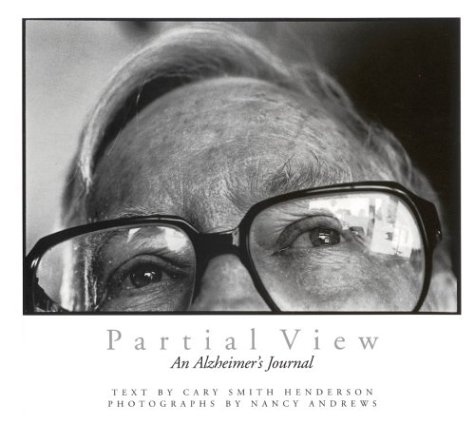
It’s been too long since I’ve written a book review post! After much anticipation, I finally received former history professor Cary Henderson’s Partial View: An Alzheimer’s Journal.

Typically, one cannot receive a definite diagnosis of Alzheimer’s until they’ve passed away and an autopsy is performed. Mr. Henderson, however, was a rare exception; he had had a biopsy for something unrelated and the results confirmed he had the disease. Though no longer able to write, he used a tape recorder to track and share his thoughts. His wife and daughter eventually transcribed his footage and wrote this book, which I was able to finish in a little over an hour.

Partial View contains mostly random, unrelated thoughts; it doesn’t follow a clear path, but is nonetheless informative and definitely provides a glimpse of what an individual with Alzheimer’s is thinking and feeling. It’s a quick, easy read, and though it won’t necessarily change your life, I think it’s worth the hour! Plus, you can find it on Amazon for as cheap as a dollar.

One of my favorite quotes (he keeps you laughing!):
“I did stop going to church. The biggest reason – well, there were two reasons, one of which is that I am not really enamored of a God who creates something like Alzheimer’s and the second is I’m afraid of tripping.”

I Want to Go Home

FullSizeRender-5

FullSizeRender-6

IMG_1332

FullSizeRender-2

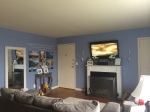
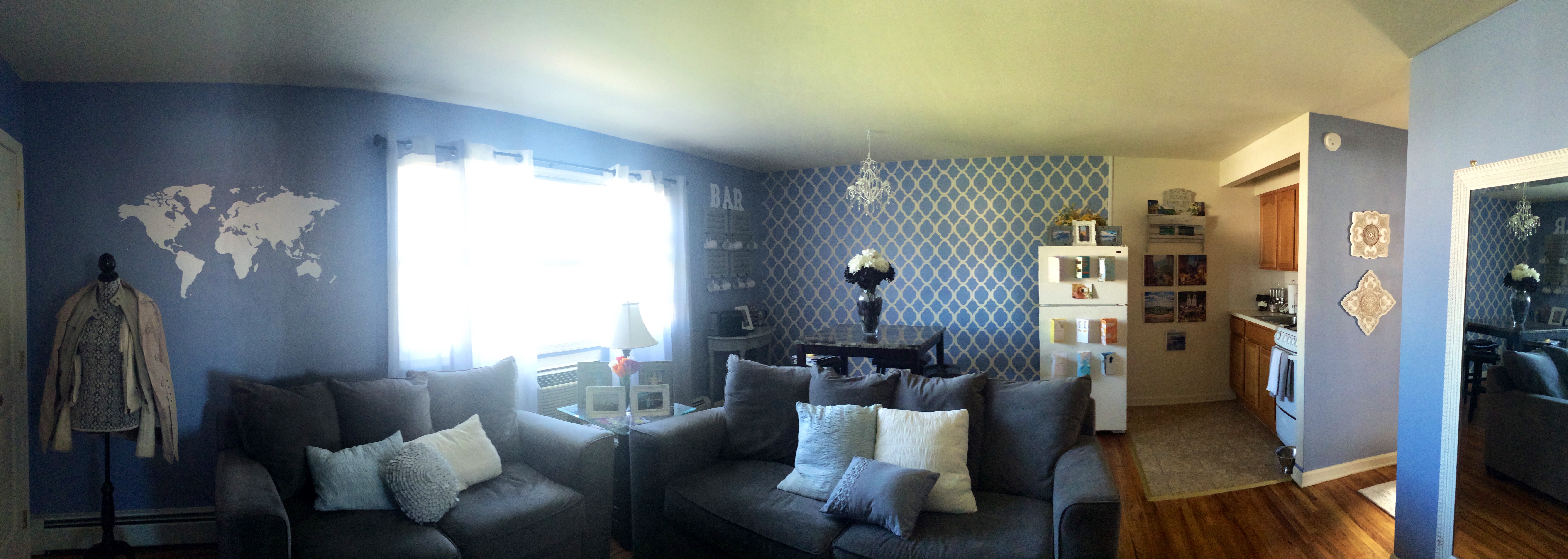
I don’t want to toot my own horn, but how cute is my apartment?! This is the first place I’ve rented entirely on my own and I’m so proud of the work I’ve put into painting, decorating, and affording it. I feel like such a grownup! After all, nothing screams “adult” or “accomplished” quite like a stenciled accent wall (confession: it’s not worth it.. do yourself a favor and go with wallpaper).

This may seem like a humble brag post, but there’s a reason I’m mentioning both my apartment and my affinity for it. It’s not just my place that I love right now, it’s my life. I’m head over heels for my job, my friends, my galavanting, and for where I’m at in general. It breaks my heart, then, to know that when my loves say they “want to go home,” this is where they mean. Nine times out of 10, they’re not referring to the house they’ve lived in for the last 30 years, and they certainly don’t mean the nursing home in which they currently reside. This “home” isn’t even necessarily a tangible place; it’s their life.

Nonnos and nonnas with dementia often have their long-term memories intact despite everything newer being a mess. “New” doesn’t have to be last week, either – it can apply to anything within the last, say, 30 years. As a result, it’s not uncommon for them to revert back to a much earlier time in their lives. Your 97-year-old nonna may truly believe she’s actually a broke twenty-something living in a one-bedroom with her dog Max and debating about whether or not to paint over her accent wall. She may look in the mirror and feel both confused and deceived, as there’s no way she could possibly be staring at her own reflection. She could look at her son, a grown man, and wonder why this creepy middle-aged guy is calling her “mom” – her baby boy isn’t even walking yet!

As caregivers, we have to be willing to let go of what was to sanely and effectively embrace what is. Trying to convince your mom that she is home will only further instigate an argument that you will never, ever win. Even if you’re fortunate enough to be able to bring your dad to the home he seems to miss, it likely won’t suffice; he’s yearning for the life he lived there, too.. for the friends that surrounded him and the times that they shared together.

As difficult as I know that it can be, try not to fight with your nonna when she insists she doesn’t live with you. Instead, ask her about her home and what she loves the most about it. Encourage your nonno to share stories of his angsty teens. Put yourself in their shoes and empathize with their confusion. If I woke up in a strange place with same-colored walls and an 8lb poodle at my feet claiming to be Max, I would be crazed, especially if imposters insisted I was home.

*note: to my future husband, if you happen to read my blog.. you’d better plan on moving to the apt pictured above because i want this to be my life forever. sorry in advance for the zebra print.*

Nebbia

nebbia

Un po’ di nebbia a Venezia ❤

At my new job, we have a “lending library” of activities caregivers can use with clients that are so fun and that remind me of those I’ve used in the past. For instance, a popular memory game we’d play in Italy involved naming a fruit, a city, and an object for (almost) every letter of the alphabet. I especially enjoyed playing with one of my favorite nonnos, who was always happy, playful, and excited to participate. We would laugh so hard! There were numerous times, however, when he’d be stumped (and understandably so! Can you name a fruit that starts with z?!) When my love was unsure of an answer, he’d respond with “nebbia” to let me know he wanted a pass. Nebbia actually translates to “fog;” his mind was cloudy. His thoughts were also foggy when asked the names of his grandchildren and, occasionally, even his own kids.

What a powerful analogy. I’ve worn contacts since I was 12 years old and I am frighteningly helpless without them: I have no idea who I’m looking at, driving is a form of Russian Roulette, and I’m actually afraid to be up and moving around because I have such a hard time seeing that navigating even familiar surroundings is dangerous. Worse yet is that I know it shows… it’s mortifying! That being said, I can’t imagine my mind being foggy on top of my vision. If I can respond “fog” to an ophthalmologist and feel ashamed, I cannot fathom admitting I’m unclear about my brothers’ names.

A great friend of mine recently shared this video with me: http://youtu.be/QEmBmokHU3Q. It demonstrates the Virtual Dementia Tour, which is a method of instilling awareness and increasing understanding of the effects of dementia. The VDT uses sensory tools to mimic the fog that is created by Alzheimer’s. I am dying to try it, especially after seeing clips like the one above. I’ll be sure to wear my strongest contacts when I finally do :-O

Do We Ever Grow Out of Being Afraid?

Soo I reluctantly had a birthday recently and am officially a late twenty-something 😐 At 27, I’m already a solid three years into a full blown quarter-life crisis. I’ve spent too much time thinking about who I am, where I’m going, and what I want. I have set goals and chased dreams. I’ve taken chances, saved all my money, spent all my money, and learned big lessons. Despite some questionable decisions and bumps in the road, I’m proud of and ecstatic for present and future endeavors. I still, however, can’t silence all of my twenty-something anxieties; though older, I’m still afraid.

As much as I like to argue otherwise, 27 fortunately isn’t that old. My fears are justified, perhaps, but they’re trivial; I worry about wrinkles and paying rent. I’m afraid of Ferris wheels and spiders and being late to work. I’m scared to go to a bar and not be asked for ID. Otherwise, I am for the most part blissfully naïve and pretentiously invincible.

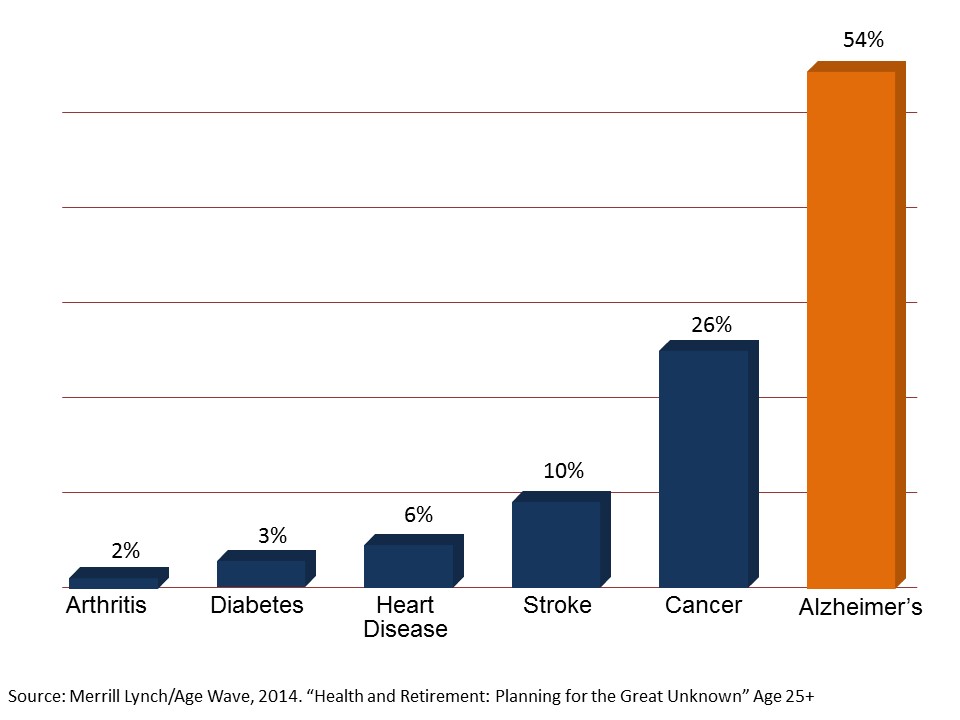
I joke around, but not all my fears are narcissistic; after all, I work and immerse myself in a field that treats the demented. I see firsthand the impact that Alzheimer’s has on both its victims and their caregivers, and it’s terrifying. It’s no surprise that the disease was recently found to be the scariest disabling condition in later life. According to those 3,000+ surveyed, it’s more frightening than cancer, heart disease, stroke, and diabetes combined.

feareddiseasechart

It’s not uncommon for those experiencing symptoms of dementia to attempt to deny and conceal them, and understandably so. Who the f would want to admit to people that they have the most feared disease out there?! Imagine the humiliating stigma that accompanies a brain disorder. If sharing a diagnosis resulted in being treated like an incompetent child, I’d keep quiet too. Similarly, those caring for a loved one displaying signs are often quick to conceal as well.. if I can’t bring myself to face or accept that my mom is slipping, how am I supposed to speak of her condition aloud?

What we don’t realize, however, is the damage this denial does. Alzheimer’s is progressive and as of now it can’t be cured, but at least its symptoms can be kept at bay or its progression slowed. Early diagnosis allows for planning and for treatment, both of which nonnos and nonnas should be involved in themselves. With this disease, time is undoubtedly of the essence and unfortunately not on your side.

To add some perspective, those experiencing Alzheimer’s symptoms who are worried about stigma remain undiagnosed for 3½ years. That’s 42 months! 42 months that could have been spent delaying advancement, deferring effects, and planning for the future. Especially frightening is the fact that when we as caregivers are concerned of stigma, the delay is even more severe: a nonno remains undiagnosed for an average of 6 years.. 72 f’ing months.

These are serious and unnecessary setbacks. I understand this disease is scary; I witness it every single day. It can be not only confusing, but absolutely heartbreaking and discouraging. It requires the biggest adjustment you’ll likely ever have to make in your lifetime. I beg you, though, be honest. Be open about what you’re seeing or experiencing. Be accepting and empathetic, not shameful. Show compassion and truly mean it. The disease itself is daunting enough – seeking support shouldn’t be.

Soo This is Awkward…

ss-110917-Ruth-Orkin-American-Girl-in-Italy.grid-6x2

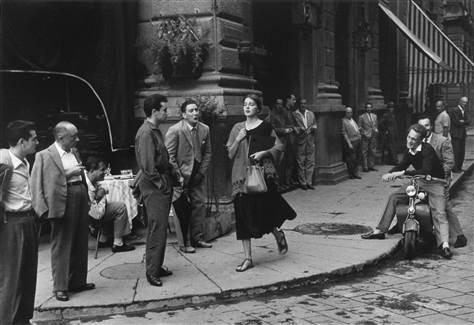
Though the iconic “American Girl in Italy” was shot over 60 years ago, its portrayal of Italian men is still alarmingly accurate. After a little research, I was ecstatic to read that it wasn’t at all staged; 29 year old Ruth Orkin couldn’t have captured a better photo if she tried! She had simply been “horsing around” with friend and fellow twenty-something female traveler Ninalee Craig. I feel like the three of us could have been best friends <3. The young studs in that photo are now likely well into their eighties, and while their health may have deteriorated, their feisty, flirtatious spirits have not.

While most nonnos on both my trips have been beyond respectful, some have been frisky and borderline inappropriate. Others have leaped over that border and proudly settled on the other side. Though I’ve gotten a kick out of a lot of them and been playful back with some, I’m not quick to be flattered; it’s not me, it’s them. 😐

“Many people with dementia still have sexual urges – and want to act on them. But with poor impulse control and self-censorship, and lacking the ability to read a social situation as they once did, these feelings can lead someone to behave in ways considered socially wrong.

Advances can range from suggestive comments to propositioning, and from flirtatious touches to groping.” Paula Spencer Scott

I’m neutral. I’m the young (is 27 still “young”?) American volunteer who they’ll likely never see again. No matter how inappropriate or unwarranted, their advances won’t hurt my feelings; I can address them properly and we’ll all move on. This is much easier said than done for a family member, friend, or caregiver, and understandably so!

“Know that for an adult child, this can be one of the more distressing problems to deal with – especially when you’re the target of the unwanted advances. The mix of shock, distaste, guilt, and confusion you may feel is absolutely normal. It’s the ultimate muddling of your social roles.” Paula Spencer Scott

It’s essential to keep in mind that the nonno or nonna (the ladies are guilty of it too!) isn’t thinking incest or expressing deep-rooted feelings; they truly believe you’re someone else. It has nothing to do with how you are or aren’t acting toward them, either – though I’m playful and outgoing, I certainly don’t solicit sexual advances from 90 year old men.

Since they’re sincerely confused and mistaken, try not to shame or embarrass them. When greeting your loved one, perhaps you can subtly specify what your relationship is. A translated personal example: “Good morning, Mr. Casoni! Your favorite American caregiver is here!” 😉 (AKA the only American caregiver, ma non fa niente) You can gently (but firmly) set a boundary, or even distract them by introducing a fresh activity or offering a snack to satisfy a different type of physical craving. I know I’d accept Nutella in place of making out. 😛

Approaching Relationships

It’s been way too long since I’ve posted here! I’ve been debating about whether or not to keep going, as I’m back home and unfortunately no longer with my loves. However, there’s so much more that was learned that I didn’t have time to share, so I decided to keep it up! That and I’m hoping to get a job in the field here, so I will ideally have plenty more to write about in the near future 😉

When I first started working with patients back in 2012, I remember having mixed feelings regarding visitors. Some family members would come to il Rifugio every single day, others occasionally, and some I had never met at all. The same held true this past trip.

I understand that it’s difficult; the illness’s impact on relatives and caregivers can be crippling. Of course, then, the thought alone of the possibility that a loved one may be showing signs of it is terrifying. In fact, a recent survey revealed that people fear being responsible for someone with Alzheimer’s more than they fear actually having the disease themselves. :-O No wonder some have a hard time visiting!

I’ve learned from observing their interactions, though, that the relationships family members have with their ill loved ones can be some of the most beautiful and heartwarming ones to witness; I promise that it doesn’t have to be frightening. What determines where these relationships fall on the scary scale is simple: the approach.

Though we as caregivers may be painfully aware of the change in our nonna or nonno’s condition, they are not. Lucky for them, patients themselves lack this kind of insight; anosognosia is a condition that accompanies dementia and refers to reduced awareness of symptoms. Even in earlier stages, when one may recognize that something isn’t right, they aren’t entirely sure of what’s actually wrong. More important to keep in mind is the fact that they likely don’t care. Anosodiaphoria is also present with dementia, and it refers to a lack of concern about the consequences of these cloudy symptoms. As Dr. Taylor writes in the midst of his own battle with Alzheimer’s:

“Caregivers have pointed out to me a number of incidents during which I was unaware of what I was doing. Even more amazing to me, when told what I did, I didn’t seem to care! And, as a matter of act, I really don’t feel like I should care right now… It is simply amazing to be aware of what you don’t want to do, and when you do it, not to care one way or the other… I have wandered away and didn’t care, and I don’t care, although it sure upset a lot of other people. I didn’t get upset about it. I was not and am still not afraid. Others are upset and afraid for me.”

While we understand facets of our loved ones’ conditions, it’s important that we recognize that they do not and that we treat them accordingly. When your nonna asks you for the fourth time that day if you’ll be eating lunch together, try to keep your patience; don’t allow aggravation to overcome your emotions. Instead of answering frustratingly and asserting that she knows you always eat together, keep in mind that unfortunately she may not. Not anymore, at least. When your nonno insists on wearing a button down and nice slacks every day, refrain from trying to convince him it’s unnecessary; allow him to be comfortable. Compliment him. Ask for his opinion of your own outfit. Whatever you do, respect his harmless decision and thank him for passing his sense of style down to you. Above all, for your own health and sanity, try to remember that the difficulties you’re facing are part of the disease process, not part of the person. Per favore, approach your interactions accordingly.

A Dignified Life

Screen Shot 2014-10-16 at 5.37.23 PM

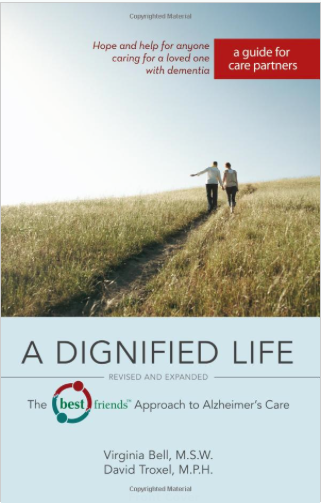
I am too in love with this book! A Dignified Life: The Best Friends Approach to Alzheimer’s Care is absolutely incredible. I must admit that I am biased, though, as its suggestions nearly mirror my own therapeutic approach to geriatric caregiving. The authors describe a refreshing, respectful, mutually beneficial caregiver/patient relationship that fosters trust and relieves anxieties. Aside from being extremely well-written, its combination of anecdotes and recommendations offer hope and strengthen optimisim.

No Prescription Necessary

Although I’ve been here for nearly two months, most of my friends still crack jokes about the “work” I’m doing (or lack thereof). They affectionately laugh at how when I cry my eyes out on my last day, the patients will have no clue who I am or how long I’ve been with them. How much of an impact can I really have on those suffering from this disease while I’m here in Italy? Even my former boss, whom I admire, adore, and miss every day, asked before I left, “Won’t they just come up with a pill for that eventually?” My efforts, though maybe not entirely useless, couldn’t possibly make any lasting impressions or meaningful advancements.

I can’t blame them. Our world today revolves around pills, no matter the method of obtainment or administration; the stigma is on counseling, not prescriptions. “After all, you don’t go to the doctor for advice, you go to the doctor for a pill. Roots, fruits, and exercise don’t cure diseases – pills do. If you are sad and don’t want to be, take a pill. If you want to be happier, take a pill, or quicker yet, snort one, or the quickest of all is to inject it right into a vein. Pills, pills, pills.” Dr. Taylor’s sadly right.

Believe me, I’m not anti-meds – I have ovarian cysts and I’d sell my soul for a painkiller if I didn’t have one on me during a rupture (TMI?!). To have a pill that would reverse or halt the effects of Alzheimer’s would be beyond incredible, but for now it simply doesn’t exist. Discovering some miracle tablet isn’t that simple, either:

“The truth is that we do not know nearly as much as we think we do about how and why the ‘normal’ brain works. We have some ideas. We have some tests. We have some medications that seem to change behavior by changing the chemistry in the brain. How or why they work is, again, a matter of speculation. We don’t fully understand the chemistry in the first place. How can we figure out what is wrong when we can’t explain what is right?” – Dr. Taylor

According to Paula Spencer Scott, “It’s been 10 years since the newest FDA drug was approved. Even current medications for memory are modest in their impact.” She points out, however, that socialization is treatment for Alzheimer’s disease:

“Boredom is the enemy. If nothing is going on, it often leads to the challenging behaviors that we see – agitation, aggression, crying, wandering.”

I can’t offer a magic pill, but I can provide companionship. I can foster intimacy, closeness, and comfort. We are social by nature, and it is essential for human beings to regularly experience emotional intimacy in order to develop and maintain good mental health. Though of course to only a certain degree, I can empathetically cross the border into Alzheimer’s land:

“When people are very old and deteriorated, no one enters their world – they’re often just sitting there. They will withdraw inward more and more, their desperate need for connection all inside. Here’s a person who has worked his or her whole life, contributing their whole life, who needs that connection again to feel a sense of worth. They’re longing for closeness.

Validation is a way of communicating with very old people who have Alzheimer’s-type dementia. It restores a feeling of dignity and self worth. It’s a way of being with them, feeling what they feel. You pick up their emotions and reflect them back. People who are validated feel safe.” –Naomi Feil

When I laugh with my friends at my own expense, I’m comforted in the fact that I see improvements every single day. Even if you think you’re not making an impact, you are. Don’t ever feel as though your presence, forgotten or not, doesn’t matter. The mood boost of having seen you can in and of itself be huge; “your loved one may not know why she feels happy (from seeing you) but she does. Your presence is cheering, comforting, and de-stressing. A rose is still a rose, and smells as sweet, even if you don’t know what that pretty pink fragrant thing that cheers you up is called.” – Paula Spencer Scott

Can I Still be the “Kennel Girl” ?! Please

HW for life <3

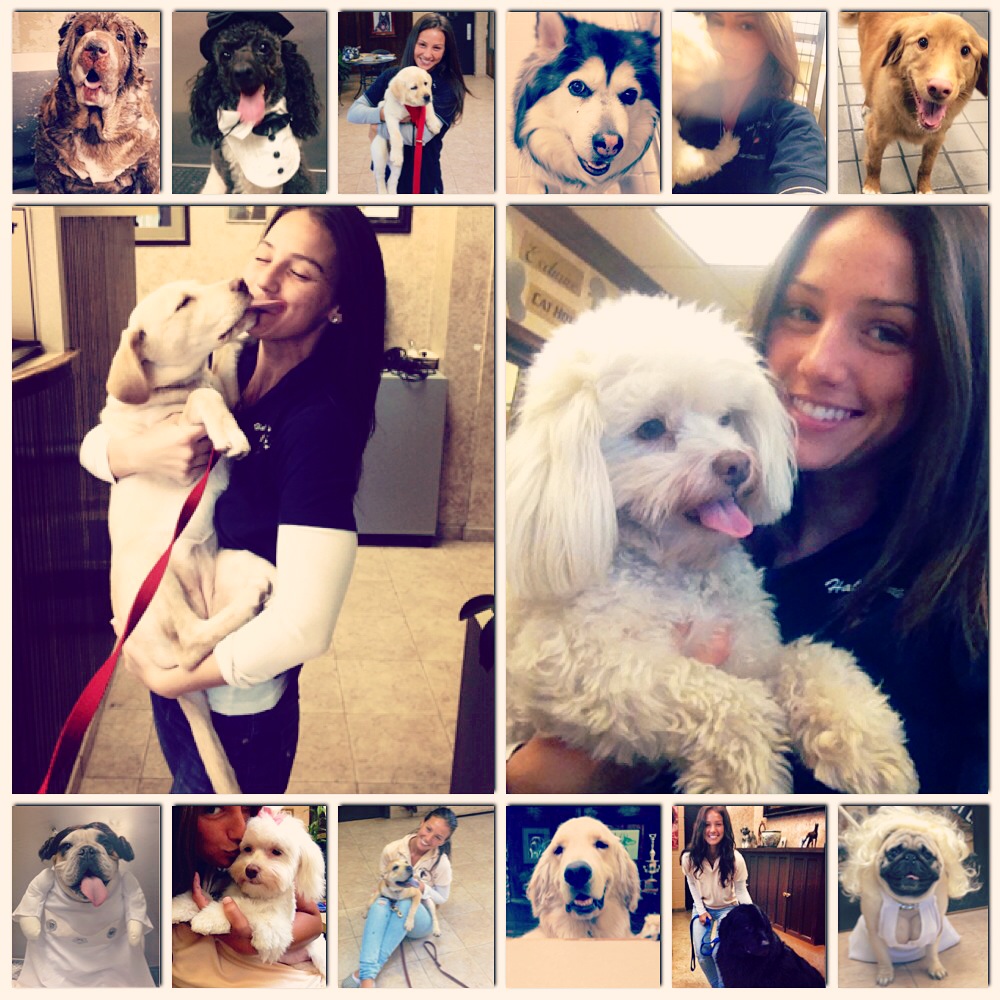
      I know I nonchalantly mention in my “About Me” that I quit my job to come here like it was an easy, almost impulsive decision, but I totally played it down to sound like a baller. It was honestly one of the hardest things I’ve ever done and I cried like a baby. Just this weekend, I woke myself up in the middle of the night because I was dreaming of the kennel and crying so hard that I actually began sobbing IRL. Poor me, leaving my job where I’d get peed on regularly to move to Italy, right?!

      There’s so much more to it than that, though. I worked at Hal Wheeler’s for seven years; I grew there. Within that time, I graduated college, went out (and broke up) with my first real boyfriend, attended grad school, watched my parents separate and divorce, moved three times, struggled with figuring out what I wanted to do with my life…I became more of who I am today, and much of my identity was shaped around and influenced by my years there. Hal’s wasn’t just my job, but part of who I was – I snuck my phone number to worried customers and chatted with them late-night so that they’d feel better about leaving their pups (sorry Mike! My boss hated this!!), I took pictures and videos to assure that they were safe, and I kissed and cuddled with them as if they were my Maxi ❤ so that everyone felt more at ease. I was the “kennel girl,” and I cared so deeply about those dogs and their parents.

      Though it’s more than a quarter of my life, seven years is nothing compared to the time my patients have spent investing in and growing from their roles, professional and otherwise. I can’t imagine how much more of a baby I’d be had I hit the ten-year mark, let alone something like forty. I honestly feel sad when I think about my replacement and how now if I leave Max to go away she’ll be sending me pictures and talking me down from the ledge that is my irrational nervousness. I cannot begin to fathom, then, the emotions that must be sparked in the face of role confusion (and often reversal) after so many years of perfecting one’s identity.

“Everyone needs a philosophy of life. Mental health is based on the tension between what you are and what you think you should become. You should be striving for worthy goals. Emotional problems arise from being purposeless.” – Viktor Frankl

      Frankl’s right, and there is no expiration date on what he said. Imagine being treated as a child by your kids and supervised like an entry-level intern in your own home. Picture having your words spoken for you and a constant presence over your shoulder, for reasons foreign and unfathomable to you. Imagine!! I’m sick at the thought, and I’m only 26; the nonnas and nonnos probably laugh with each other at my so-called independence and unwavering sense of self (lovingly, of course).

      Dr. Taylor, a father and former professor, stresses in his essays:

“Actually, what I need is to feel that I am still taking care of something. Something that returns love, that gives itself away without expecting anything back…”

      David Troxel reiterates:

“People with dementia still need to feel productive – arranging flowers, sorting and organizing, folding clothes, hammering nails. When my mother was in assisted living, I’d keep rolls of wrapping paper, bows, and supplies in her room. I kept buying new things for her to help me wrap – for a friend, I’d tell her. She had so much fun, picking the paper, holding the ribbon while I tied the bow…

I’d bring my mom half a dozen dress shirts and neckties, and ask for her help. She loved matching the shirts with the best neckties. It’s empowering to feel you have a say in things.”

      I see this constantly; nonnas especially love to offer input and provide assistance. After all, they’ve run the show for far longer than I’ve attempted to, and there’s much to be learned from them and their experiences. It is because of this (and so many other reasons) that I approach each patient not with the attitude that they require my help, but that ours is a mutually beneficial relationship. I admire them outwardly and without shame, seeking guidance and offering praise for even the most trivial tasks. I look up at them when we are talking, not down, and kiss their hands when we’re not. I speak properly (Lei, not tu) and show respect. Most importantly, I embrace, encourage, and solicit their guidance and their nurturance, as it has been not only their “job” to provide them but part of who they are for so, so many years.