Me Too

prep

Not only is today the Friday of Labor Day Weekend, it’s the last day of an insanely challenging month. I had hoped on sneaking out of work early and possibly jumping on Parkway South, but my afternoon (and, subsequently, most of my evening) was spent otherwise: for about an hour before I clocked out, I spoke at length to one of my favorite residents regarding our hemorrhoids. Yes, our hemorrhoids. Hear me out…

This particular nonna is going through a difficult transition as she moves [reluctantly] from our assisted living into long term care. She’s the new kid on the block and just as she’s getting to know the staff, they’ve still got to get to know her. She tearfully explained that she’s been in excruciating pain and that her unfamiliar caregivers just don’t get it; there’s no way they understand how much it hurts. She’s probably right – they likely have no clue, and truthfully, neither do I. I do know, however, how powerful and important empathy can be.

The concept of empathy is generally implied to mean that an environment is created in which a person feels understood and accepted, due in part to the demonstration of kindness and warmth. It involves support, sharing, and acceptance, in turn helping others to feel understood and not alone. It fosters universality, or the idea that one’s problems are not unacceptable or entirely unique to them. Empathy squashes labels and depresses stigmas.

Stigmatization of things like dementia (and obvi hemorrhoids) can foster judgment. Even worse, it can impact attitude and, as a result, care. My now great friend and I still laugh about our early days together at my first assisted living job. We had a particularly worrisome nonna who would constantly fret over things like her bowel movements and the corns on her feet. To comfort her, I’d share my own experiences and assure her we were in this together and that we’d both feel better soon. Barely knowing one another at that point, Kaitlyn turned to me and said, “Do you even know what corns are? Do you actually have them?!” I admittedly did not, but pretending I did led to instant relief for our frequent visitor.

Interpersonal relationships are important because our own self-concept is defined by others and what info we get about ourselves from those connections. Simply put, the way we view ourselves is based in part on how we believe other people perceive us. Having a sore on your rectum is not only painful, it’s embarrassing! My nonna wasn’t seeking physical assistance from me tonight, but she did need some emotional validation and support. She was eager to know she was not alone and that her pain was understood.

Put yourself in your loved one’s shoes and treat them accordingly. Disregard the stigmas and lose the labels. Tell a *therapeutic fib* or two if fitting, even if you feel embarrassed. Dementia, like my AL, is a judgment free zone; all conditions (both real and imagined) accepted.

Choices

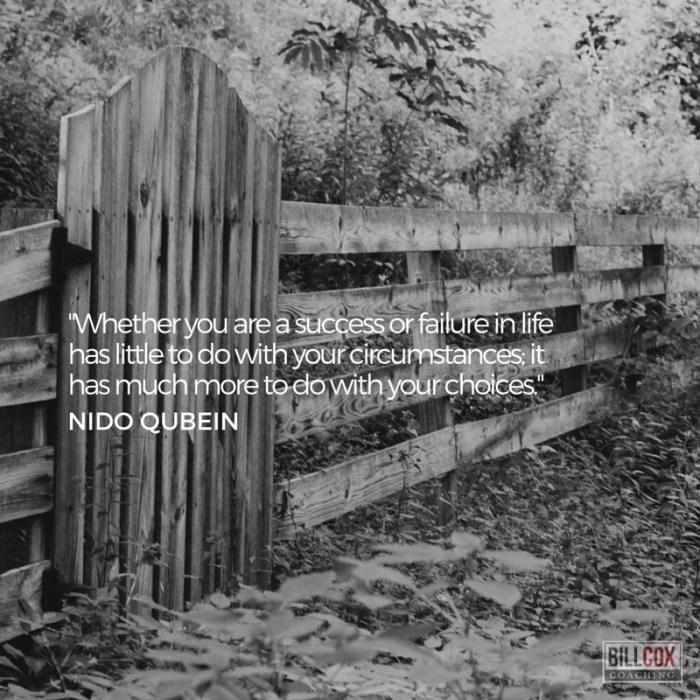
“Where you are a success or failure in life has little to do with your circumstances; it has much more to do with your choices.”

– Nico Qubein

I recently came across the above quote in a book by one of my favorite authors, John C. Maxwell. The chapter is on growth and change, and though the reference is pretty straightforward, it resonated with me on a deeper level. As I continue to learn and grow myself, I’m astounded by how much power is held in the choices we make. I’m even more surprised by the extent to which we carry their consequences with us over time.

At the risk of sounding like a broken record, it’s worth reiterating that my loves teach me an insane amount every single day. Some lessons are intentional and others inferred. Some exciting, others sad. When it comes to our choices, I’m realizing that it’s not only the obvious ones that stay with us; things like a healthy diet and regular exercise are important and can certainly shape our future, but the others – the emotional, social, psychological decisions – are just as significant.

Nico’s remark is incredibly wise. I recently had to sit down with one of my neediest residents. Despite tireless efforts to make her happy, she is constantly cranky and drafts lists of complaints. In my eight months at our community, I’ve seen her smile once (and it was at Rosie). It’s easy to assume when interacting with people like this particular nonna that they’re just miserable; they’re unhappy and there’s nothing that can be done about it. I’m realizing that though this assertion is partially true and that I can’t control her feelings, she has the ability to change them. I explained to her that while her living arrangements are less than ideal (no one wants to move to assisted living – I don’t take it personal), she has the choice when she wakes up every morning to make the best out of her day and her current situation or to wallow in self pity.

It’s not always easy on the other side of the curtain, either. We had a mandatory team meeting a month or so ago in the midst of what is best described as a corporate systems nightmare. Much of the stress and responsibility was falling on us as leaders, but the outcomes were beyond our control. It was killing our morale and draining our spirits. At our SOS lunch, we made an important, game changing pact: we’re in this for the long haul (and for our residents), and since we refuse to throw in the towel, we’ve got to adjust our mindsets. We can’t control the chaos, but how it affects us is in our own hands. What a shift there has been since.

Choices, when made consistently, become habits. Positive, healthy habits breed success. According to her son, the nonna referenced above has been unhappy her entire life, and that’s been her decision. It’s difficult to break bad habits at 90, but I’m thankfully finding it easier than expected at 30. Start right now. If your circumstances are unwavering, make the conscious decision to choose positivity. Oh, and if you insist on making lists, please write down what you’re thankful for.

So Embarrassing

logans.jpg

I’m not the type of girl who’s easily embarrassed. Earlier this month, while exploring Ireland with my best friend, there was a makeup incident that resulted in a stained shirt and impromptu shopping trip. I offered to trade; her white crop top was super cute and, in my opinion, the bronzer was barely noticeable. She was mortified. Weeks later, we’re still laughing about our Logan’s detour and her refusal to be out in public with that shirt, even if I was the one wearing it and not her. As silly as it sounds, it got me thinking.

The lessons my loves teach me are uncountable. Some are intentional and others by example. Dementia is known to lower inhibitions, leaving those with the disease more carefree. Dr. David Hilfiker, who is living with mild cognitive impairment, confirms:

“With this disease, much of my fear of humiliating myself has shriveled. When I do something outrageous, I apologize. Most people understand that I’m doing the best I can and that these kinds of things are just going to happen in Alzheimer’s. I’m still embarrassed, I suppose, but I no longer feel humiliated; this illness has given me the great gift of acceptance.”

Similarly, Cary Henderson writes:

“Somehow I learned to cope with it. First of all, you know you’re going to screw up a good many times, so just don’t let it bother you. There’ll be another time to screw up, and there might be a few times when things go right.”

Unfortunately, this attitude doesn’t always translate to caregivers. A diagnosis alone can be enough to spark embarrassment. In the 2012 World Alzheimer’s Report, researchers noted that one in four families hid their diagnosis from others, much unlike those with loved ones fighting cancer. Symptoms, I’ve found, are even more shameful; it’s incredible how many articles there are with tips on how to avoid embarrassing situations (i.e., “entertain friends at home”) and diffuse them. One caregiver suggested passing out cards that read, “My loved one has Alzheimer’s – Please excuse their behavior.”

Humiliation is exhausting. Yesterday afternoon, I had a long talk with a nonno whose wife has dementia. Despite both living in my community, he insists on helping, and it is evident he’s burning out. I was both saddened and confused to hear him say that he can’t bear to see her pick out mismatched outfits or order food she would have otherwise scoffed at. Why? Perhaps her decisions now are not those she would have made when she was well, but why do they embarrass him? His wife is happy.. She is safe, well cared for, and content. Her choices may not align with his, but they’re her own and she should make them. As Dr. Taylor (also living with the disease) confirms, it’s even good for her:

“I appreciate and sometimes immerse myself in the process rather than only or mostly on the outcome. I like doing things. I like and appreciate the doing. Doing is how I know I am alive, and how I appreciate being alive.

As caregivers, it’s essential to accept that most elements of this disease beyond our control. Stepping into our loved one’s world means not only going with the flow, but also embracing change and ditching shame. Embarrassment is useless at any age and in any country (including Ireland).

Our 1.5K

Earlier this month, I had the pleasure of joining my fellow Mount alumnae in a fundraiser for a classmate we lost. It was my first 5K, but to say I “ran” it would be a gross exaggeration: the ’05 ladies and I participated. We strolled through the streets of Essex Fells like we had all the time in the world; after starting late, we did one of three laps and celebrated like we’d actually accomplished something other than a makeshift reunion.

Shortly after my 1.5K, I attended a much-anticipated seminar with the founder of Dementia Village as its keynote speaker. As expected, Eloy van Hal completely blew me away. When describing the community’s unique approach to care, he stressed the importance of individuality and learning as much as possible about each resident. There is, of course, no one-size-fits-all when it comes to this disease or its management.

Eloy affectionately picked on a woman in the audience who, based on appearance alone, was extremely different from him. He made assumptions about her taste in music and pastimes, both of which she confirmed to be accurate. He then described his own preferences. Being a traditional Dutch man, they were obviously nothing like hers. What would happen, then, if the two of them were to be placed in the same nursing home? If he had to listen to pop music on repeat, or do chair yoga between meals? Most likely, he noted, he’d end up a bit restless. Agitated, even.

Eloy’s analogies really stuck with me. His focus was on person-centered care, an approach that has received worldwide recognition and called for a redesign of our own nation’s healthcare system. According to a 2001 report by the Institute of Medicine, we in the US are fragmented and impersonal; we harp on disease and impairment rather than individuality and aptitude.

Person-centered care originates from the works of Carl Rogers and later Tom Kitwood. It emphasizes communication and relationships as opposed to only health and diagnoses. It explains that the environment has just as much of an effect on the brain as the brain has on a person’s abilities. It navigates from the outdated medical model of dementia care and stresses the social piece, instead. Most importantly, it enables encourages people to get involved in how the services they receive are both organized and delivered.

I remember learning about person-centered therapy in grad school. It was one of my favorite approaches, with core conditions that I find so powerful:

  1. Unconditional Positive Regard, or deep, genuine caring for the client as a person no matter what, and
  2. Accurate Empathic Understanding, or sensing a client’s feelings as if they were your own

PCC seems simple enough to implement, but we’ve got quite a ways to go. In the 10+ years following the IOM-necessitated shift, little progress has been made in the United States as compared to other countries. Our move-in packets feature surveys and our activity calendars improved, but we’re coasting. We boast diversity in facilities yet strive for conformity and compliance. We shoot for “home like” and comfy yet solicit input from outsiders (whose homes do we think we’re mimicking anyway?! Not my grandparents’, that’s for sure). We may be on the right track, but we’re still strolling our first lap.

Show Me the Money

It’s no secret that senior citizens can be preoccupied with money. They worry not only about what they have, but where it’s kept, who can access it, and how it’ll be distributed once they’ve passed. Those fears can heighten tenfold with dementia.

I never really got it; money is of course important, but I couldn’t relate to the fixation (…or so I thought). Recently, while volunteering in the Philippines, I caught a fraudulent charge from Sprint on my credit card. When I saw the $816, I lost it. I was on a paid-off trip with a $30k credit limit, money in the bank, and Chase promising me I wasn’t responsible for the charge, but I was beside myself. Long story short, I trolled Sprint’s Facebook page like a crazy ex girlfriend and they paid me back in full. I eventually got over it, but to say it was an eye opener would be an understatement.

My loves are billed monthly to live in our community and the rates are basically all-inclusive. They don’t need as much as a dollar on them, yet the money struggle is real. They’re constantly panicked about it in some capacity, whether they’re convinced it’s been stolen, determined to change their Will, or simply needing to know what’s left. I learned very quickly that assuring them they don’t need cash is useless, just as Chase’s words to me fell on deaf ears in January. Actually, I learned that any degree of rationalizing is impractical. Here’s what I do instead:

  • If a nonna is convinced money has been stolen, I “review the tapes.” We have cameras everywhere and I’m calling a detective. Whoever took it will be terminated and maybe even jailed, but not before that money is returned. It will never happen again. Did she need me to loan her some in the meantime? What is she up to today; did she have shopping plans? I’ve made the mistake of swearing that the cash didn’t exist in the first place, that it had not been taken. Not only was I not helpful – I became the culprit.
  • If a nonno is convinced and angry that his kids are spending his hard-earned money, I’m “going to call and give them a piece of my mind.” The audacity! It’s not theirs to spend! How many kids does he have again? Is everybody local?
  • If a nonna wants it just in case and feels better knowing that it’s there, I grab it from the safe. I “keep everyone’s money locked up in my office.” I even hold IDs! For those who need more reassurance than my words can offer, I have backup: Amazon sells double-sided play money that has been an absolute lifesaver, as has my iPhone camera for fake ID photos. What a pretty picture, by the way! I look so silly in mine.

I’ve heard countless opinions on this matter. Some say not to reassure them, not to lie. Everyone is different and no advice is one-size-fits all. The recurring theme is that I validate their feelings, and I follow up with redirection. Kudos to my CC company for doing just that as they talked me off the ledge. As for Sprint: thanks for the lesson, but I still hate your guts.

Little Mamma

As if it wasn’t already evident from previous posts (and my Instagram bio), I am a huge dog lover. I worked through undergrad and grad school at the most incredible kennel, and I grew up with Shepherds and Labs. I’ve always hoped to somehow combine my love for dogs and seniors – to do meaningful work that involves both. This weekend, I took the first step toward doing just that: I rescued a three-month-old puppy. I know, I know…I work 65+ hours a week, I’m never home, and to say I travel often would be an understatement. I promise there is a method to my madness.

It’s no secret that the effects dogs have on people of all ages are immense. Within an instant, they can make us feel happy, loved, and safe – simultaneously excited and calm. Physically, they keep us active and in turn help our hearts. Dogs reduce stress (except during the housebreaking stages perhaps) and teach us lessons. For seniors especially, they can be pivotal in decreasing loneliness and improving mood; dogs live in the here and now. They don’t worry about tomorrow, and according to Dr. Jay Granat, tomorrow can be very scary for someone who is elderly:

“Having a pet helps the senior focus on something other than physical problems and negative preoccupations about loss or aging.”

And focus on them they do. That goes for both physical impairments and cognitive ones. Individuals with dementia (particularly in earlier stages) tend to be extremely stressed, and understandably so; they recognize that something’s wrong but can’t necessarily distinguish it from what is right. They’re not only confused, but also frightened and embarrassed. Here’s where my little mamma comes in:

“I sort of think that anybody with Alzheimer’s could benefit by a friendly little dog. Somebody they can play with and talk to – it’s kinda nice to talk to a dog that you know is not going to talk back. And you can’t make a mistake that way. … My dog knows things about me before I know them myself. … The one thing I know is that the dog is with me, and when she’s with me I at least have some solace, even if I don’t know the way.”

– Cary Henderson, Partial View

Rosie, that’s your cue. Introducing the newest member of our team and family:


The impact this little girl has had on our residents in three short days is immeasurable. I’m completely blown away. I have no doubt she will continue to amaze me. She is, after all, a dog ❤ one of the only beings that will ever love us without condition or complication. Mamma, we are so thankful for you already.

Thoughts on Aging by a Girl Who Works With the Aged

086676D2-6D2D-4924-BD65-03A91BABA3CE

It may be the psych major in me, but I’ve always found it interesting to think about the things that stick with you from childhood. I have a distinct memory of a conversation with my mom about birthdays: she was indifferent about them then, but she’d admittedly had a really hard time with turning 30. Parting with her 20s made her sad – depressed, even. An impressionable kid, I held on to that. I’ve dreaded the big 3-0 to the extent that I booked a trip alone (at least initially) as to not have to acknowledge it. The only party on the agenda was a pity party, and there’s obviously only room for one on that guest list.

Ma perché?! The more I think about it, my apprehension is not only silly but irrational. I’ve dreaded 30 not because of its consequences (which, by the way, are nonexistent – you don’t even need a new license) but because that’s what I inadvertently learned you’re supposed to do. So much so, in fact, that I f’ing ran from it.

Working in the senior care field these past few years has been nothing short of incredible. It’s insanely difficult at times, heart-wrenchingly sad at others, but always, always fulfilling. If there’s one thing my loves have taught me, it’s to embrace every single day. Our body is like a vessel; it simply transports us through life. Yes, it grows old – there’s no denying that (we put it through a lot!) but that’s the only thing that really changes. The “growing up” we talk about? The part when we’re supposed to suddenly feel like responsible, accomplished, brave, composed adults? That’s the myth. Nobel Prize winning novelist Doris Lessing said, “The great secret that old people share is that you really haven’t changed in 70 or 80 years. Your body changes, but you don’t change at all.” The famous “age is just a number” adage is corny but so, so true.

My loves have taught me (both outright and indirectly) that doing anything short of all you’ve ever dreamt is ludicrous. To wait for better timing or less responsibilities is dumb. To take risks when you feel more courageous is an oxymoron; courage, after all, is not an absence of fear but rather doing what you’re afraid to do. Things will work out as they should – they always have:

“You gain strength, courage, and confidence by every experience in which you really stop to look fear in the face. You are able to say to yourself, ‘I lived through this horror. I can take the next thing that comes along.’ You must do the thing you think you cannot do.”
– Eleanor Roosevelt

The point is, who we are inside is not what changes, not at our core. Only our bodies do (speaking of, when does the good stuff happen..? Like no more pimples, for instance?!?). We’ll never feel like we’ve learned it all or that we have it completely together, or that we’re ready for whatever it is we’re scared of. The emotional constraints of growing old are self-imposed and the limits we set for ourselves the real tragedy, not our actual age (even if it’s the dreaded 3-0).

Is Honesty Really the Best Policy?

f114af2fcda7ecdcc207e247e14c8ff9

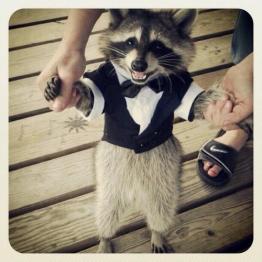
Last week, I sat beside a client in the hospital and reminisced of days gone by. Though her short-term memory is shot, she’s able to recite stories from the past as though they took place yesterday. She shared one in particular that’s stuck with me for a few reasons: 1) it was hilarious and 2) it hit really close to home. This nonna (who I’ll call Lo) and daughter (D) recalled one summer at their country home, where they took in a baby raccoon that had been abandoned by its mommy. Four-year-old D affectionately named him Rakki and they bonded instantly; she dressed him in tiny outfits and turned a bottom drawer into a bedroom.

September approached and so did the inevitable: it was time to part with Rakki. Obviously D was heartbroken, but in true mom fashion Lo stepped in and made it better. Uncle Eddie lived on a farm full-time in Pennsylvania and was happy to adopt his furry nephew. Perfetto! The story doesn’t end there, though. Lo and D outlined the rest of Rakki’s thrilling life, including marriage, kids, and a subsequent (yet civil) divorce. Lo got a kick out of filling me in, especially when she revealed that they did not, in fact, ship Rakki to PA – he went right back where he came from (the back yard). We could not stop laughing.

The Rakki tale hit close to home because my parents told a similar lie to me: after finding that an egg had fallen from its nest and opened prematurely, I was panicked. We were on our way out, but my mom assured me that if I scooped the baby up and put him by the Virgin Mary, my dad would rush him to the vet when he got home from work. As far as I knew (until my mid-f’ing-twenties), he did just that: Dr. Wilson patched him up and sent my tiny bird to live on a farm in Pennsylvania. Was the PA farm anecdote a Jersey parent thing?! Was it so that we wouldn’t ask to visit? Regardless, the elaborate fibs our parents told were not simply for their own amusement, nor were they to hurt us. On the contrary, they were for our own best interests – to protect our little hearts.

D didn’t find out the truth about Rakki until adulthood, just as I was kept in the dark about the bird. It makes sense considering as kids we’re taught that lying is both awful and unfair. On top of that, we learn to never lie to our parents or to people that we love. Being dishonest with someone with dementia, then, logically sounds appalling. In reality, it can be essential:

“Those with dementia often struggle with logic, rational thought, sequencing, and emotional control. Therapeutic fibbing may be may be appropriate when telling the truth would cause pain, anxiety, or confusion, or when the person with dementia is experiencing life in a different “time zone”.”

Sometimes, a fib may be the kindest thing you can say to your loved one with dementia, though it’s easier said than done:

“To varying degrees, many of us as adults still feel that our parents are parents and that we, the children, are less assured, less capable, and less “grown up.” [We feel guilty for being untruthful.] The trouble with guilt is that it can keep you from making clear-headed decisions and doing what is right for [your parent] and the rest of the family.”

The 36-Hour Day

Remember that the fibs you tell are not intended to hurt your parents, just as theirs were not to you. Shake the guilt and be creative; adaptation is the key to success. There’s no one-size-fits-all when it comes to this stuff. Accept the illogical and embrace absurdities. If your nonna insists her car’s outside and she’s got somewhere to be, remind her that “it’s in the shop.” Show her it’s not out front and offer her a ride. Validate her feelings. If nonno needs an aide post-fall but is too prideful (and too cheap), confirm that it’s just temporary and covered by insurance. Empathize with him: a guest at home is not ideal but the doctor wants him stronger (plus it doesn’t cost a thing!). Think outside the box and go with it. After all, they did the same for you.

Commendable or Crazy?

canstock21951820

Picture this: it’s 9:57AM and you’re just waking up, super late for work. Groggy and in a little pain, you immediately reach for your phone – why the f didn’t your alarm go off?! Wait, why is your phone not plugged in on your nightstand? Where is your nightstand? You don’t know where you are, but it definitely isn’t home. Perhaps more frightening, you’re not alone. You ask for – no, you demand answers. You had to have been kidnapped (possibly even drugged) and, rightfully so, you’re not going down without a fight.

Under most circumstances in the above situation, we’d praise the fighter; we would commend them for their bravery and validate their panic. At the very least, we’d empathize with their hysteria. In the case of dementia sufferers, however, our reactions differ. When a nonno whose reality orientation is off by 50 years insists on getting to work, we scoff. When a nonna swears she has to get her kids from school, we try to snap her out of it. Even worse, when emotions escalate, we dish out labels like “behaviors” or “agitation” and over medicate for good measure. Suddenly, the above scenario reads paranoia and delusion.

Dementia is so much more than memory loss. It has a lot of positive symptoms, too, or ones that manifest themselves as a result of some condition. Hallucinations, delusions, illusions, and paranoia are examples, to name a few.

  • Hallucinations are the perception of an object or event in any of the five senses in the absence of an actual external stimulus. They can be visual, auditory, etc.
  • Delusions are false beliefs that are based on incorrect inferences about real external stimuli. So a person isn’t necessarily seeing or hearing things, they’re believing in something that simply isn’t true and that has evidence against its validity. They could assert that they don’t live in their own home and truly believe it, even though it’s evident that not only do they reside there now, they’ve been there for nearly 30 years.
  • Illusions involve distortions of the senses or how one interprets sensory information. Someone may hear a violent show on TV and interpret the scenes to be happening in real life, for instance.
  • Paranoia is heavily influenced by fear, often to the point of irrationality. Paranoid thinking, then, usually involves anxiety-inducing beliefs about some perceived threat.

As unnatural as it may feel and difficult as it can be, it is so important to put yourself in your loved one’s shoes. Instead of trying to bring your nonna back down to earth and convince her she’s mistaken, think outside the box: what’s triggering her perception? Consider her environment and any changes that may be beneficial: provide adequate lighting, avoid sensory overloads, and make detailed observations. Something as trivial as rustling bushes could trigger the perception of an outside intruder. Most importantly, reassure her and validate her feelings. Lock the deadbolt on her front door and alert the authorities of suspicious behavior (wink wink). Tomorrow, address her overgrown shrubs.

An old friend recently shared a story about her mom that serves as the perfect example of how to act in such situations. Her mother, who is believed to be suffering from frontotemporal dementia, is convinced there is a snake in her bedroom. The fear became so debilitating that she could no longer sleep in her own bed. Her compassionate (and smart!) first born nixed the reality orientating game and stepped into her mom’s world: every evening, she screens the room alone then lovingly (and convincingly) assures her mother that she’s thrown the snake out the window. On particularly rough days, she calls for backup and “exterminators fumigate the house.” Unnatural? Maybe. Insanely comforting, thoughtful, and commendable? Absolutely.

What’s Your Sign?

Screen Shot 2017-06-30 at 7.27.37 PMScreen Shot 2017-06-30 at 7.24.40 PM

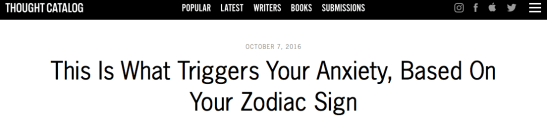
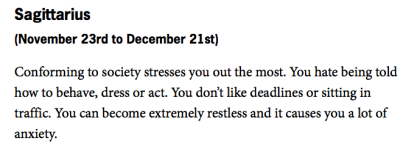
Full disclosure: I know close to nothing about astrology. I have no idea how planets retrograde or what it means for all the signs. I do, however, follow Thought Catalog religiously, and find its zodiac posts to be alarmingly accurate. The above assertion fits me to a T: I don’t stress easily, but try to control me and I’m instantly claustrophobic. Not physically, of course, but emotionally – down to my core, I feel suffocated.

Horoscopes are vague. They’re intended to be broad enough to apply to everyone yet specific enough to strike a cord. At the very least, they get you thinking. Conforming, being told what to do, and meeting deadlines aren’t just anxiety-inducing to us Sagittarians; we as human beings crave autonomy. We inherently desire the ability to make choices consistent with our own free will.

According to the self-determination theory, human aspiration relies on three core psychological needs: autonomy, competency, and relatedness/the need for social connection and intimacy. In other words, we need to feel that we are free to make our own decisions, that we’re capable and thriving, and that we’re connected to other people. Satisfy all three, they say, and find your bliss. Restrict them, however, and you’ll experience more than just claustrophobia.

Constraints on our autonomy can both destroy our sense of happiness and spark retaliation. Throw incompetence and isolation into the mix and you’ve got the perfect storm. Interestingly (and sadly) enough, that is exactly what one experiences when they have dementia. Luckily, we can do something about it.

For whatever God forsaken reason, it seems as though our instinctual reaction when a loved one starts deteriorating is to completely take over. Are they drinking enough water? Have they gotten enough sleep? What about their diet – are there three square meals a day? Coffee’s out of the question, as are sugars and red meats. Che cazzo?! Innocently and with the best intentions, we as caregivers assume total control. What we don’t realize, however, is that our authority may do more harm than good.

Research shows that the desire for and assertion of power are sometimes misconstrued; its appeal is not, in fact, to control things but rather to control oneself:

“Power as autonomy allows one person to ignore and resist the influence of others and thus to shape one’s own destiny. … Generally, when people say they want power, what they really want is autonomy. And when they get that autonomy, they tend to stop wanting power.”

The Atlantic: People Want Power Because They Want Autonomy

When it comes to dementia, we so naively take the reins and are confused by the reaction. We use tough love to set new standards and enforce rules with no real bearing. Could nonna benefit from cutting ice cream out of her diet? To some degree, I’m sure. Would nonno nap less after breakfast if he skipped the nightly news? Yes, most likely. Odds are he’d also fight your bedtime.

Put yourself in their shoes. Try to think objectively of what is necessary and practice patience and acceptance. When your influence is required, be mindful of its implications. After all, wouldn’t you be pissed if someone messed with your routine? Sagittarius or not, I bet you would.