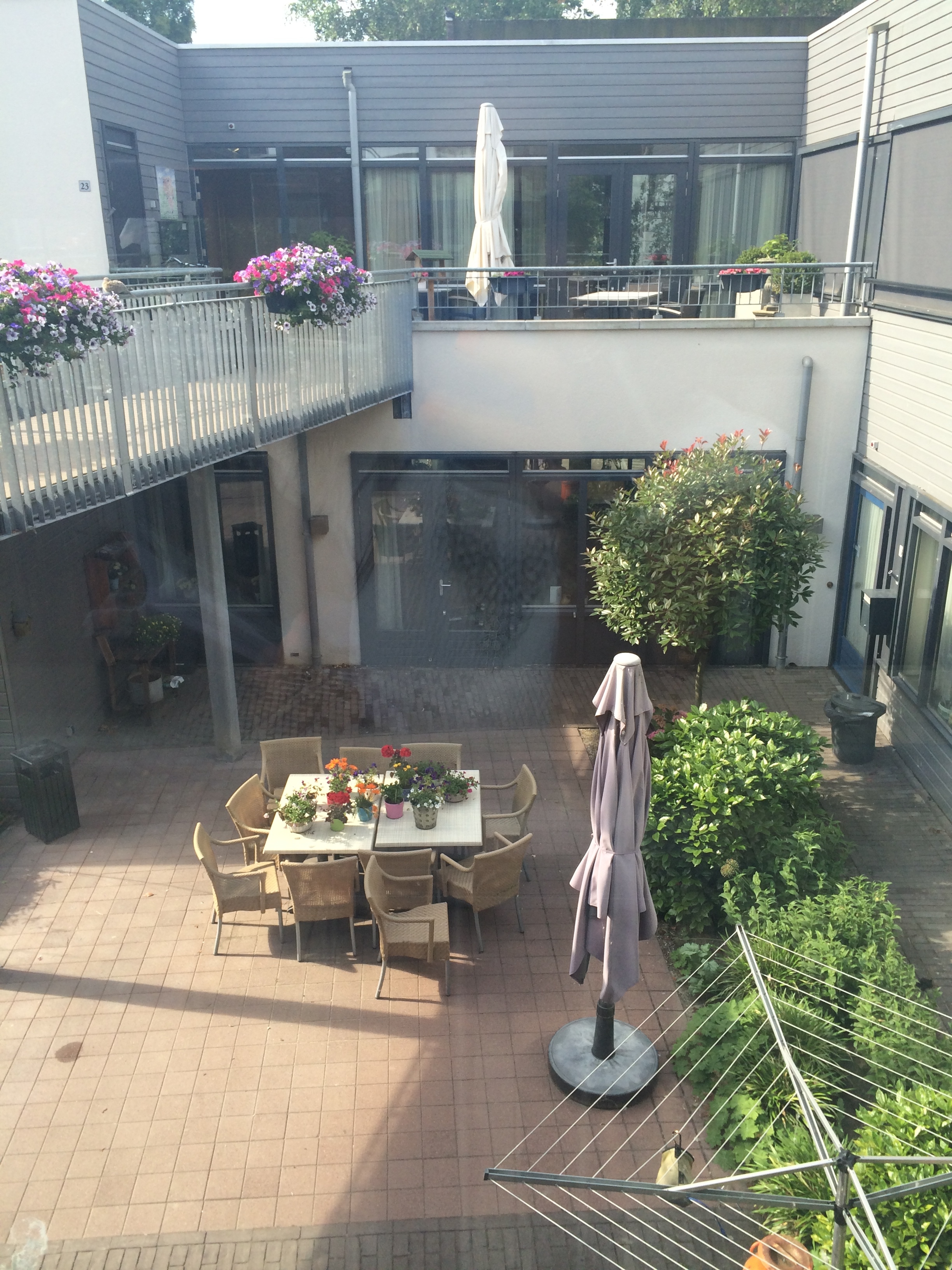
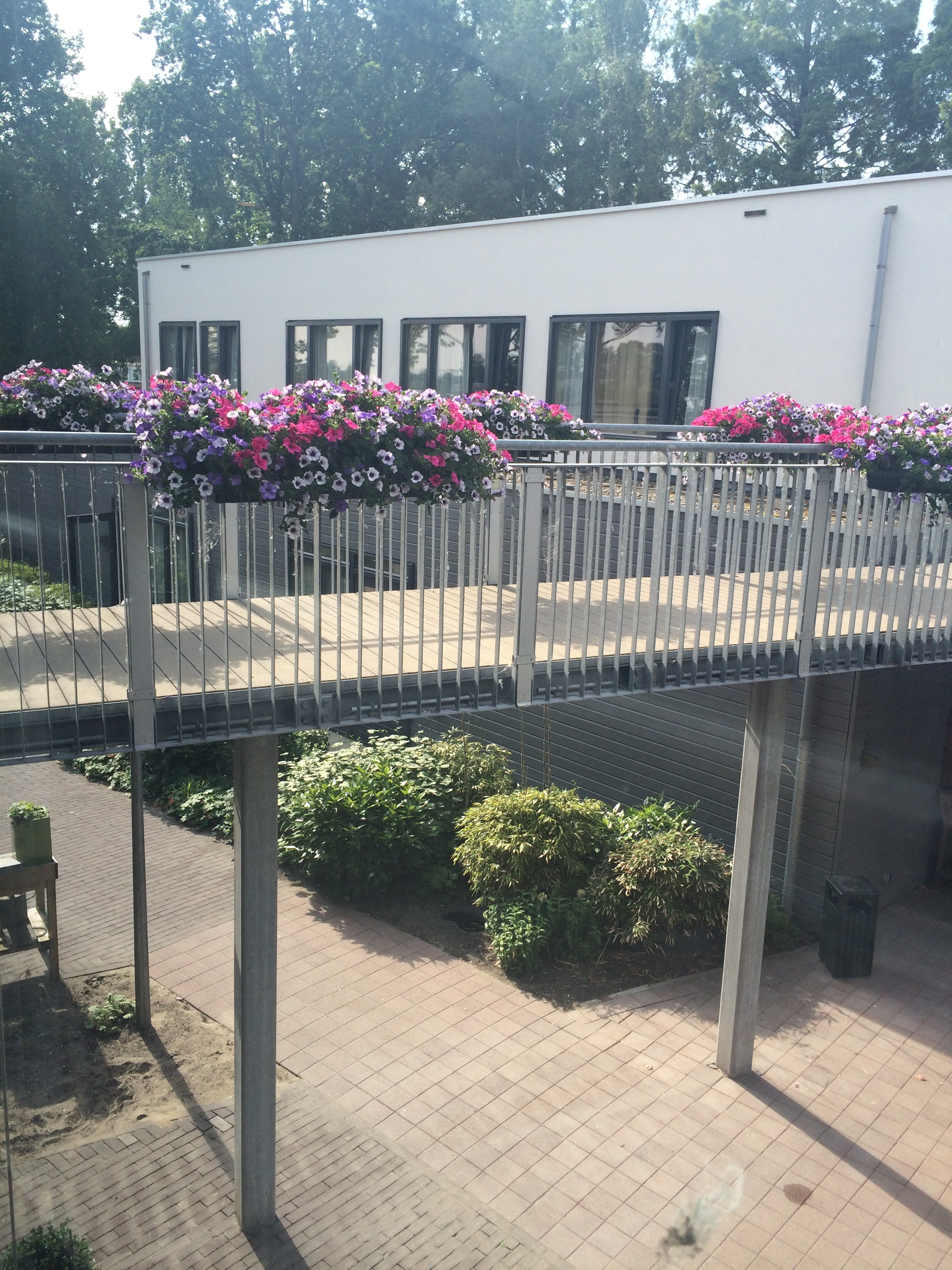
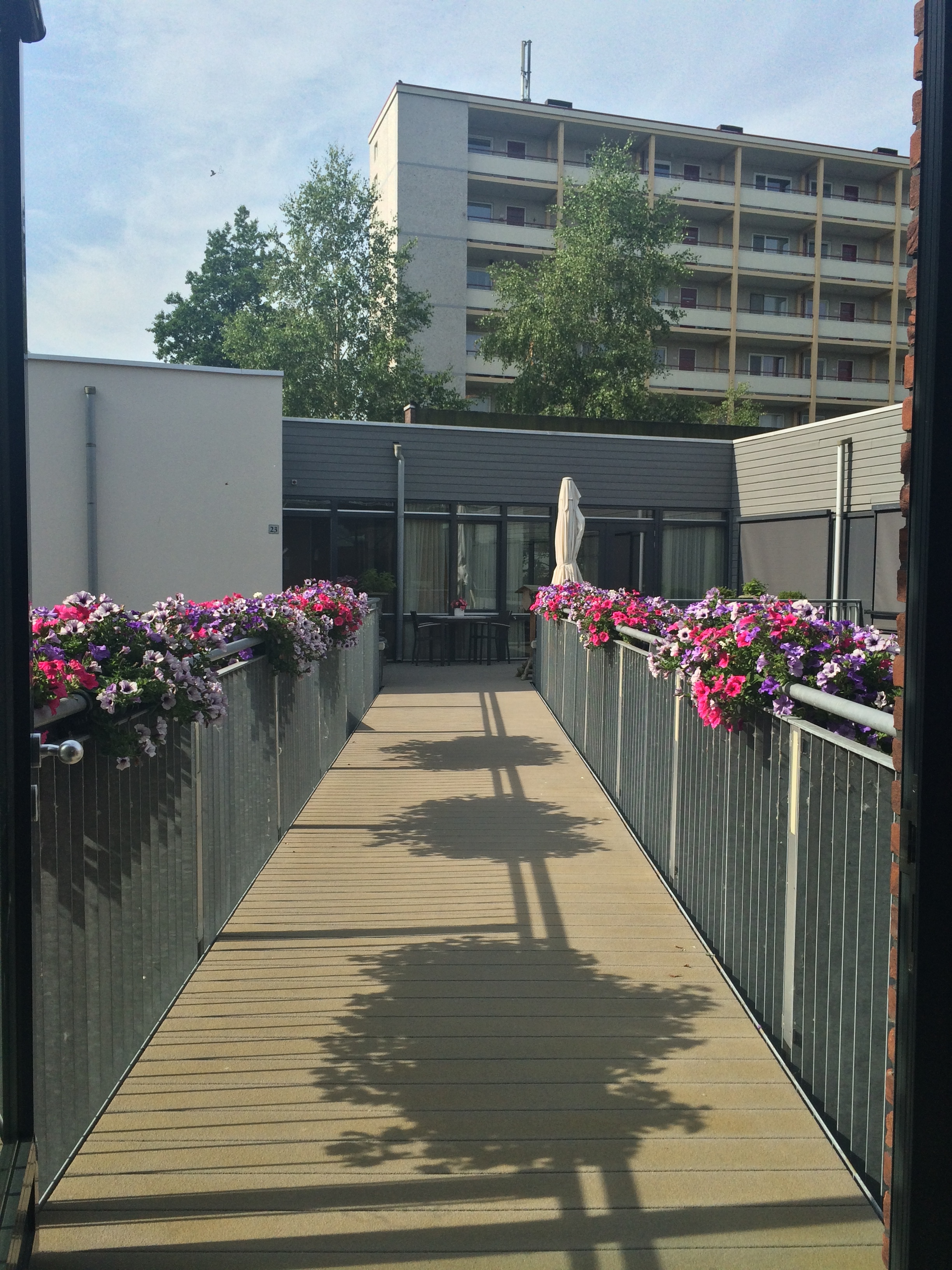
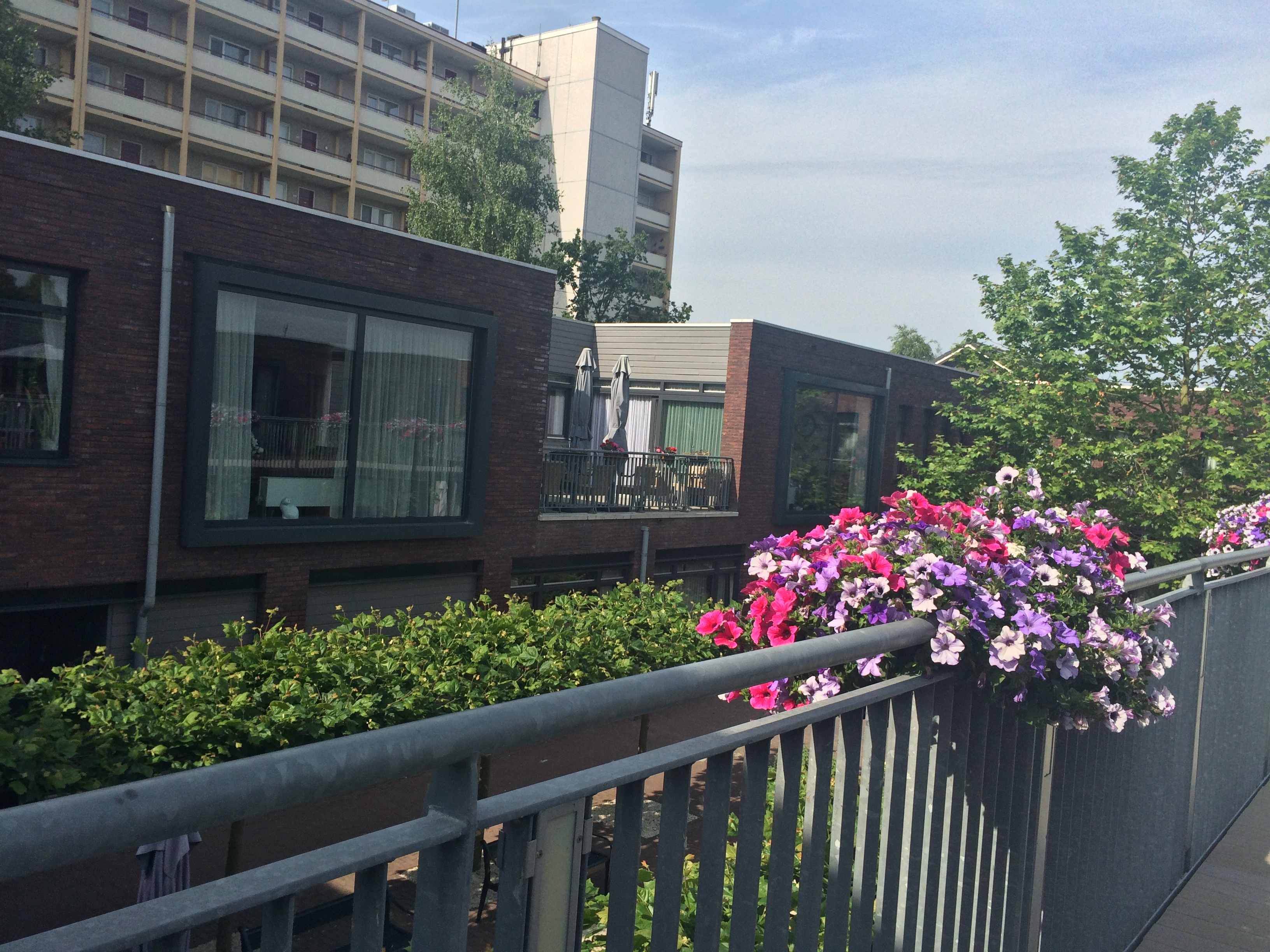
Dementia Village

To scale the cliffs of the Amalfi Coast, to barter with street vendors at Christmas markets, to see The Pope say mass… There are a ton of reasons I book the trips I take (most involving food or scenery), but the latest was more personal. After over a year of watching prices, flights to Amsterdam dropped and my dream was within reach: in six short days, I was going to Dementia Village. “Hogeweyk” as it’s actually called (pronounced hoke-ah-waek) is a Truman Show-style village 20 minutes southeast of Amsterdam. Though seemingly ordinary, it is a constructed reality designed to cater to those with dementia. Everything about the community, from its layout and its shops to its antique décor and styles, is geared toward creating an environment that is as close to home as possible for all inhabitants. It is the currently the only one of its kind in the entire world, though others are excitedly following suit.

The purpose of this post is to paint as clear a picture as I can of the innovative, remarkable community that’s had my heart since its CNN debut. I will therefore try to keep it as simple and orderly as possible, refraining from writing too much about my feelings. 😉 As a lot of the information I’ve researched has been in other languages, some names or translations may sound funny. Bear with me as I try!

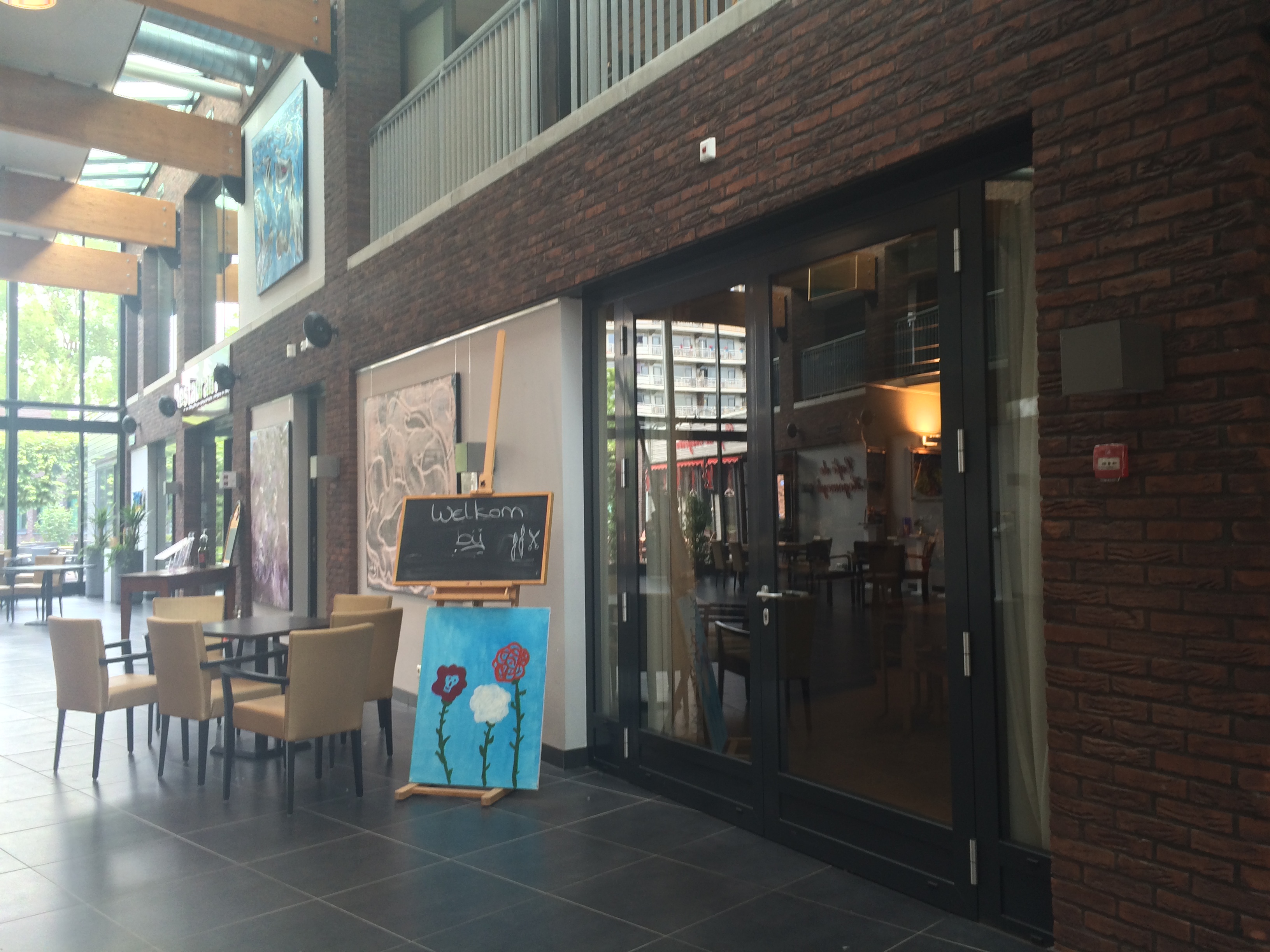
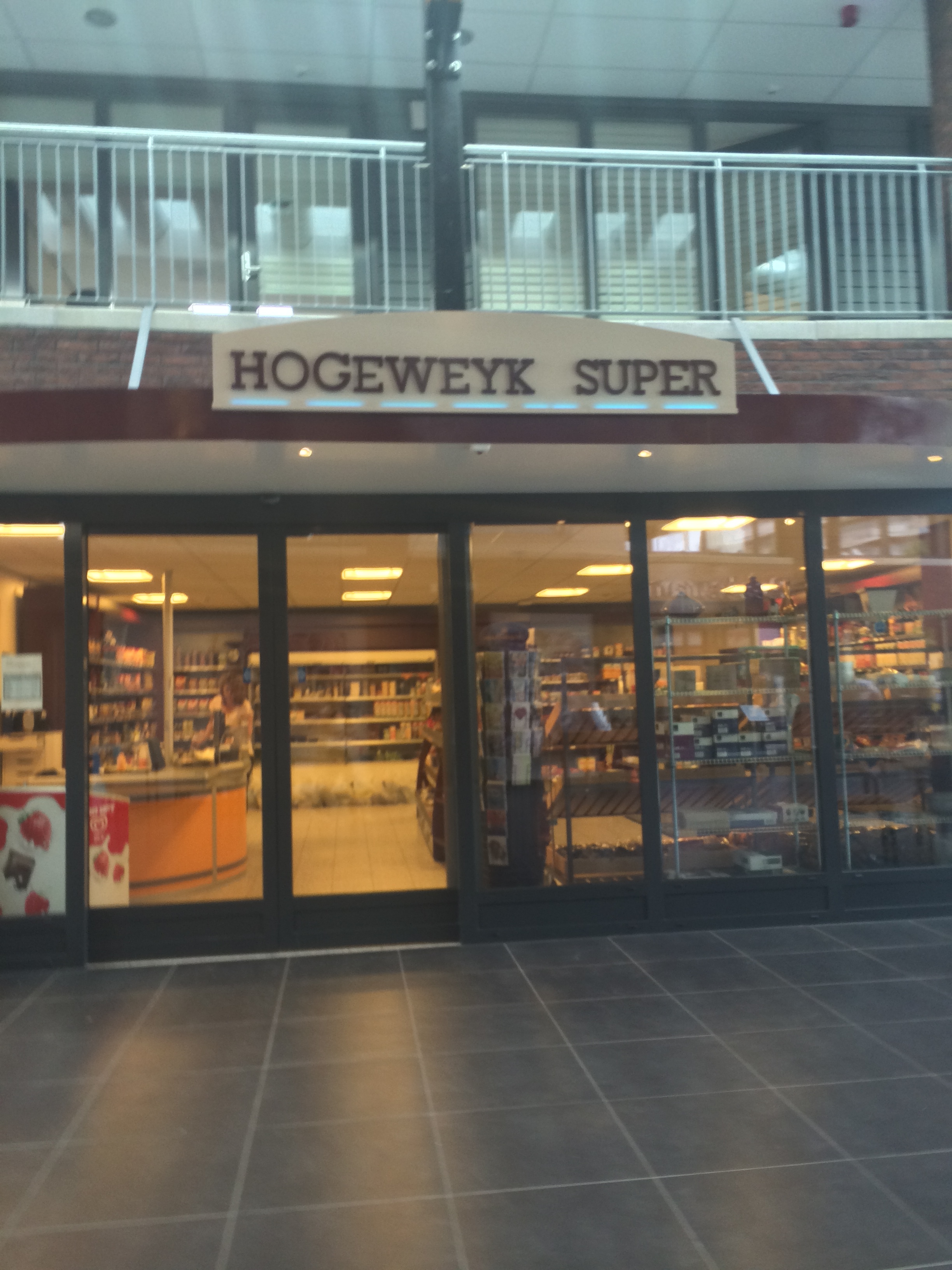
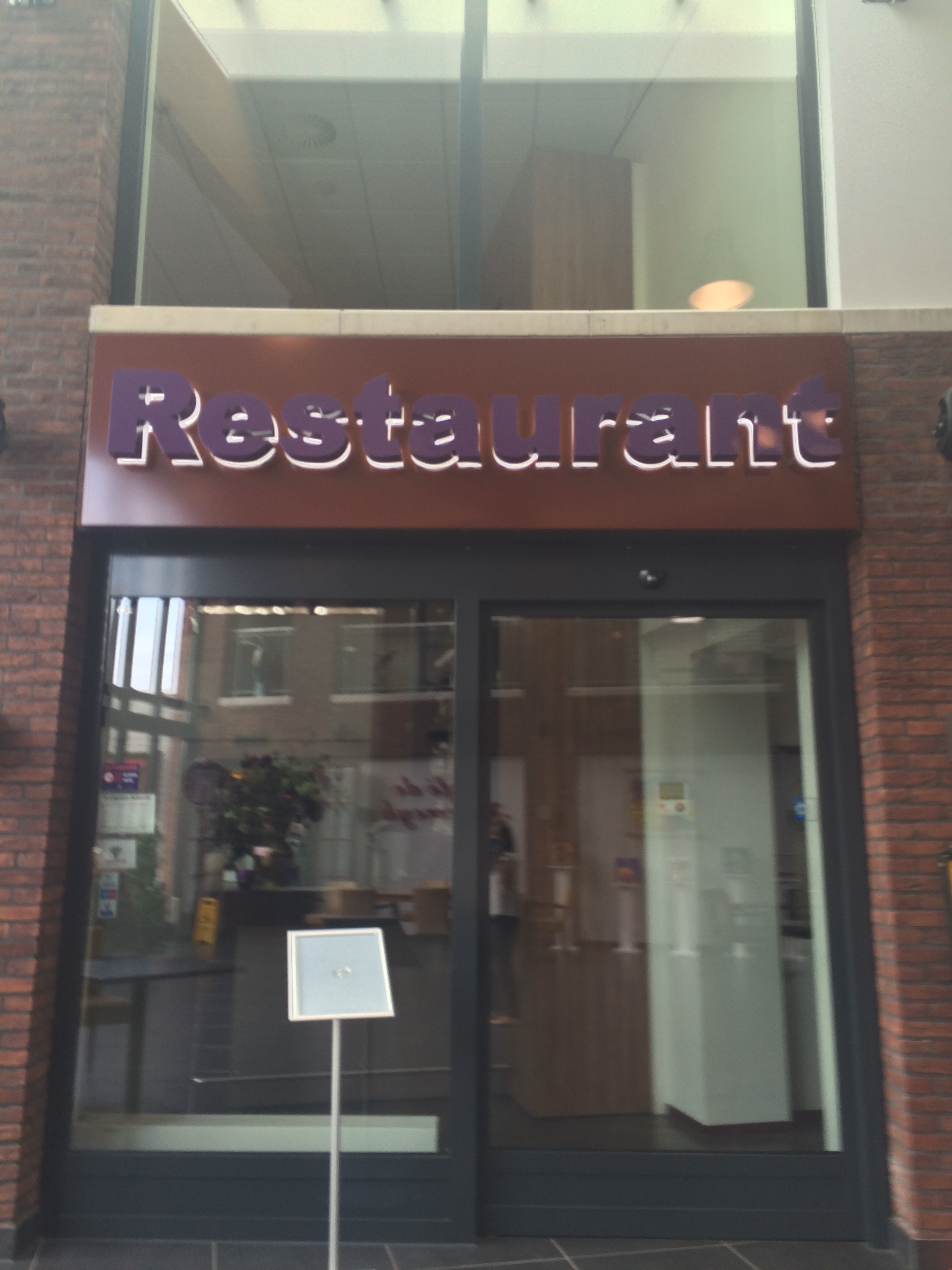
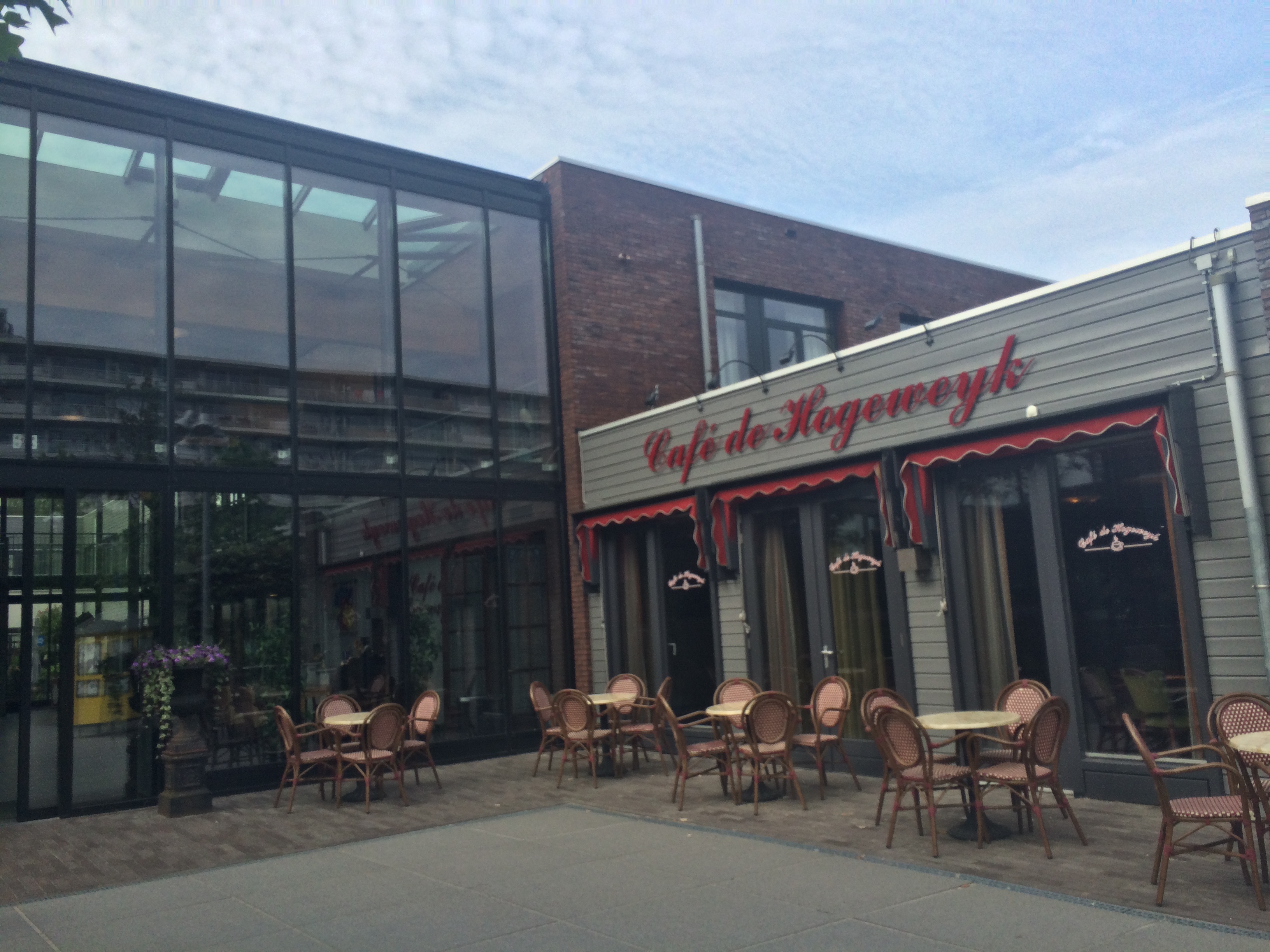
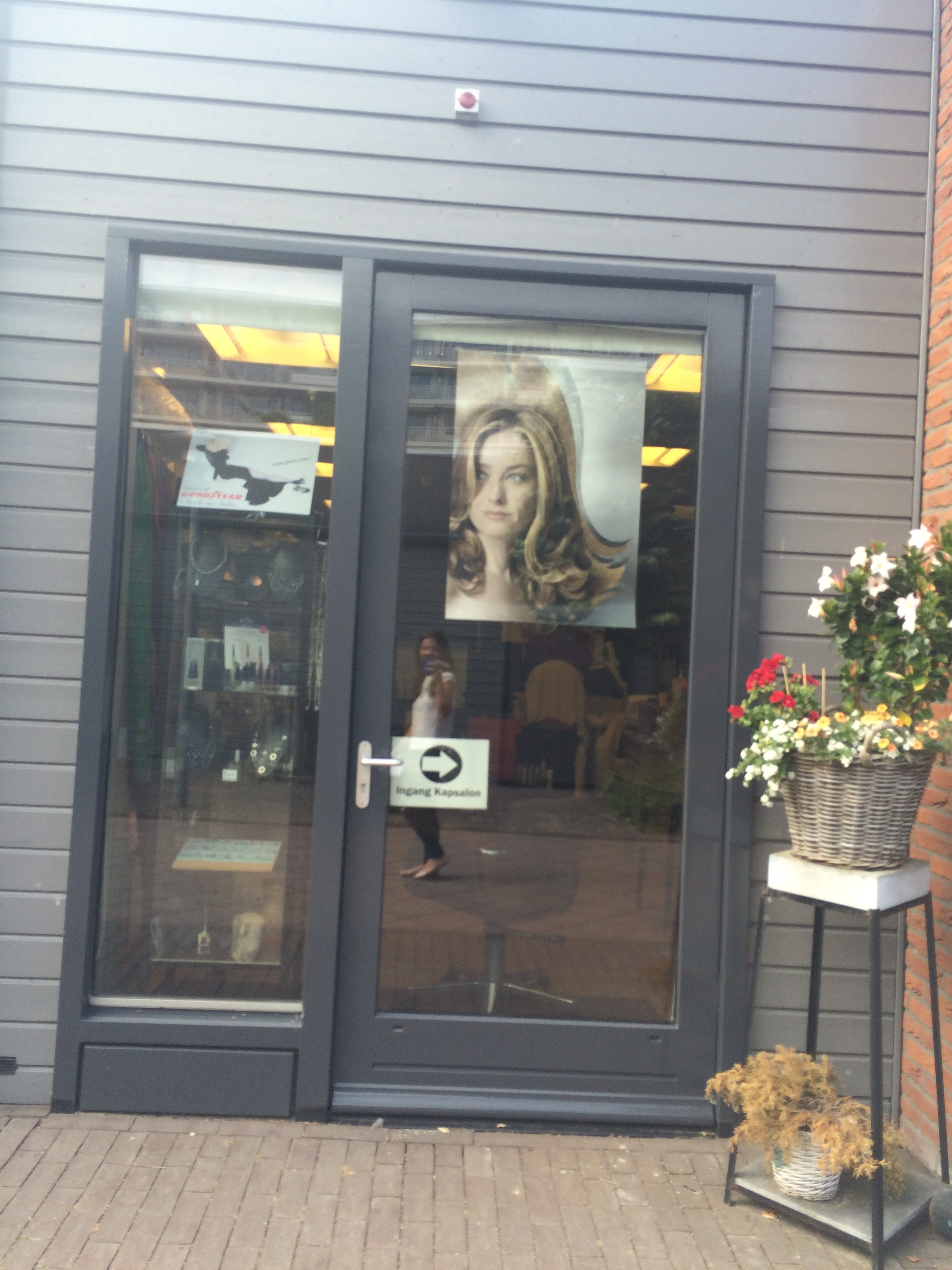
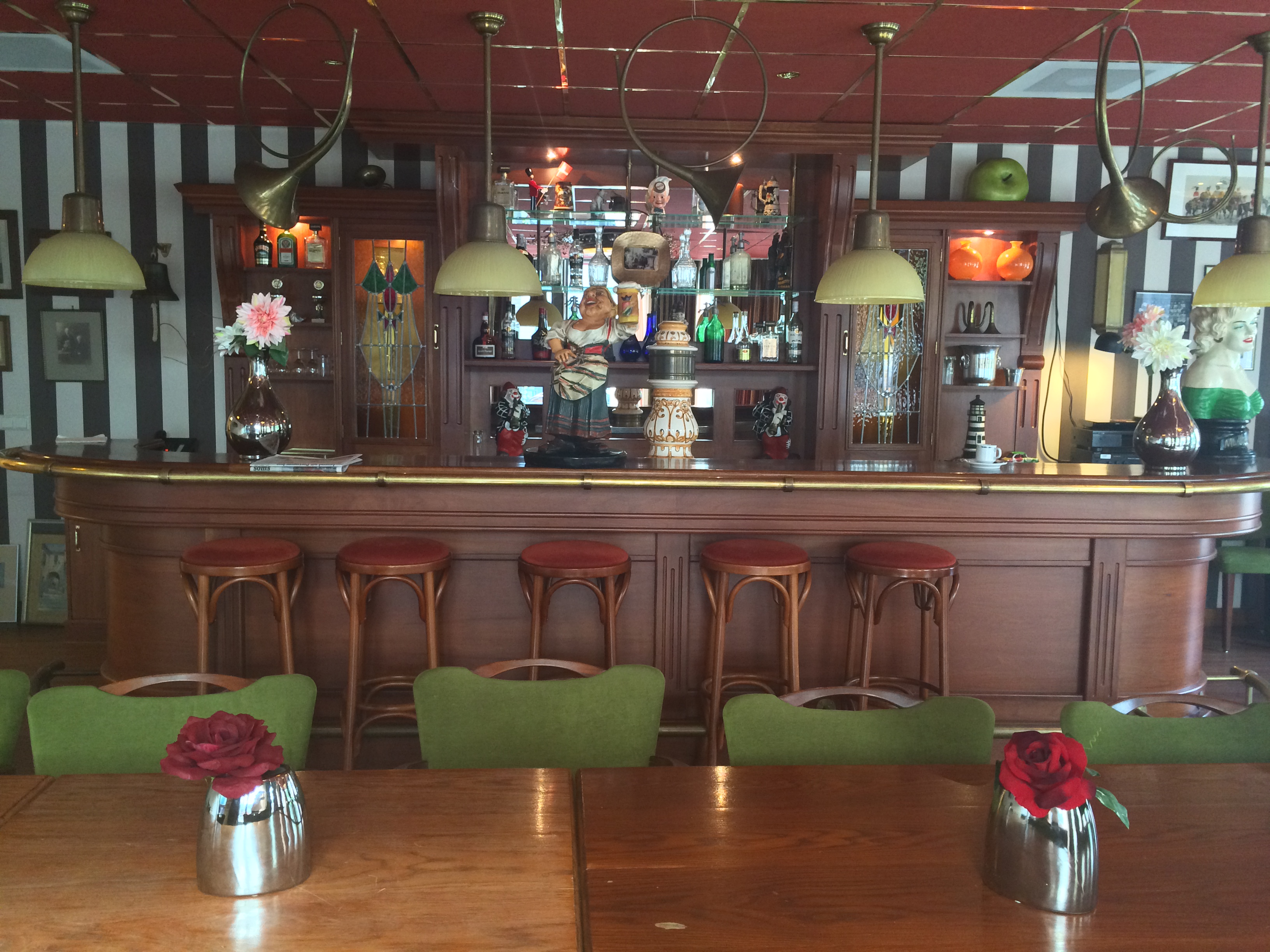
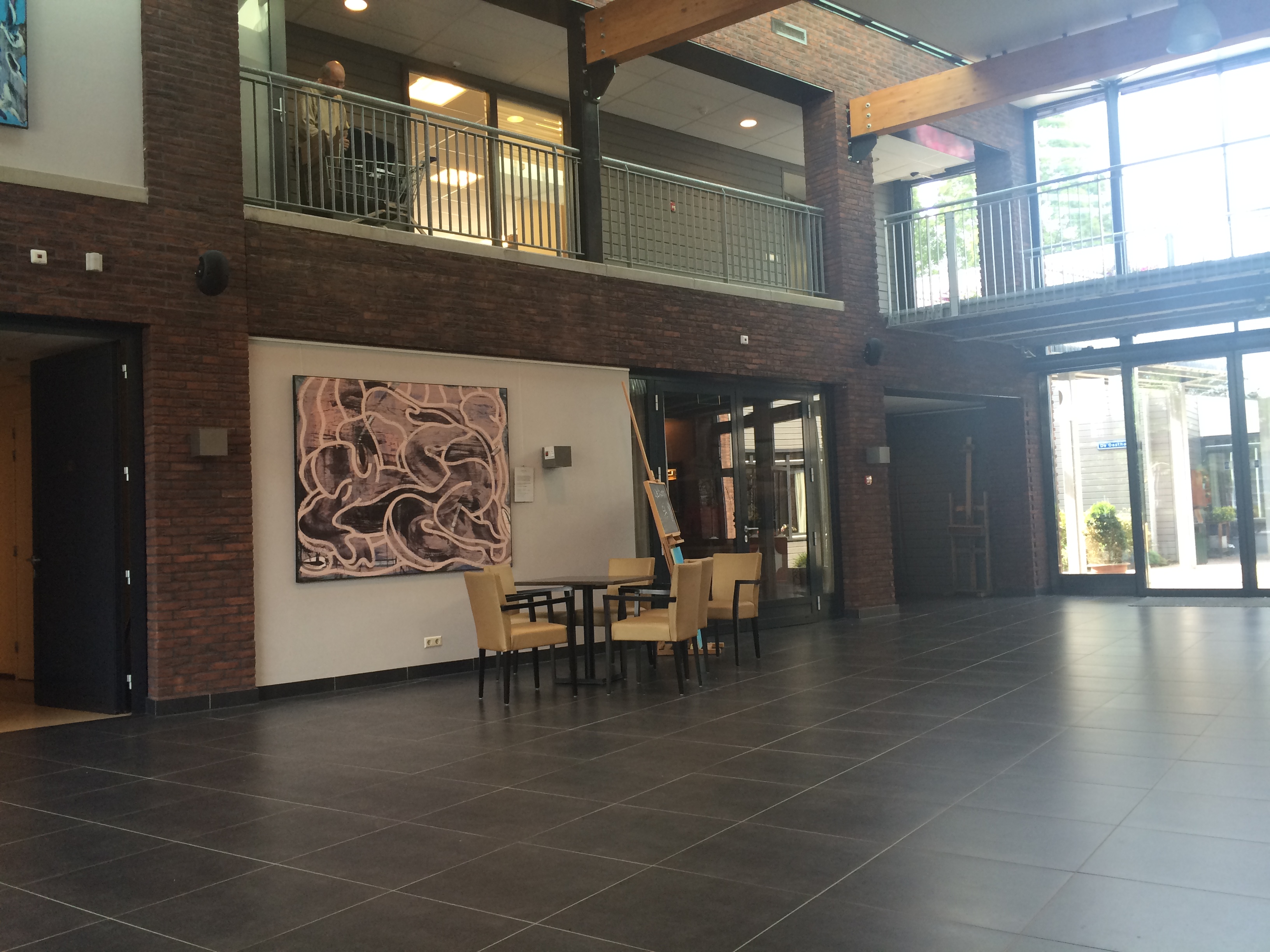
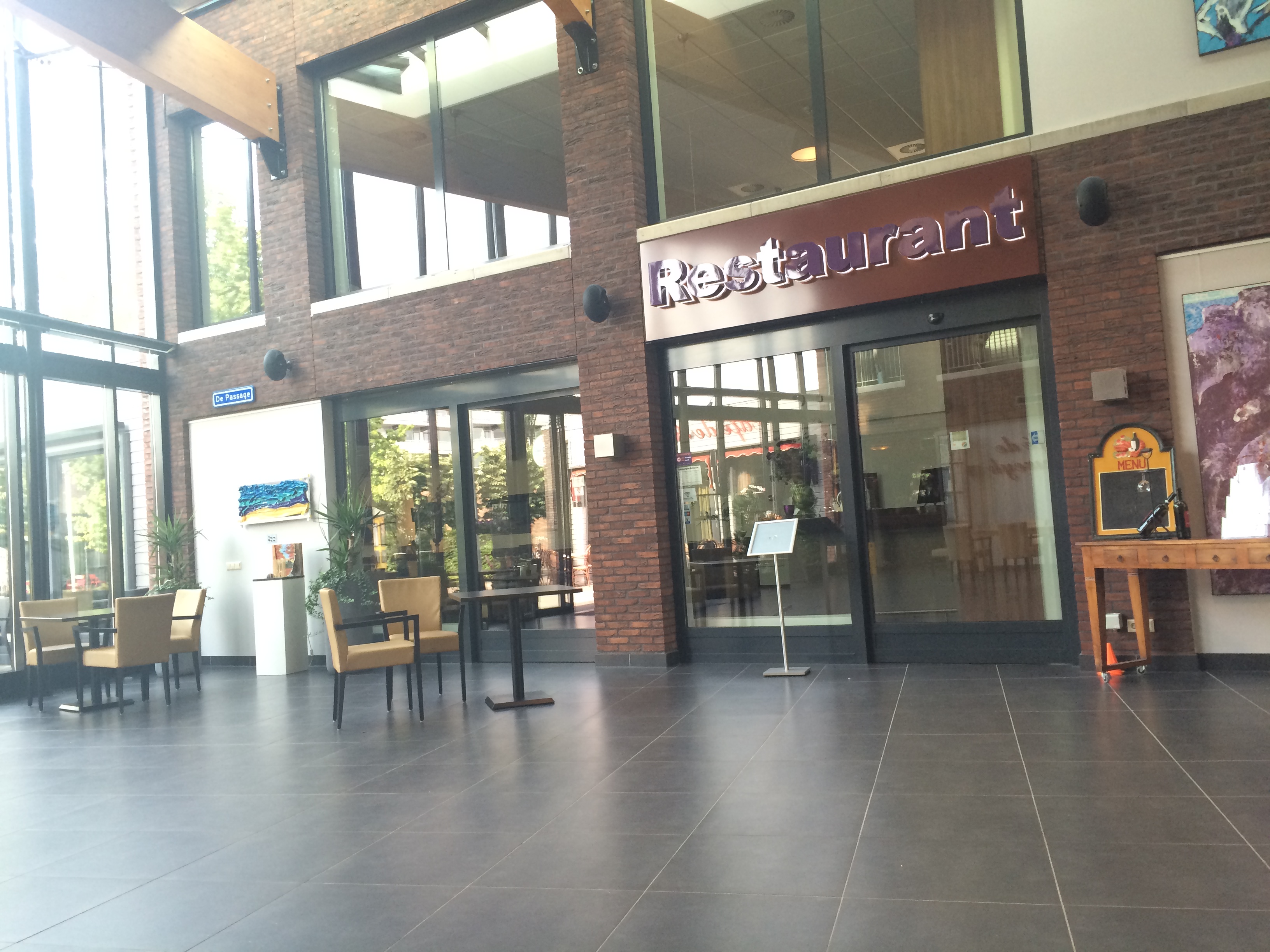
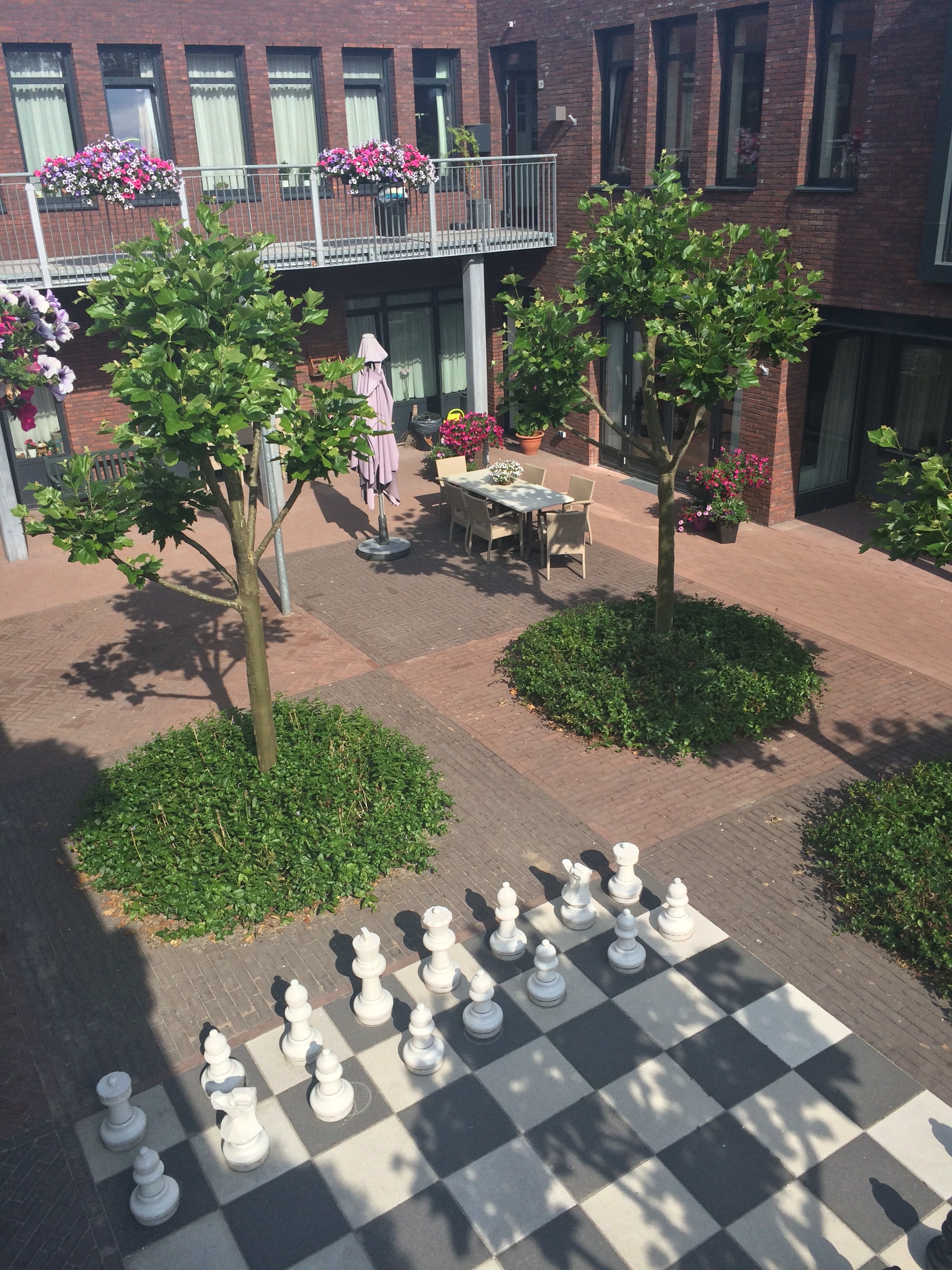
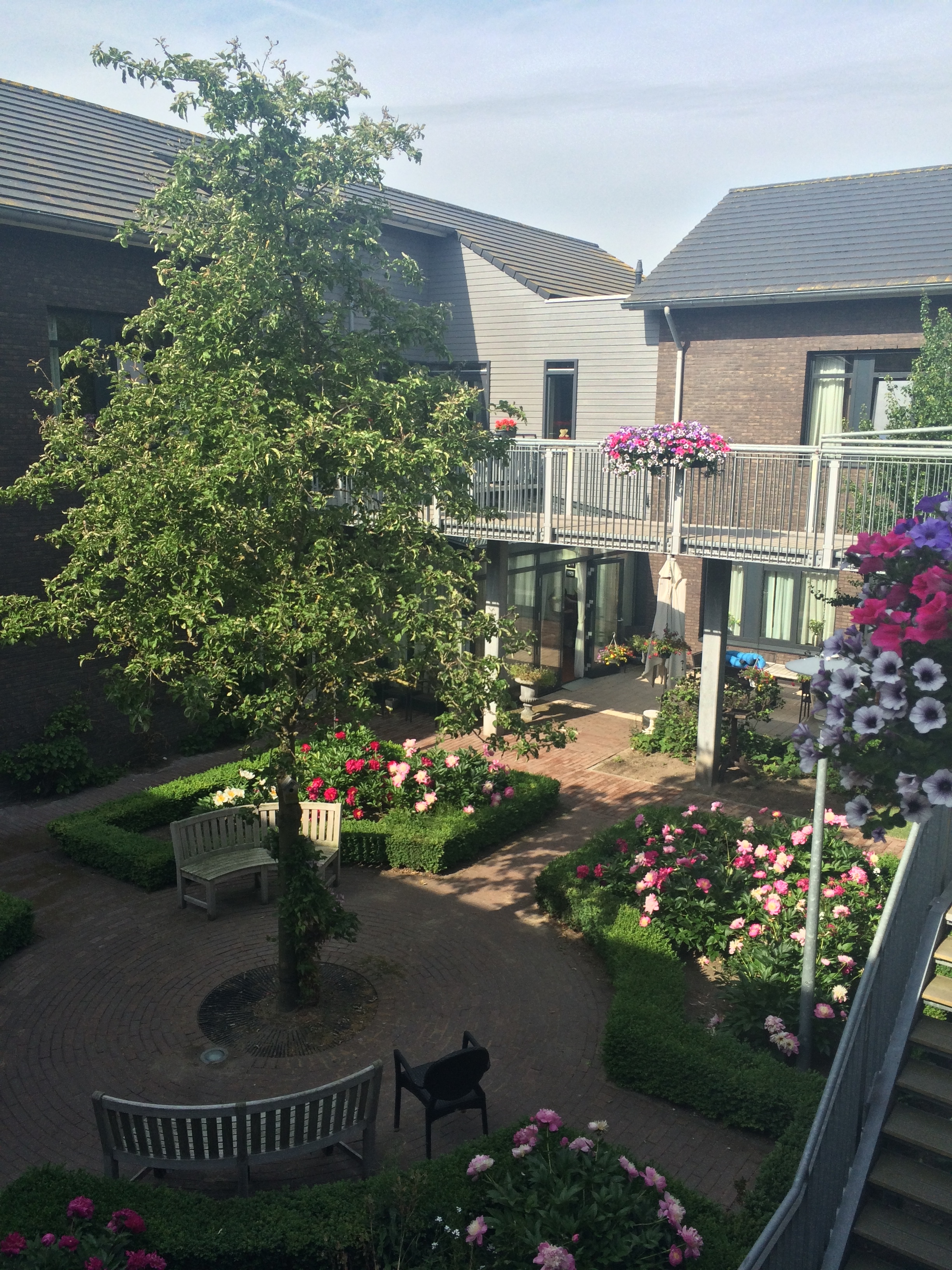
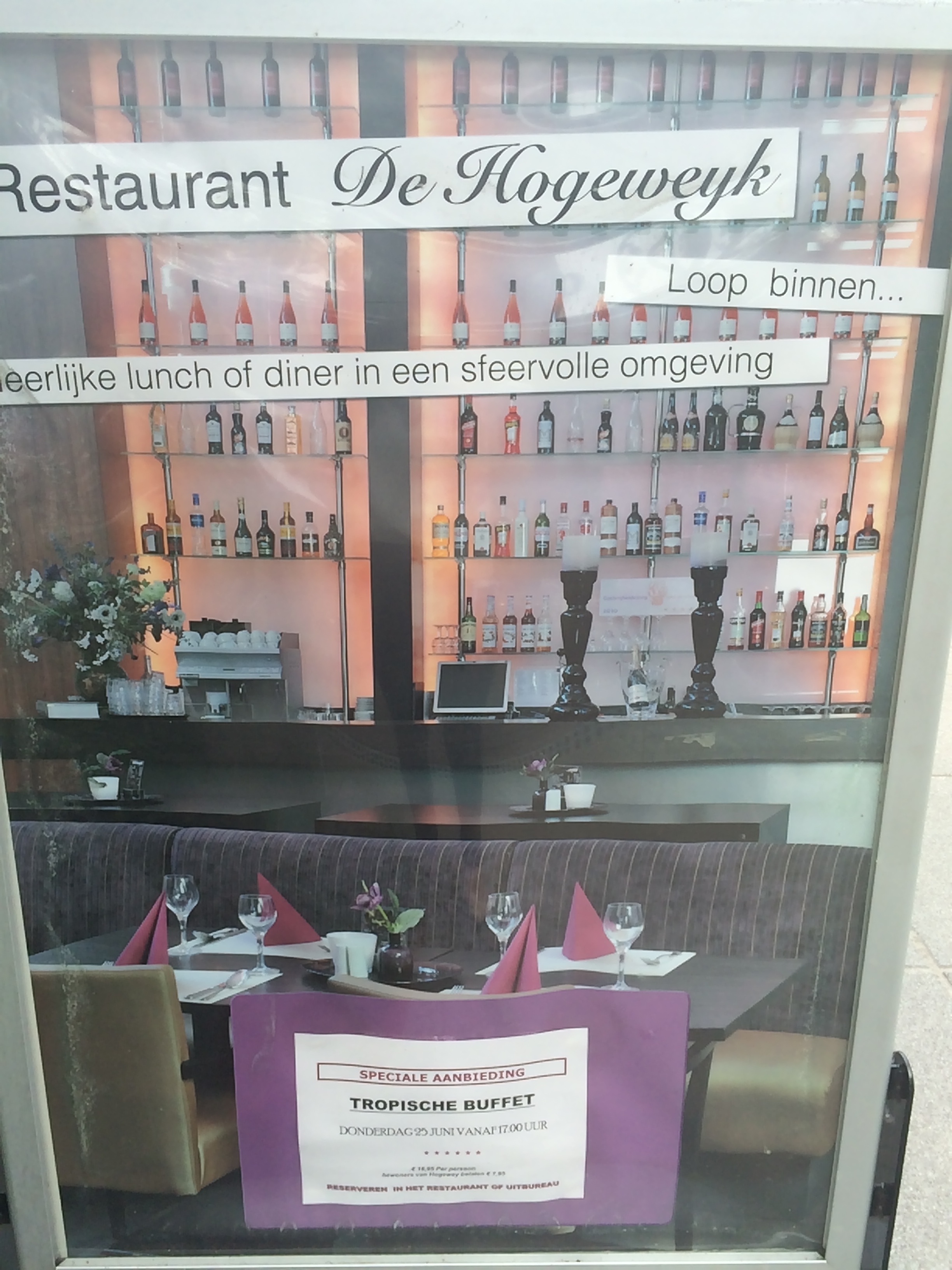
As I mentioned, Hogeweyk appears to be a disarmingly “normal” town. It’s tinier than we’re used to in the States and reminds me of a garden apartment complex or college campus. Its layout is intriguing; while secure, there are no walls or gates surrounding its perimeter. There are no locks, no guards, and no fence. Home to 152 residents, the tiny town boasts a restaurant, café, pub, supermarket, hair salon, music store, gym, lending agency for borrowing CDs and the like, various offices, and 23 “houses.” Each home is designed to match one of 7 different lifestyles:

  1. Urban/City Lifestyle: for those who were at the center of city life
  2. Homely Lifestyle: for those who value caring for their family and household
  3. Cultural Lifestyle: for those who love art and culture
  4. Indonesian Lifestyle: for those of Indonesian decent and whose daily life reflects their heritage
  5. Gooi/Well-to-Do Lifestyle: for those who find it essential to have proper manners, etiquette, and respected external appearances; for the “aristocratic Dutch” of a wealthier social class
  6. Traditional Lifestyle: for those whose pride and identity come from carrying out a traditional profession or managing a small business
  7. Christian Lifestyle: for those who live their lives according to their Christian faith

In general, each house is huge, with wide hallways, vast common areas, and personalized bedrooms. Floor-to-ceiling windows scan the length of each living room, and personal photos and art adorn the walls. Hardwood floors are found throughout, atop them beautiful furniture and antique accents. With resident reality orientation in mind, they match that which was popular in prior decades; Hogeweyk wants its environment to be virtually identical to that of residents’ past lives, focusing not only on religion and culture but also on smaller things like setup, music, style, and customs. It’s like an average US nursing home, except it’s the complete opposite. :-O

Homes cater to each lifestyle, however, and therefore differ in details and décor. The Indonesian apartments, for example, are decorated with flourishes of their indigenous culture. There are pictures of their homeland and color schemes to match. The food served is a mixture of Indonesian and Dutch cuisine, as residents identify with both cultures. Outside, gardens are planted “Eastern style” so that they’re suitable for prayer and meditation; they’re even equipped with big Buddha statues! Gooi houses, on the contrary, are super fancy; residents dine on lace tablecloths using fine glass and porcelain. Meals are brought to the table by “servants” who remain on standby out of sight. There are ornate chandeliers and formal relationships; servants (aka caregivers in disguise) are to be submissive and respectful.

Each resident’s lifestyle is determined prior to move-in based on preference and the results of a “digital lifestyle guide” via Motivaction, a research company that strives to pair people together according to their values, beliefs, and practices. You can actually go to their website and take the survey yourself; I did and it was spot-on! With an extensive wait-list, newcomers move first into an Admissions House where they’re catered to on a more individual level. Once a spot opens up in a lifestyle home of their choice, they’re able to settle in.

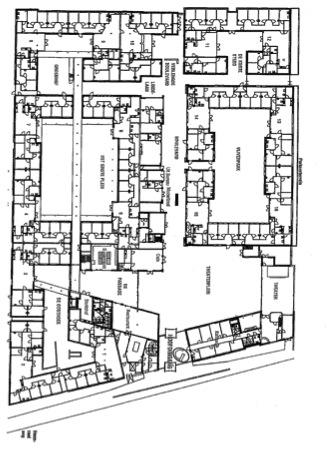
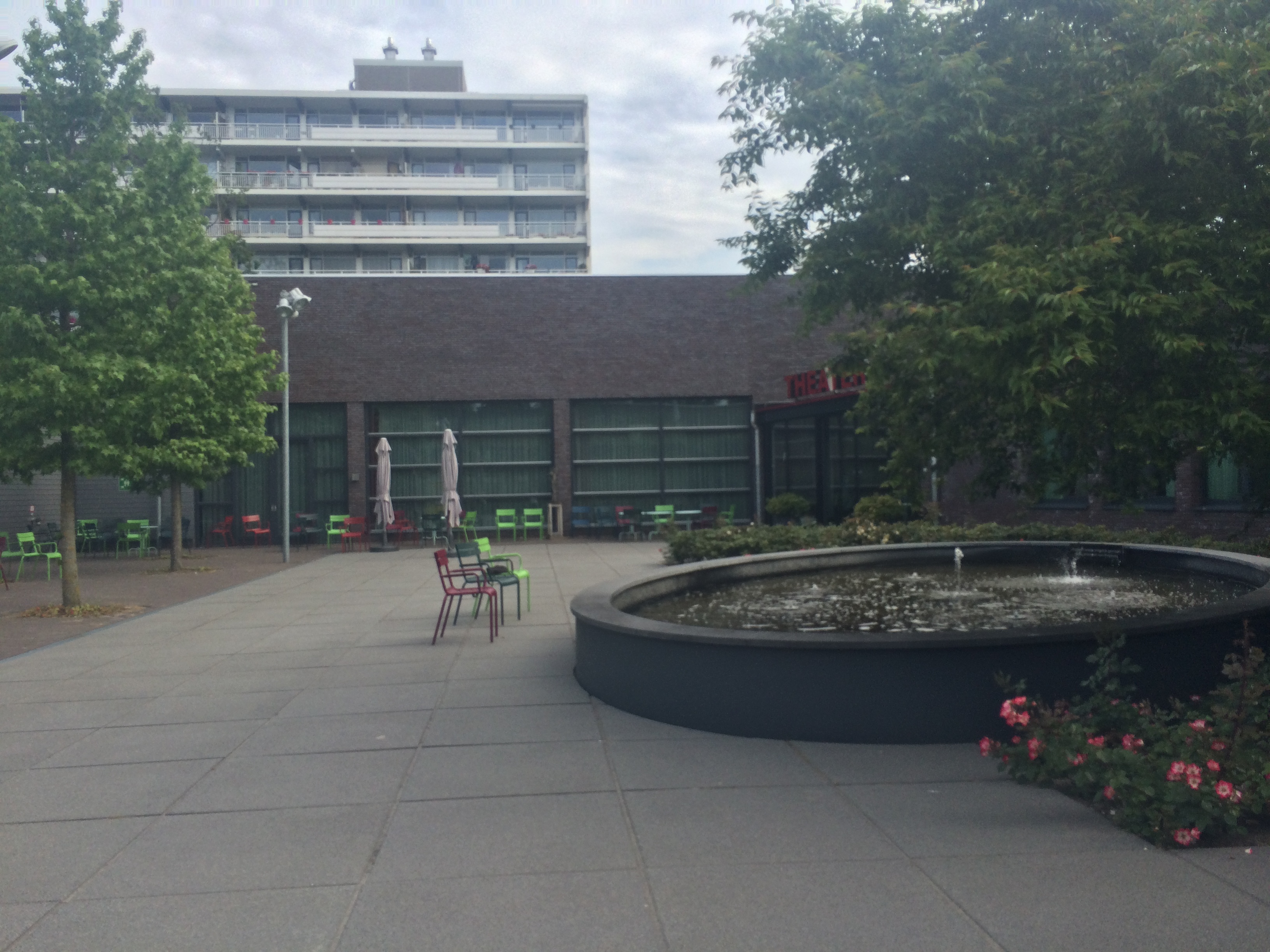
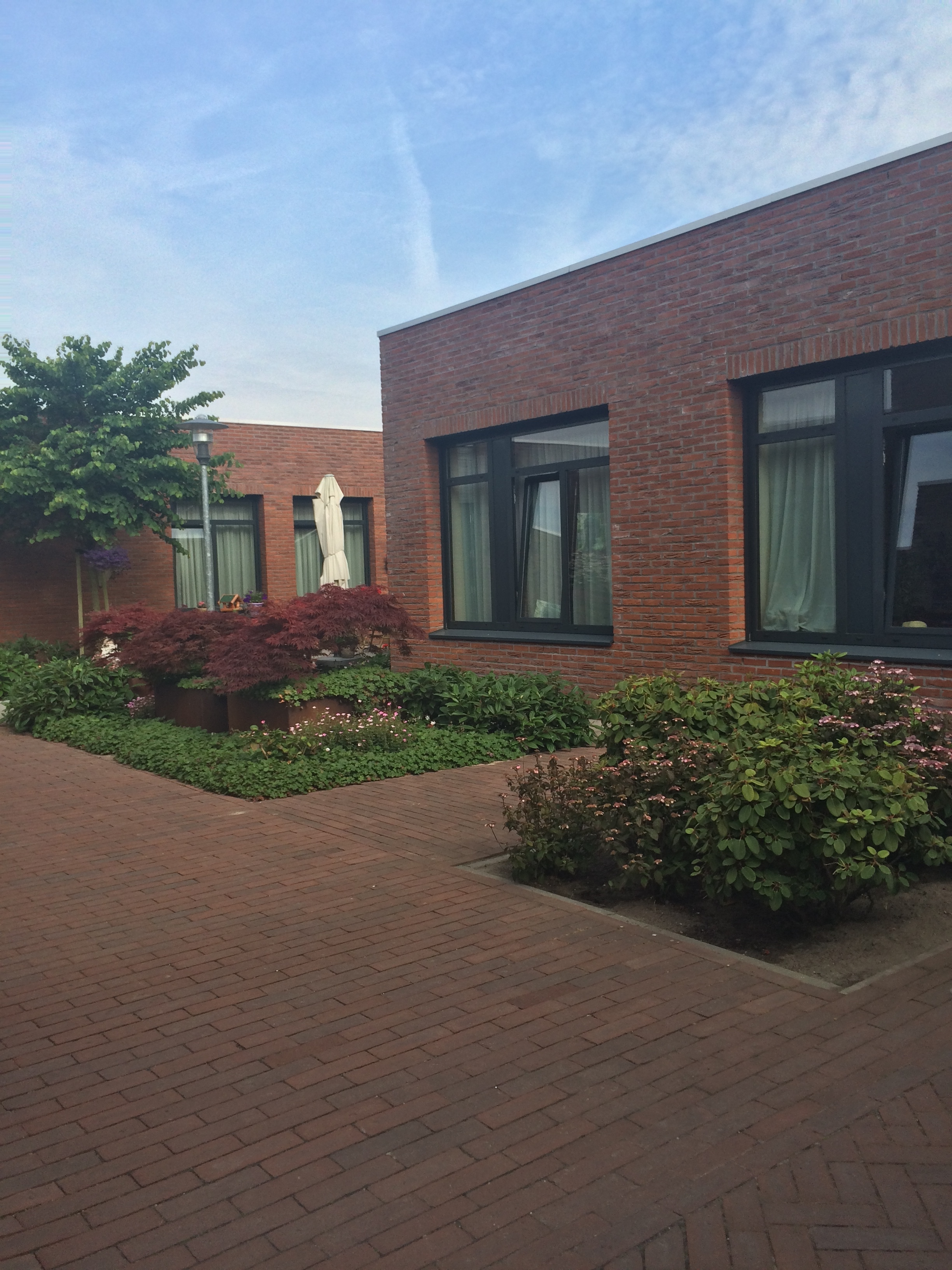
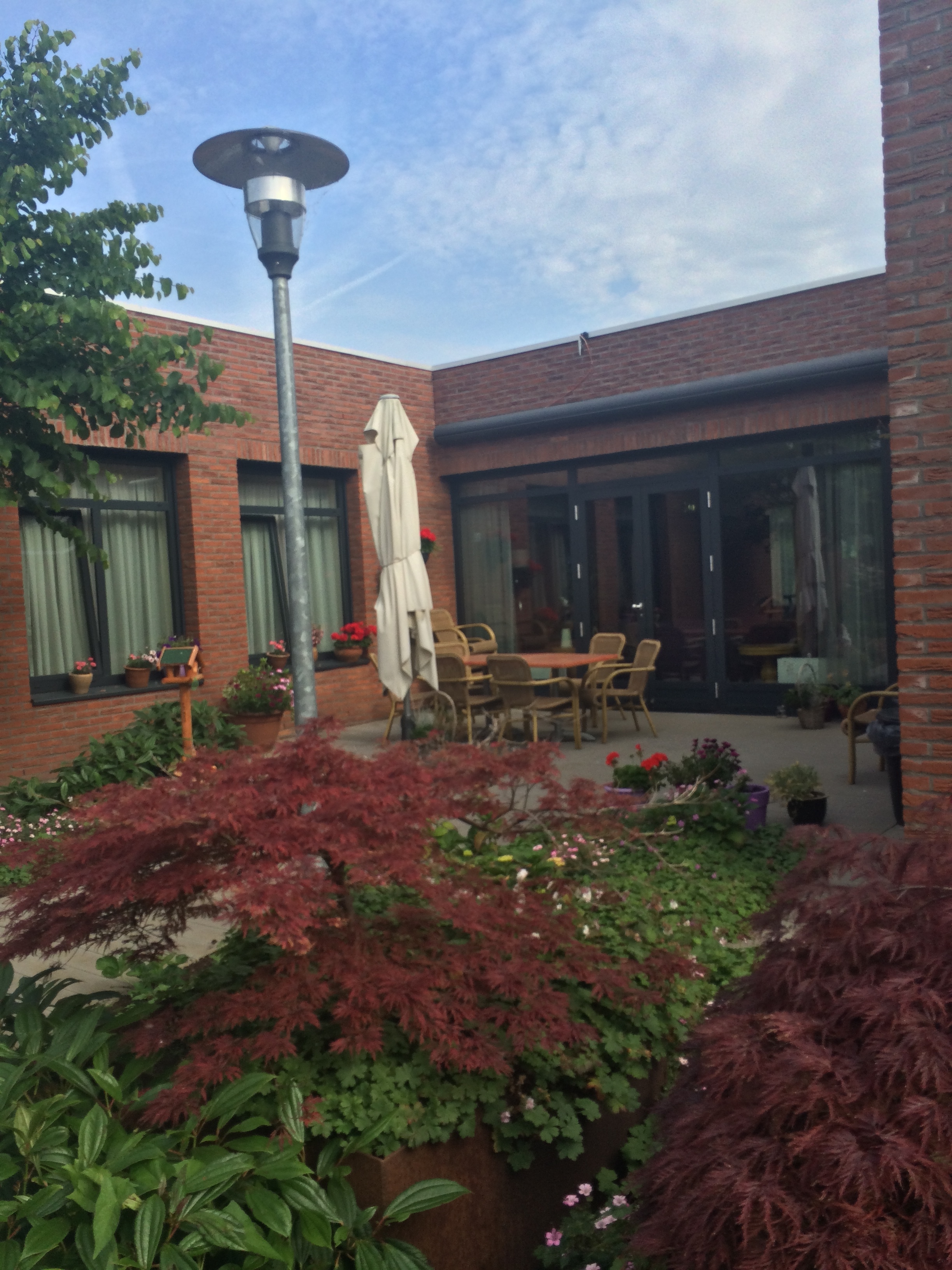
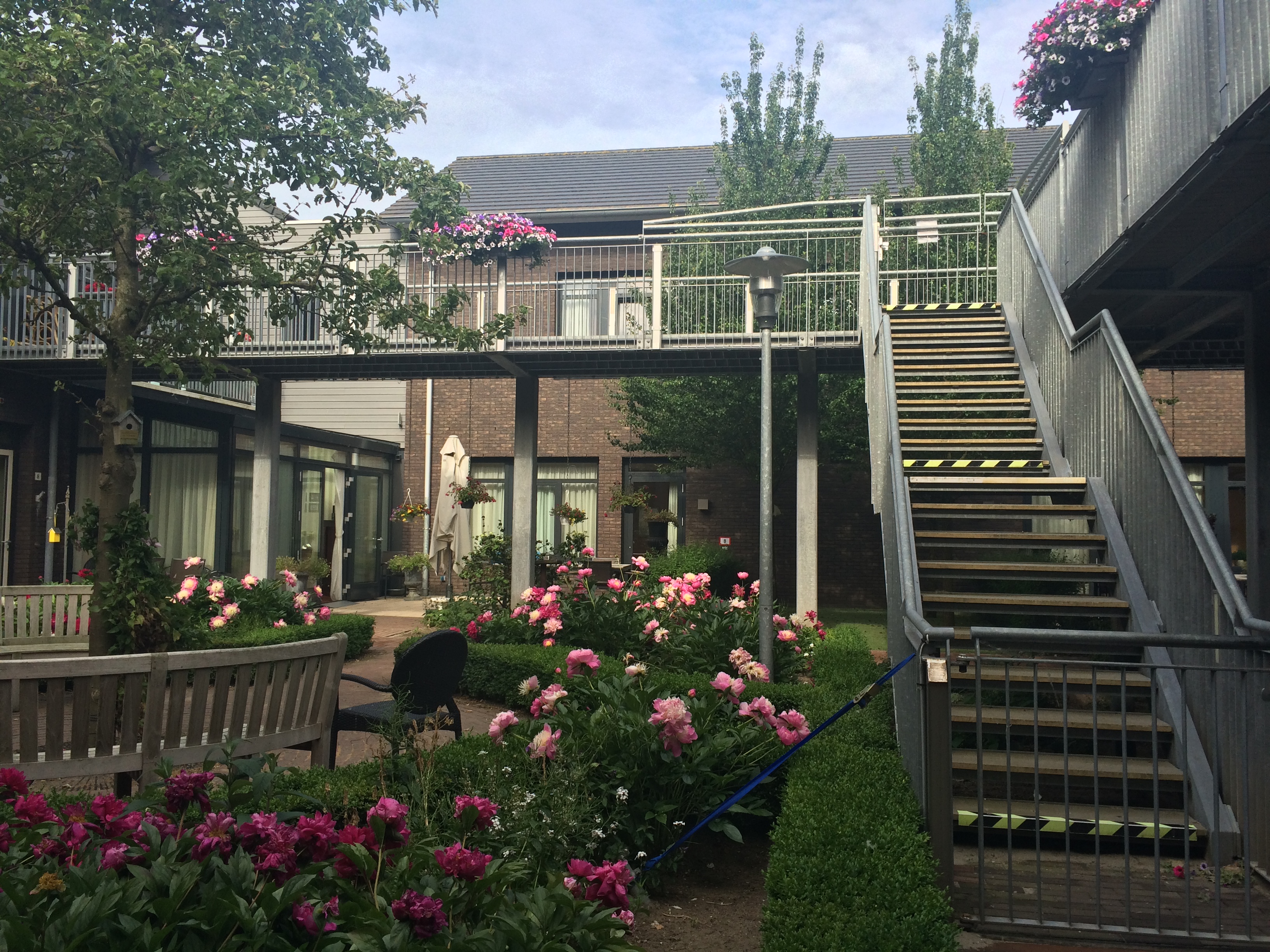
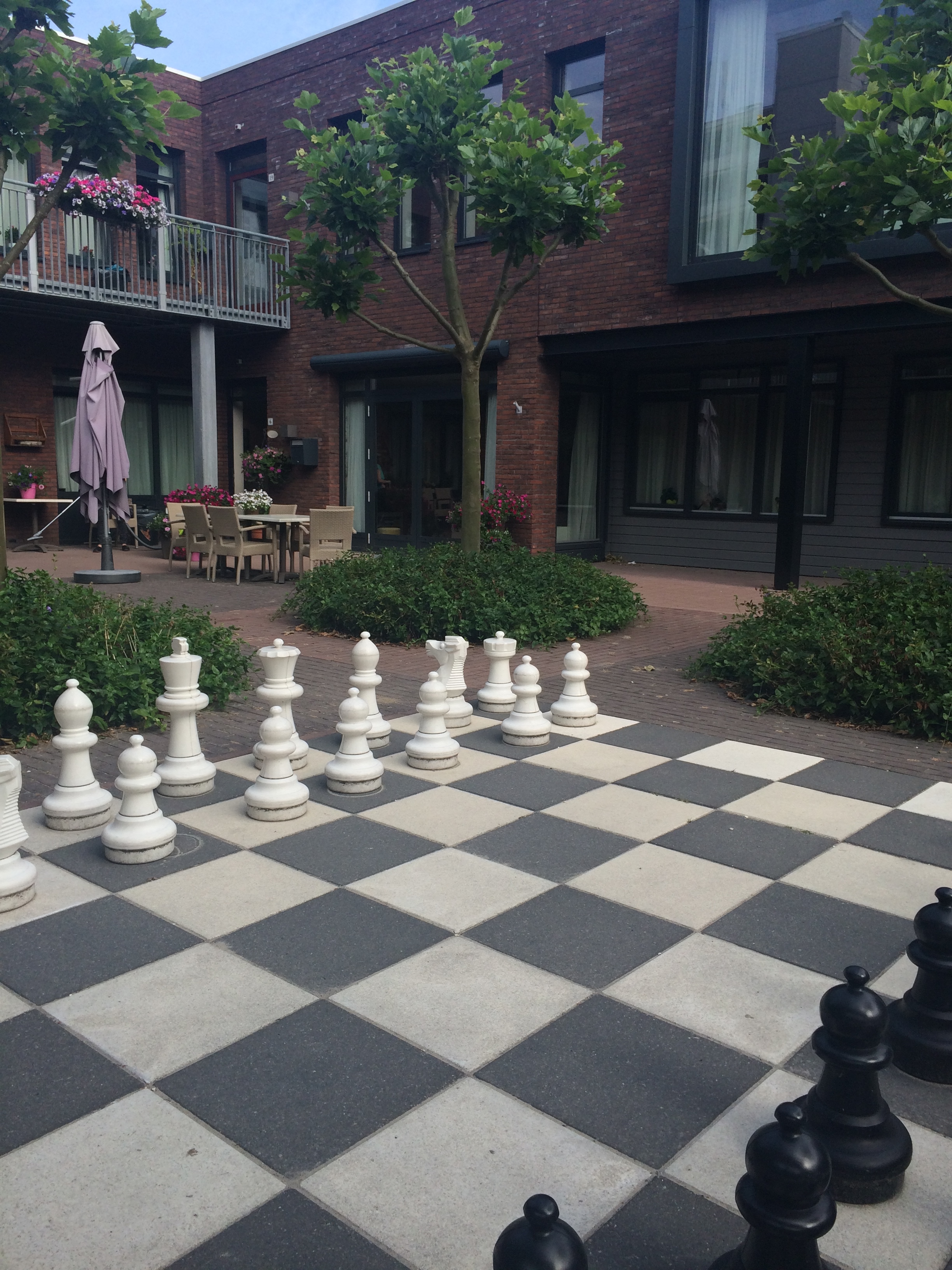
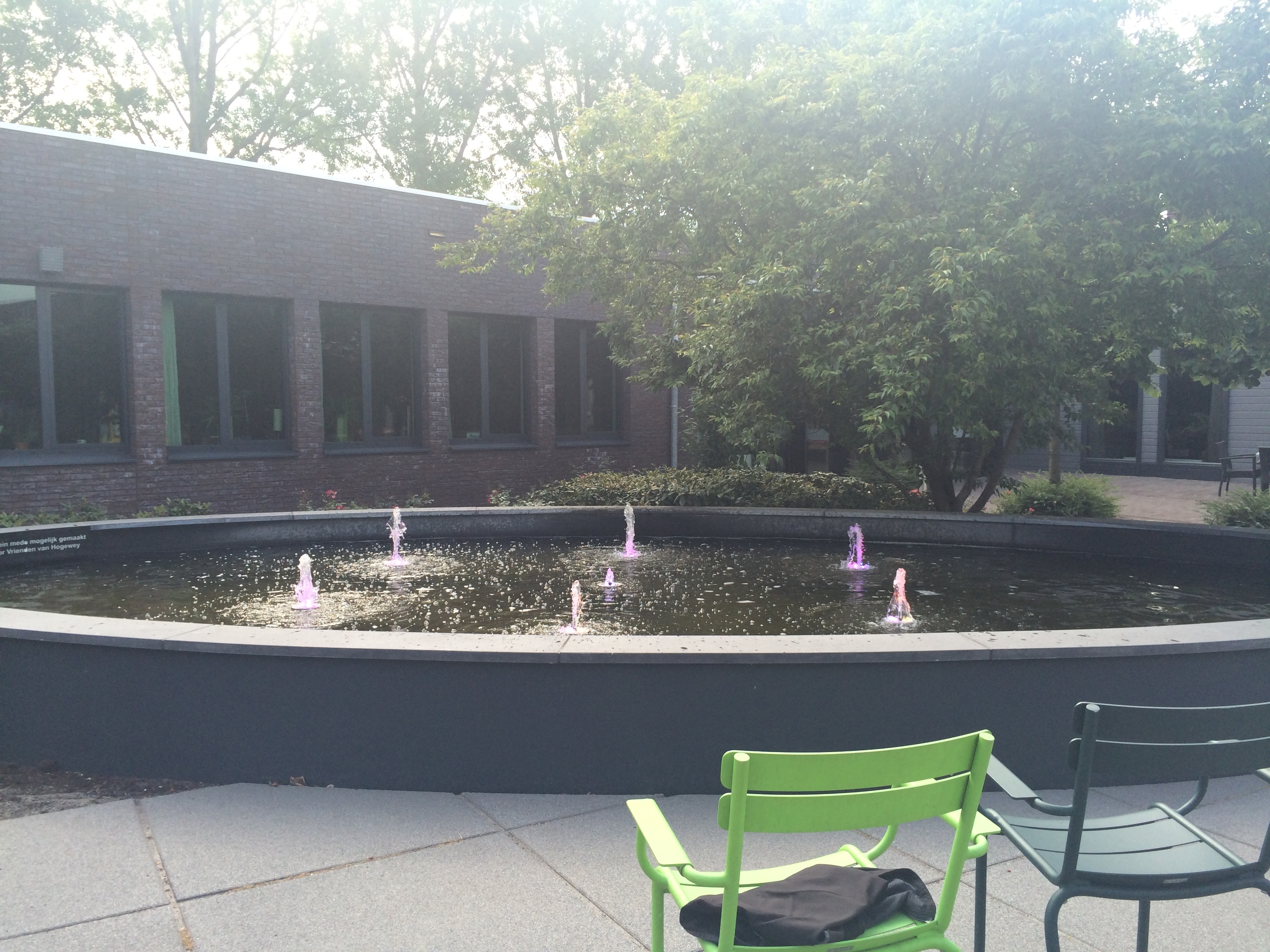
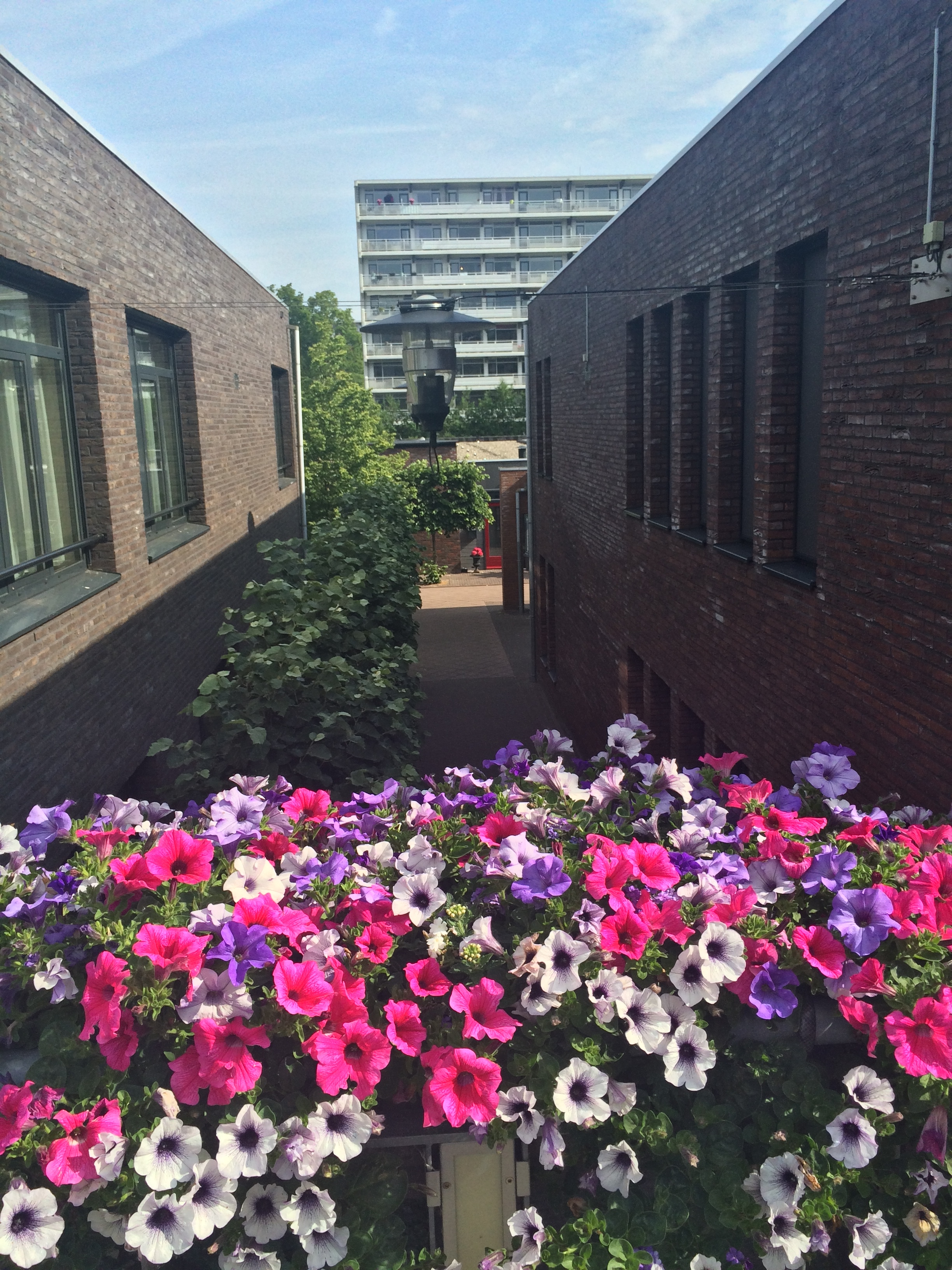
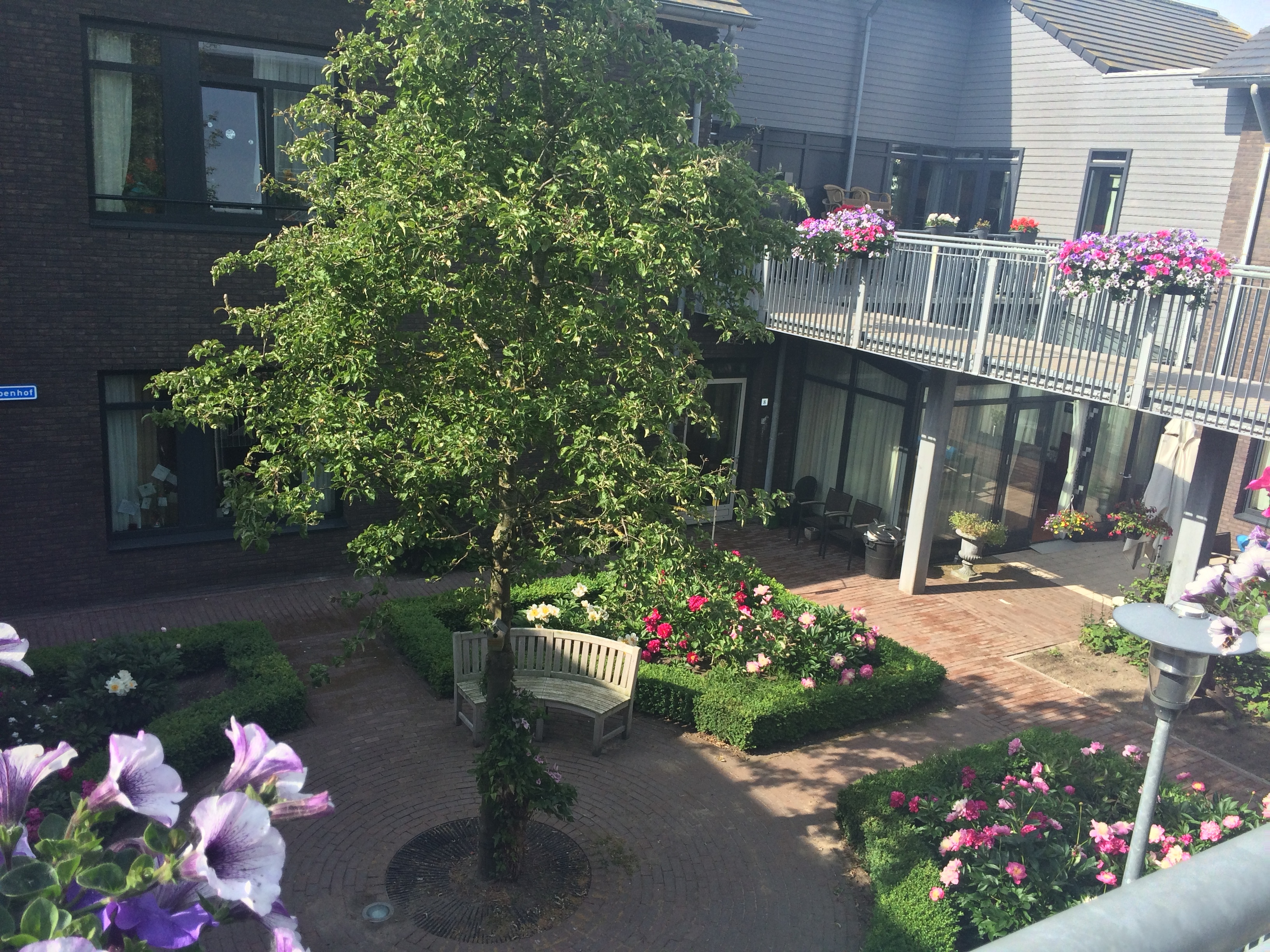
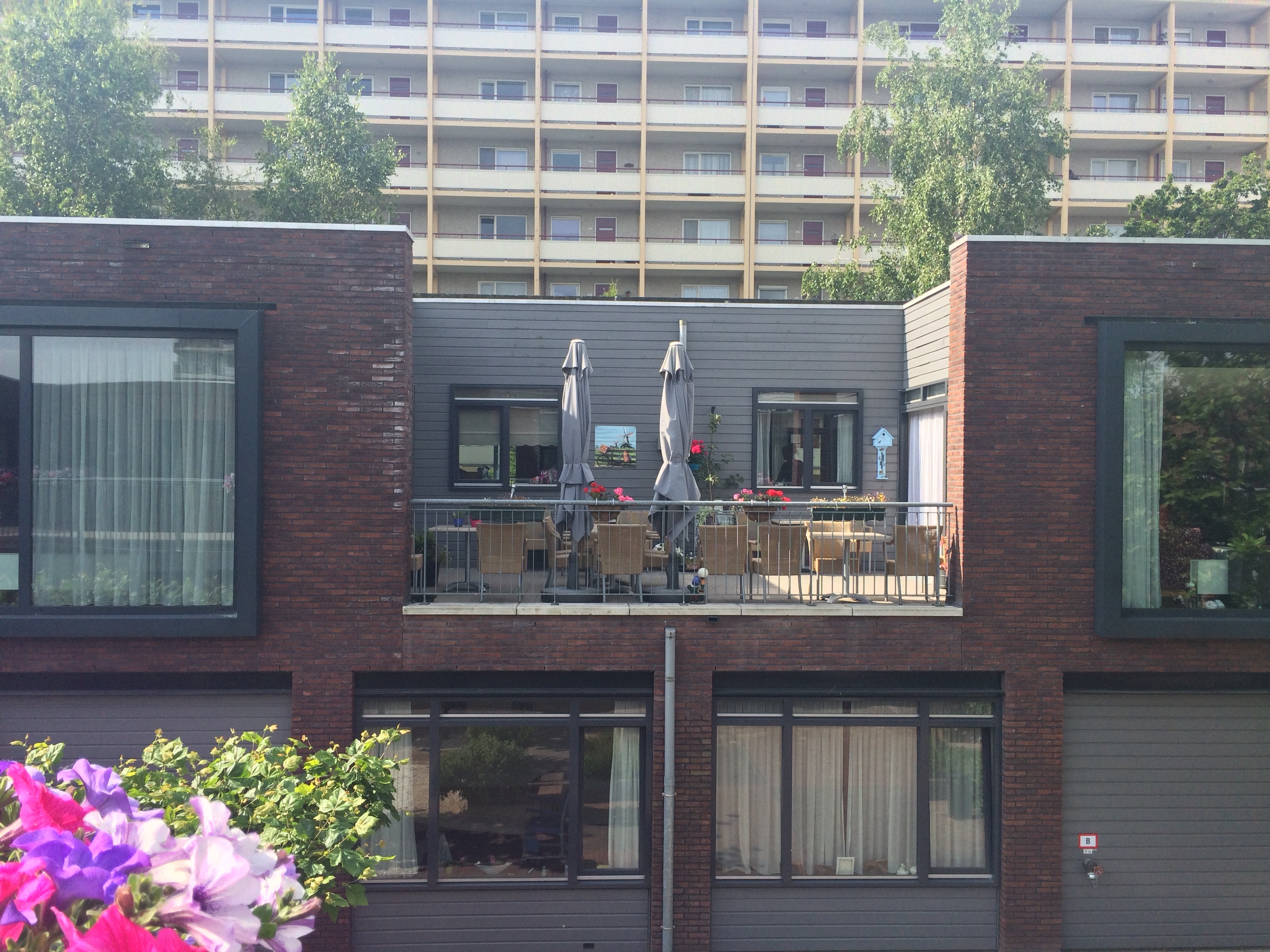
While residents seem to respond best when they retreat to private homes with likeminded neighbors, segregation is not maintained in outdoor life. Just as in a regular town, the streets and squares are neat and tree-lined. There are benches everywhere, as well as bikes for rent (no charge!) and pretty, calming fountains. There are no locks on any doors; all are free to roam about if and when they please, no matter the time of day. The town sits on nearly 4 acres, about half of which is actually built upon (homes are ~3,000ft2 each, with 5-7 bedrooms per home). There are tons of gardens, patios, and common areas, each with fresh flowers and one more beautiful than the next. Doors and windows are left propped open. What’s the catch, then? How is this community secured? Take a look at the somewhat confusing ground level floorplan (maybe this looks simple to you, but I’m a realtor, not an architect :/ ):

hogfirstfloor

Though lots of open space and room to wander, apartments line the entire perimeter of the community. Aside from the single main entryway, there are no doors that lead outside of Hogeweyk. They all open up to areas within the village itself. As a result, locks are unnecessary.. wander guards are obsolete.. coded elevators are foolish. Not only are residents able to go out, they’re encouraged to. HALLELUJAH!

As was the case in Jim Carrey’s The Truman Show, however, residents are monitored 24/7 via video and audio surveillance. Around the clock care is provided by 240 “villagers” who are actually trained geriatric nurses and caregivers dressed in street clothes. Staff takes care of everything from cooking meals and planning activities to assisting with ADLs and administering meds. Even those working in various Hogeweyk businesses are trained in dementia care, down to the bartenders and theatre actors. No real money is exchanged, and if someone gets lost or becomes confused, there’s always a villager nearby to nonchalantly guide them home. If a nonna forgets she’s ordered coffee and begins to leave before it arrives, a neighbor affectionately joins her and encourages her to stick around. If a nonno steps out in the cold without his winter jacket, a friend will simply bring it out for him. Met with dignity and respect, neither scolded nor corrected, residents are happy, safe, and free. A favorite line I’ve read was spoken by Janette Spiering, one of the community’s directors, who said in reference to a resident who liked to garden: “The fact that he sometimes pulls out plants instead of weeds is not a problem. They can be replaced.” WOW.

Rather than summarize Hogeweyk’s list of daily activities, I wanted to share my unbiased experience of the community and what life appears to be like there. I arrived before 9AM; my flight landed at 7:30 and I immediately picked up my rental car and sped to Weesp (literally. I got a speeding ticket in the mail this afternoon 😐 ). Most residents were still at home, likely showering and getting ready for the day ahead. I spoke with Ellie at the entryway and gathered as much information from her as I could. She was a saint, and even drew me a map to help me find my way to Amsterdam when I left. ❤ She filled me in on some logistics and answered the questions I came prepared with:

  • Similar to some communities here, there are three levels of care
    • They’re referred to as assisting level, care level, and nursing level
  • Technically, there is a ratio of ~1½ caregivers to 1 resident on any given day (~240:152)
  • Overnight, there are 5 caregivers per level of care
    • Instead of “making rounds,” they take turns watching the alarms and walking about the community, all remaining in contact with each other and allowing the residents to soundly sleep
    • Homes are only worked in if there’s a clear reason for doing so (otherwise, they’re kept dark and quiet)
    • If residents are up, caregivers may keep them company, as many prefer to just watch TV before heading to bed
  • Most residents spend a substantial amount of time outside every single day
  • Hogeweyk is open to anyone who wants to visit
    • They want the neighborhood to be as normal as possible, and since the residents can’t leave, they want and encourage others to come in!
    • There is a constant influx of visitors, none of whom are restricted to stuffy rooms or indoor common areas but can rather stroll through town, visit shops, participate in activities, and share a meal with their loved ones
    • *Side Note* nursing home residents in the Netherlands go outside for an average of 96 seconds per day and 60% never receive visitors. Here in the US, 35% of dementia sufferers leave their homes just once a week, whether those homes are the ones they’ve lived in for years or an assisted living/memory care community. Even more heartbreaking, 10% go out only once a month. Obviously, this isn’t the case at Hogeweyk!
  • The cost to build Hogeweyk was over $25 million, $22 million of which was funded by the Dutch government (and the rest by fundraising)
  • It costs ~$7,000 per month to live in the community, though “care insurance” that Dutch citizens pay into for nearly all of their lives covers most, if not all, of that expense
  • There is a perpetual waiting list to get in
  • There are tons of different clubs and various activities, performances, festivals, and markets on a daily, weekly, or monthly basis
  • Hogeweyk a pet friendly community (!!!!)
  • Residents receive the care they need but the emphasis is on normal living, not their illness
    • This method isn’t necessarily suitable for those with a heavy task-focused approach to caregiving, so they’re very selective about who they hire
    • Management is required to do things differently, too; their vision must be recognized and implemented by all, with living, wellbeing, and care all interwoven in such a way that one cannot exist without the others
  • It is important for all staff to communicate with residents both verbally and nonverbally
    • Even if one is far into the disease process and cannot actively participate in or contribute to household activities, seeing, smelling, and listening to discussions about ordinary day-to-day things helps provide meaning
      • They can still be involved and their plate of food doesn’t just appear out of nowhere!
    • Everything is done on-site in each house and it’s communicated to the residents what’s going to be done, what they’re currently doing, and what tasks were just completed; they’re involved and informed verbally and with nonverbal cues
  • Residents’ views of their caregiving “neighbors” differ according to their lifestyle
    • Those from wealthier backgrounds think of them as servants, whereas people of working class origins believe they’re extended family members or friends

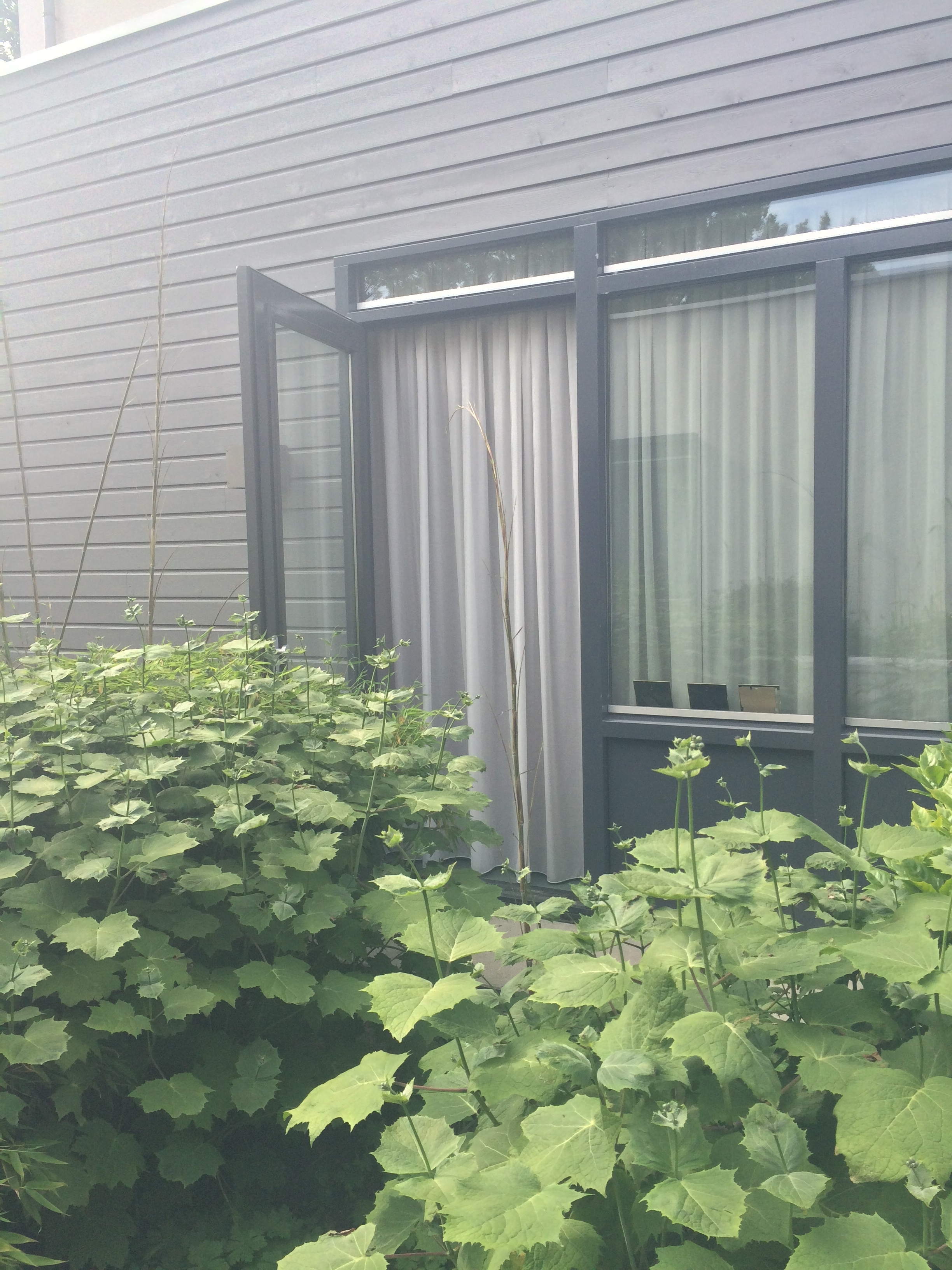
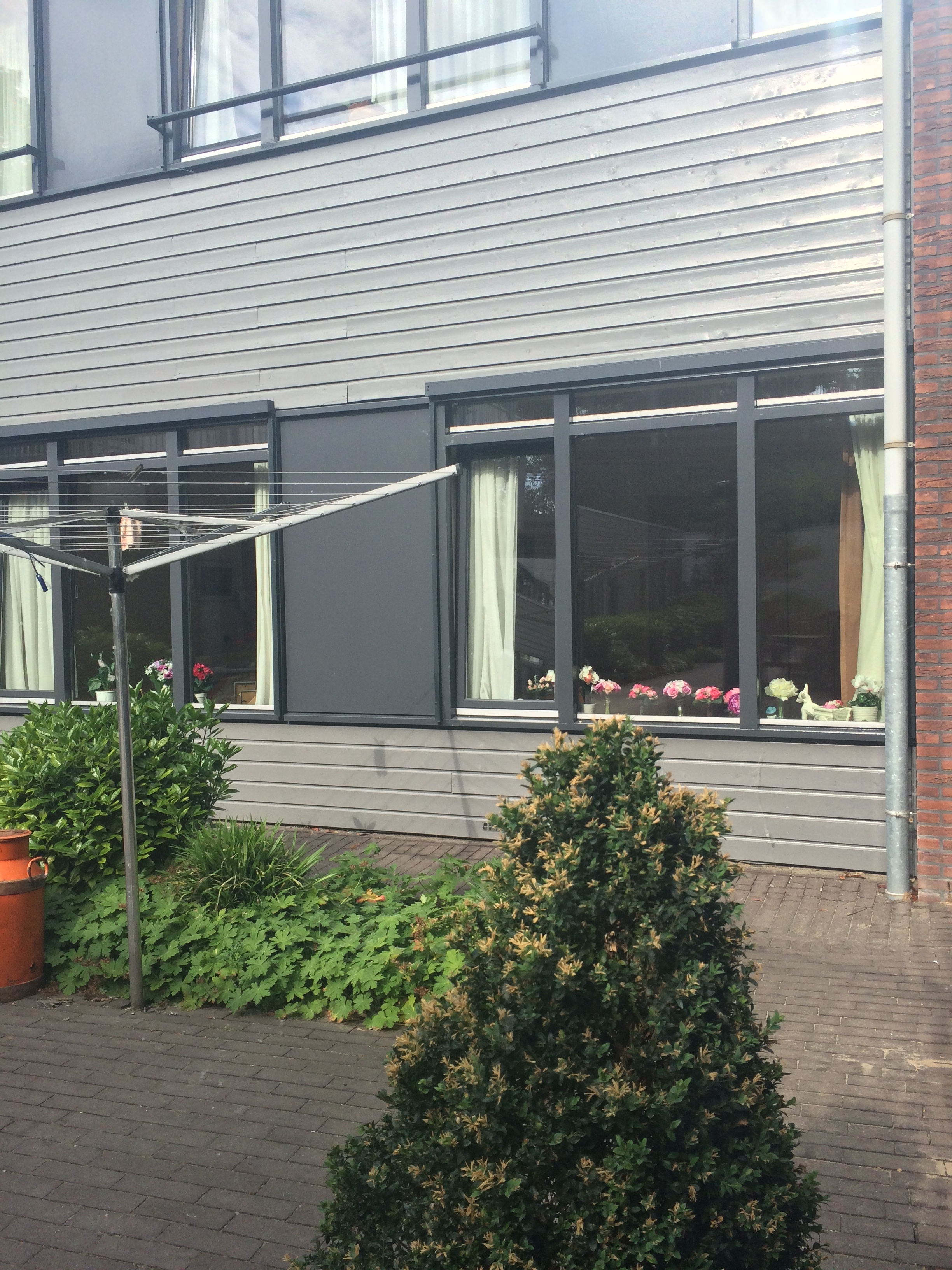
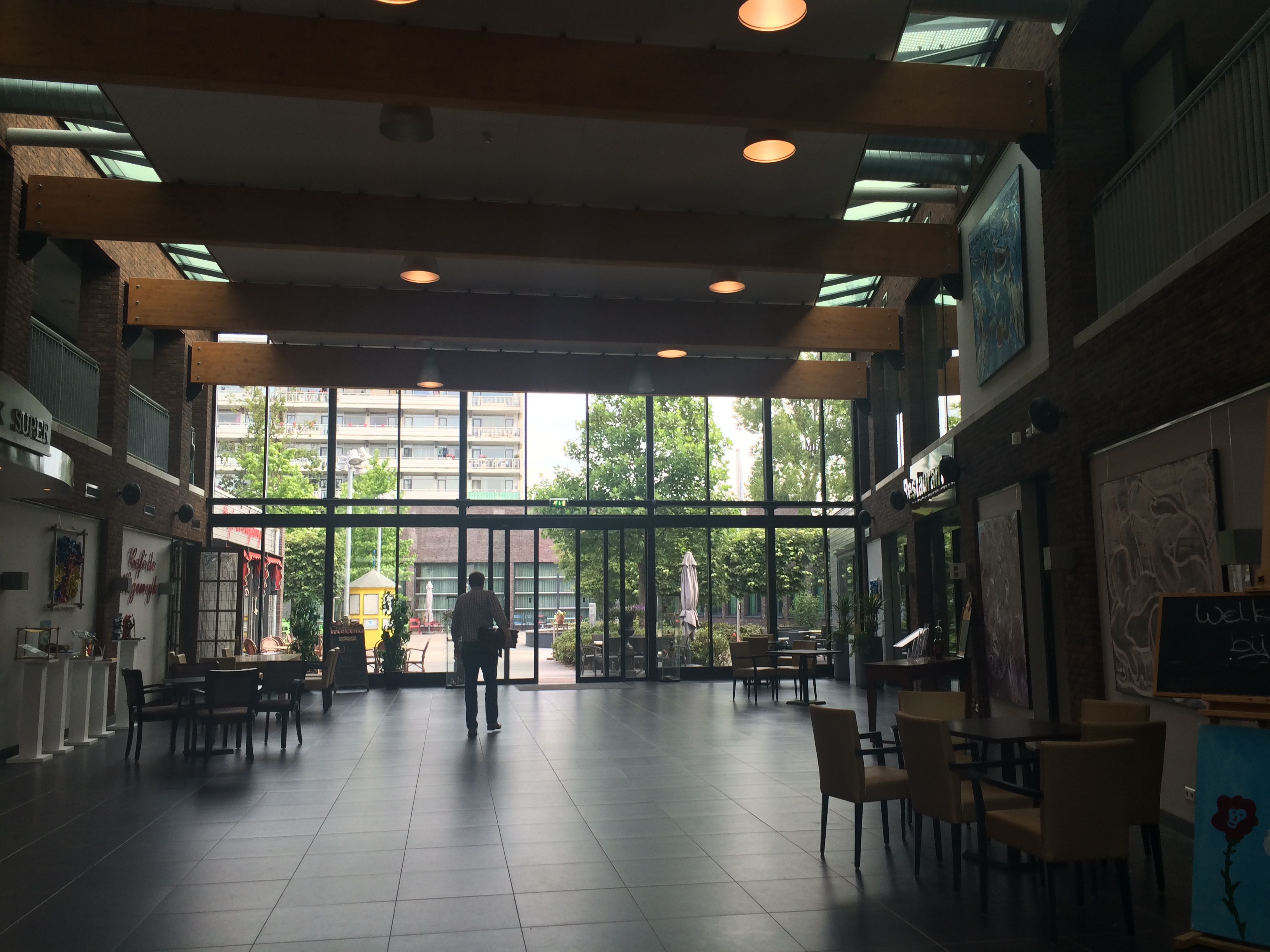
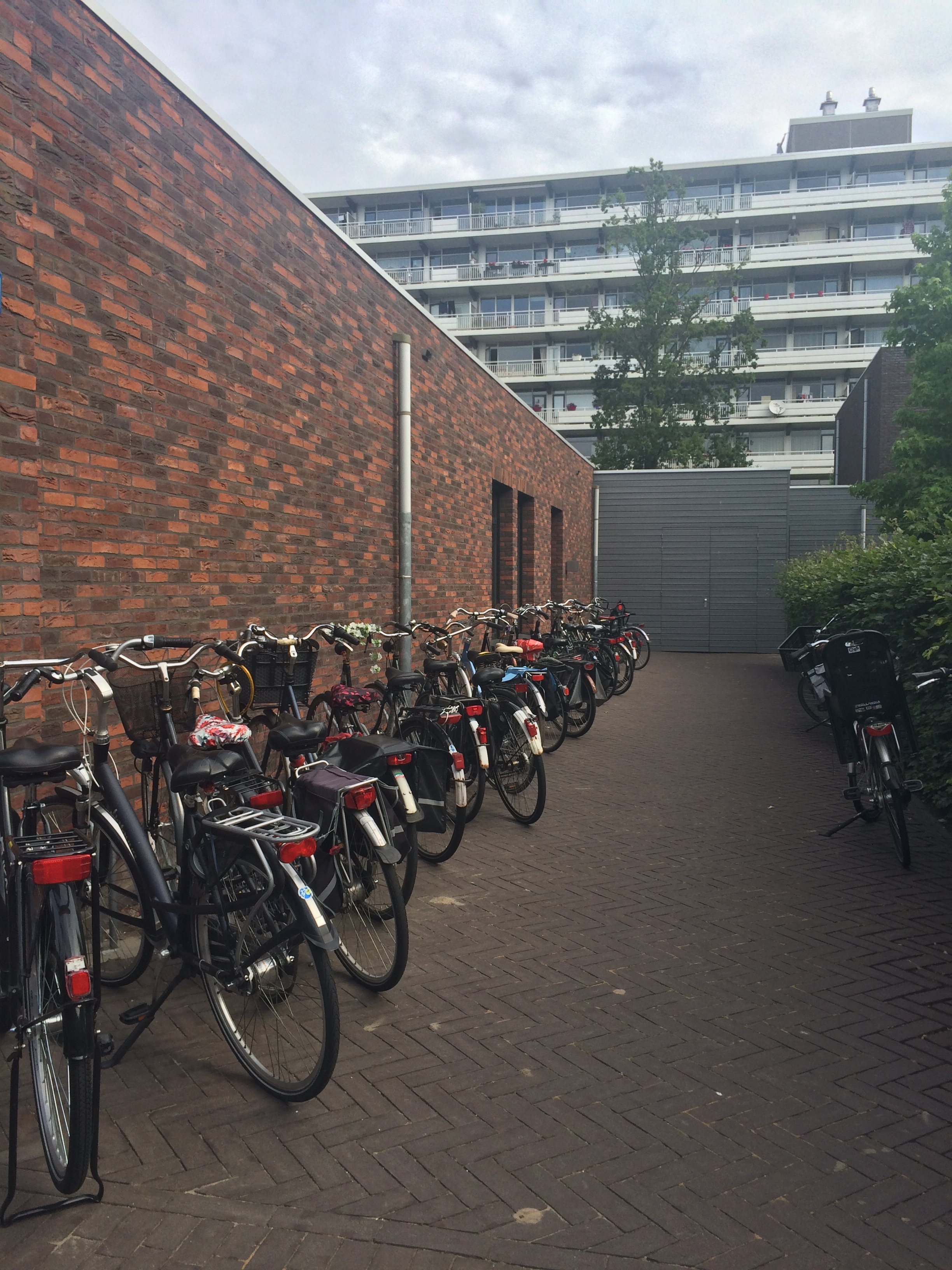
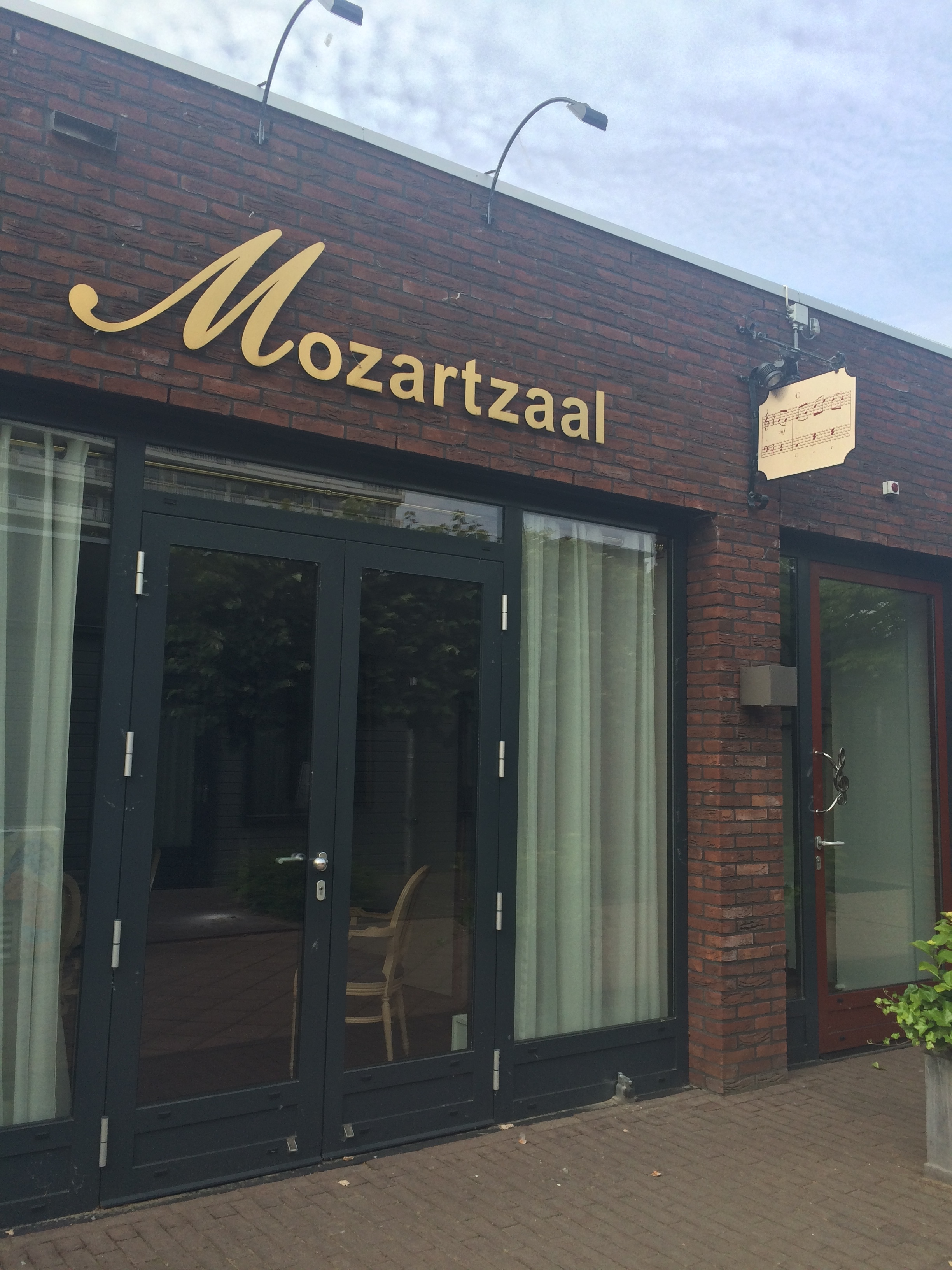
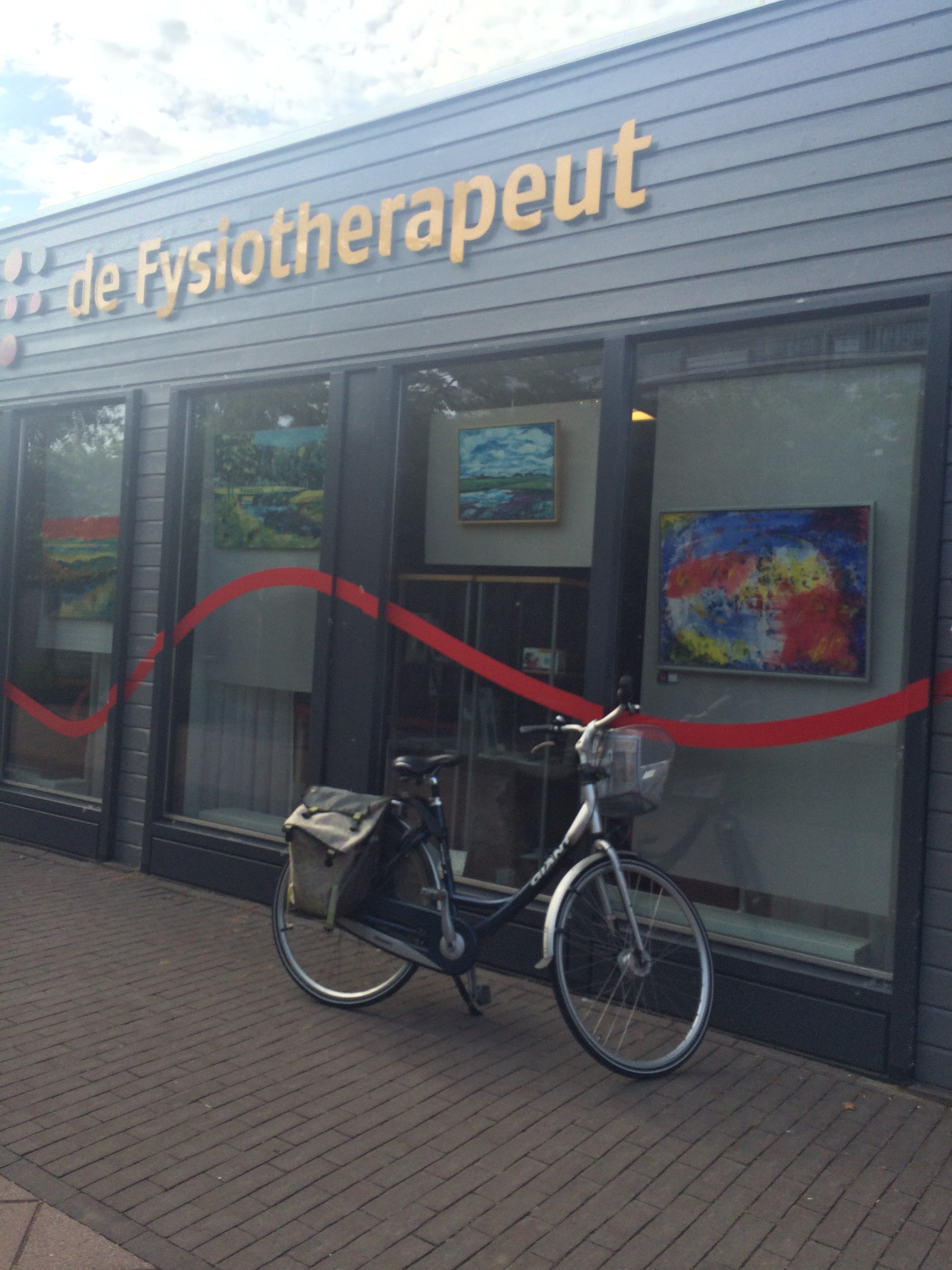
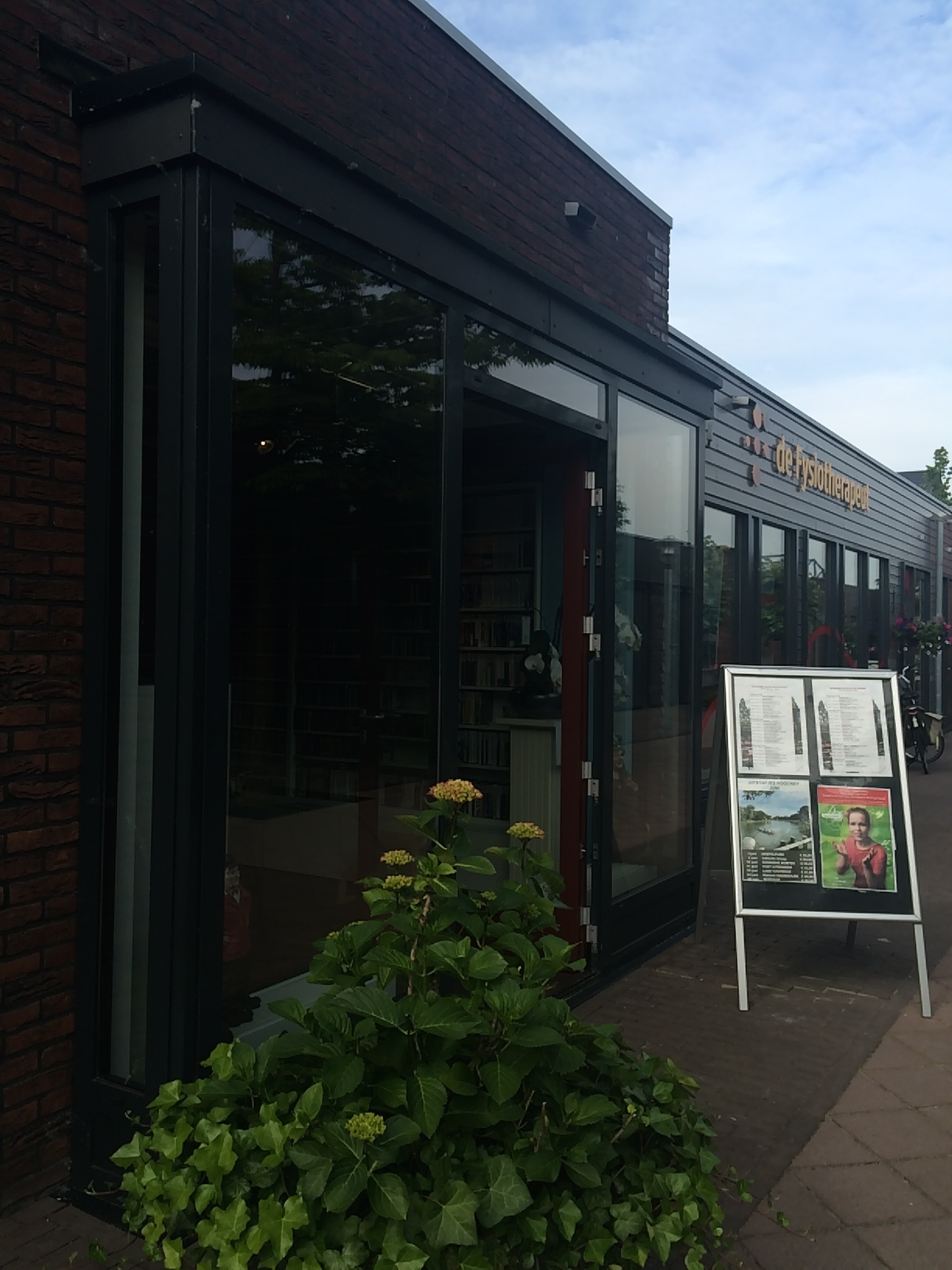
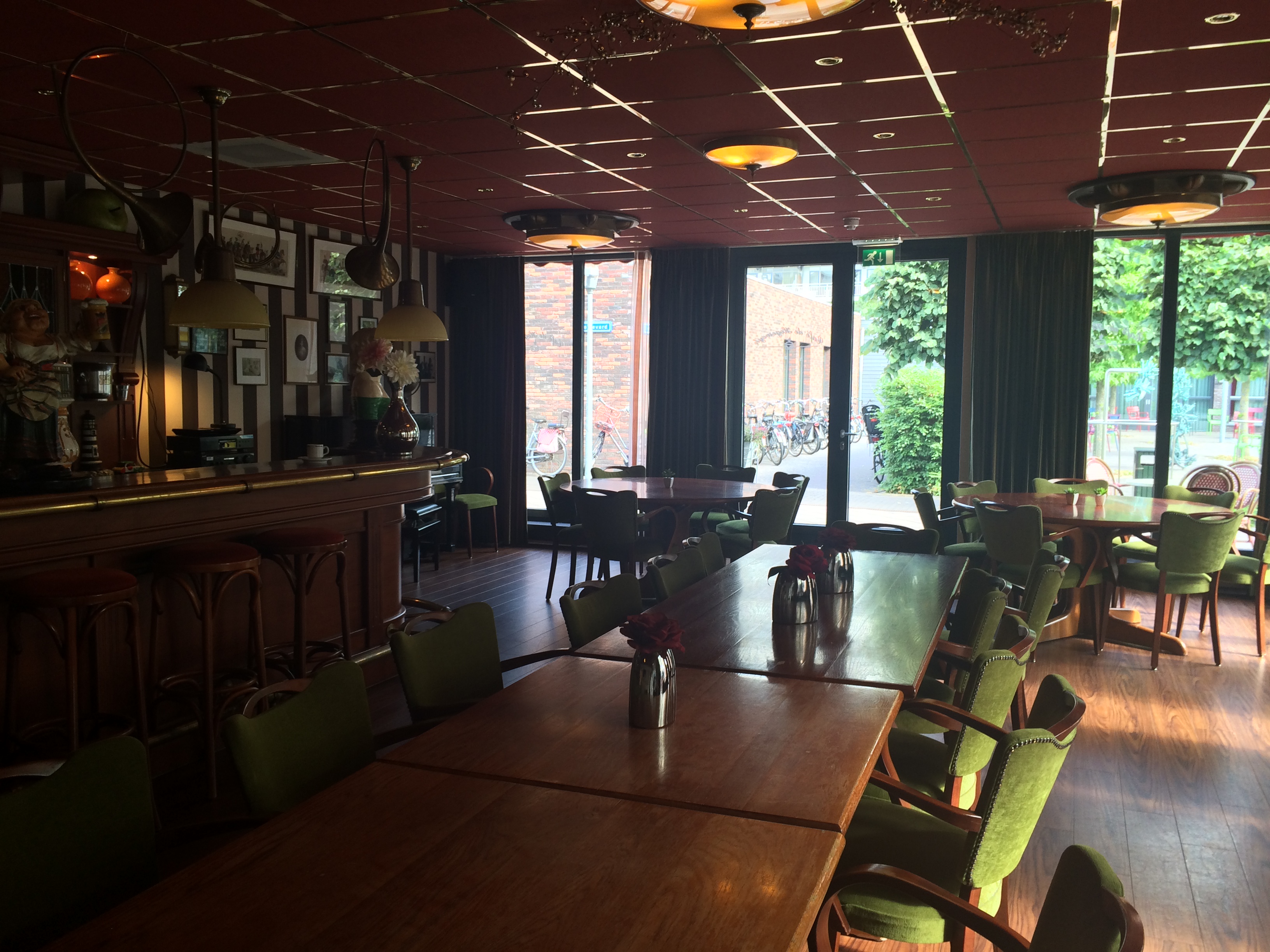
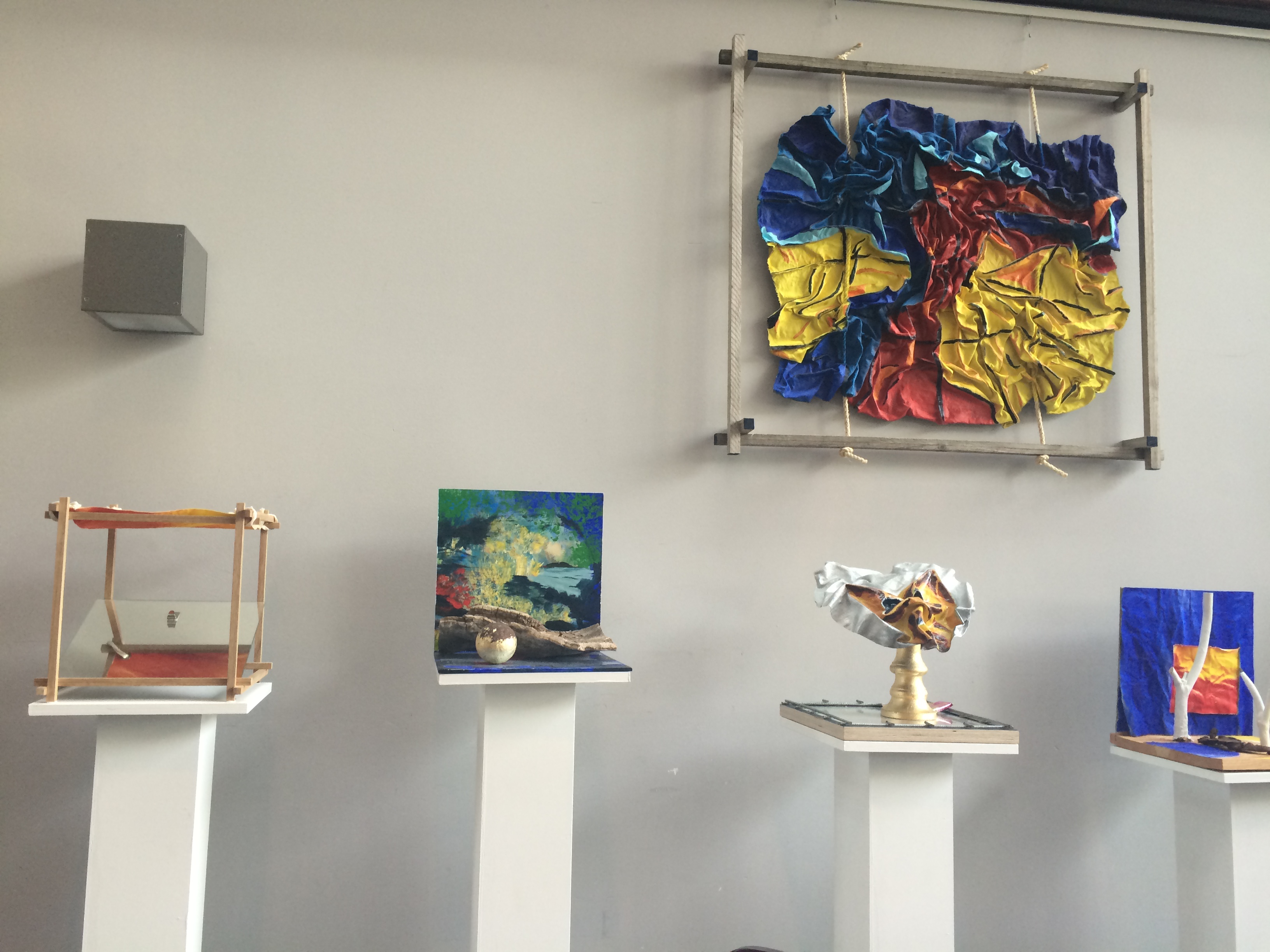
A million questions and thousands of hand gestures later (her English was così così), I had my long awaited tour. As I mentioned, nearly everyone was still in his or her apartment; I was able to galavant around town like a giddy tourist in awe of my surroundings. What struck me most was the normalcy of it all: there were shopping carts outside the supermarket, outdoor seats at the restaurant, and high-top tables at the pub. There were no unsightly med carts, no people dressed in scrubs, and no pull cords in the restrooms. It was memory care heaven. I won’t bore you with the details – the photos below speak for themselves. Just know that it was everything I’d dreamt of and then some.

After 3,655 miles of traveling, I figured it made no sense to tour and run. I wanted to immerse myself in Hogeweyk and take in as much as they’d allow me to. I sat outside of the café and introduced myself to some employees. Ok, fine.. I awkwardly inquired about where I could find coffee (dear God did I need it) and nonchalantly asked a hundred questions about their jobs. Welcoming is an understatement when describing Hogeweyk’s staff; from the house cleaners to the caregivers (& of course my girl Ellie at the entrance), they were beyond incredible. I chatted for a while with a younger man and thanked him profusely for his hospitality, insight, and espresso. I returned to my seat (in the sun, of course) and began taking notes.

Within a few moments, I was greeted by a cheerful resident who was “so happy to see me again.” I’m not worried about violating HIPAA laws (or whatever the Dutch equivalent may be) because I know I’m butchering these names, so I’ll call her what I heard her introduce herself as: Will. Will, like many residents, learned to speak English in school. We chatted as though we’d known each other for years, and I reciprocated my surprise and excitement to have bumped into her again. We talked about her family and how her father owns a hotel in Amsterdam. Will believes she’s in her 20s and still resides with her mom and dad. I asked ifs he’d like some coffee, and was happy to run inside and make her a cup. Upon my return, Will was gone; she’d likely been confused or forgotten I was coming back. The nice man I’d chatted with prior, however, had overheard our conversation and warmly accompanied Will to my table. He explained to her that I’d gone to get her coffee, and I melted at her response; she must’ve mentioned five times that she couldn’t believe her nice neighbor came to tell her that I (her friend) had gone to fix her a cup. Truthfully, I couldn’t believe it either. The Hogeweyk vision was obvious first in Ellie and reinforced continuously by everyone throughout the duration of my short (but valuable) stay.

Soon, there were three of us; another resident sat beside me, followed by a fourth, a fifth, and so on. Our table in the sun was packed and I was in my f’ing glory. Will was one of the few in our group who spoke English, but all were happy to converse despite our language barriers (and some obvious aphasia). Various members of the Hogeweyk staff walked by, but none passed without a friendly hello and brief exchange. Though evident enough in their overall demeanors, Will and her acquaintances assured me that they live in an incredible community with friendly, helpful neighbors. My heart was full and my head in the clouds.. how do we bring this place home?!

The remainder of my time was spent quietly observing life at Hogeweyk, and that’s exactly what I witnessed: living. In this tiny “fake” village, I saw true, unrestricted, happy, meaningful life. The innovation lies not only within the community’s design, but also (and primarily) in its approach. Hogeweyk is busting at its unlocked seams with compassion, dignity, freedom, and love. I can only hope to be part of such an incredible movement here in our own country one day.
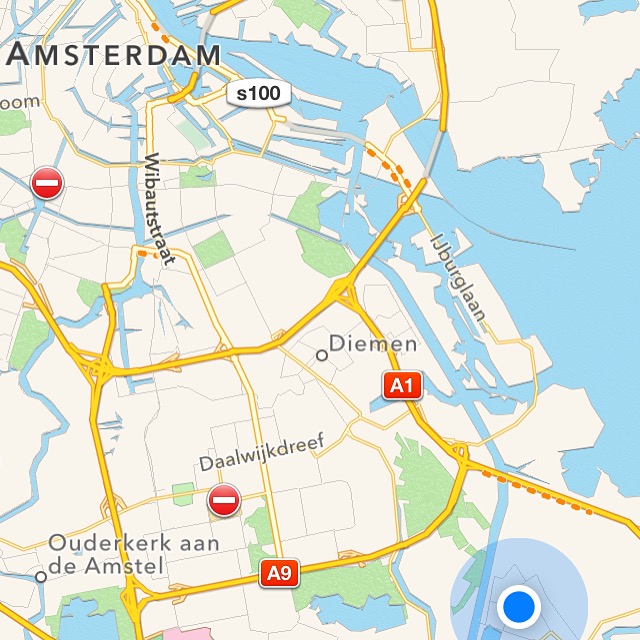
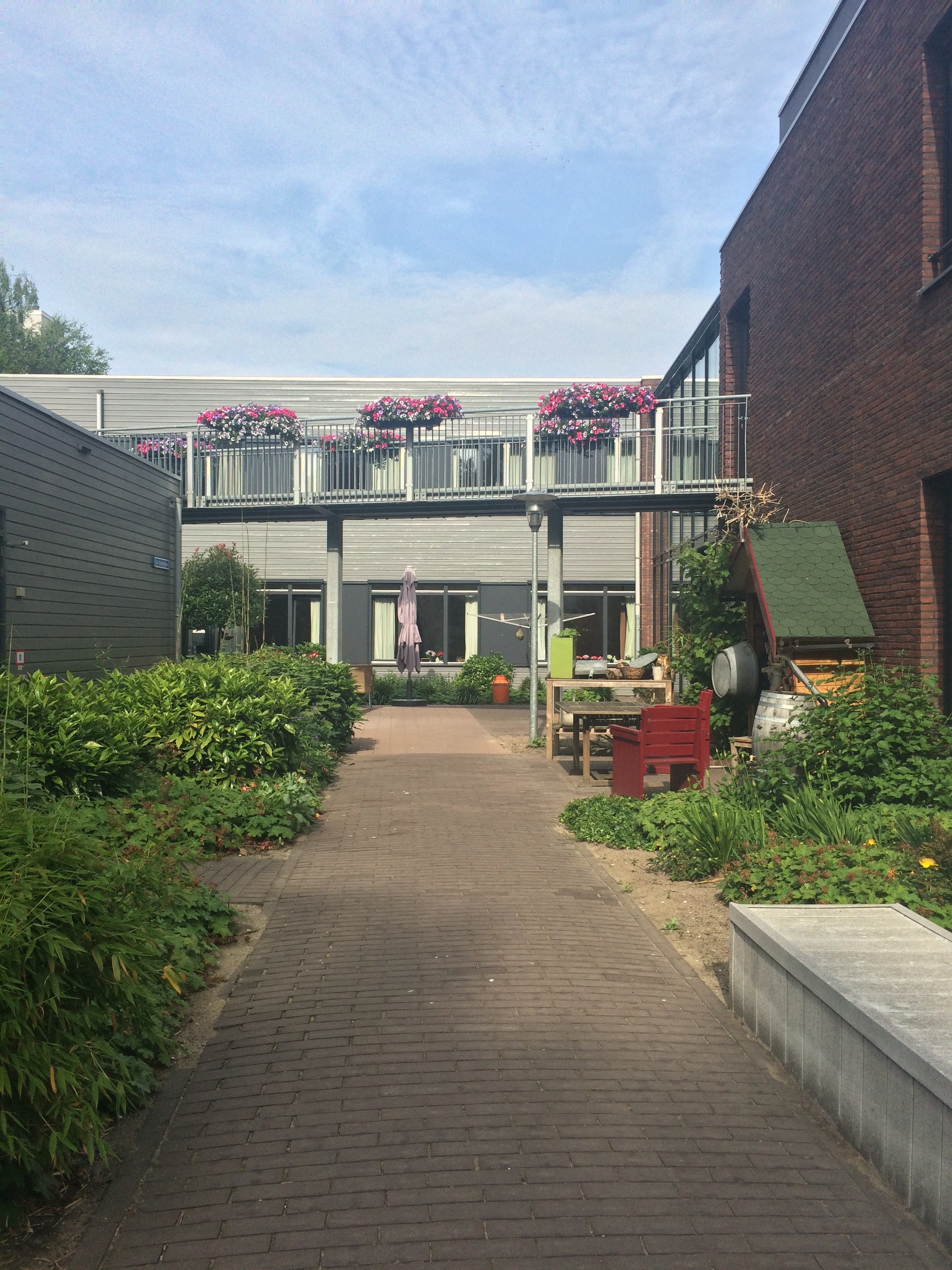
IMG_9928_2 IMG_9809_2 IMG_9813_2 IMG_9817_2 IMG_9821_2 IMG_9823_2 IMG_9825_2 IMG_9827_2  IMG_9831_2 IMG_9833_2 IMG_9837_2 IMG_9839_2 IMG_9841_2 IMG_9847_2 IMG_9855_2 IMG_9867_2 IMG_9870_2 IMG_9872_2 IMG_9873_2 IMG_9874_2 IMG_9879_2 IMG_9881_2 IMG_9882_2 IMG_9883_2 IMG_9884_2 IMG_9886_2 IMG_9887_2 IMG_9890_2 IMG_9898_2 IMG_9908_2 IMG_9910_2 IMG_9914_2  IMG_9918_2 IMG_9922_2 IMG_9924_2 IMG_9929_2 IMG_9930_2

Mi Senti?

So, we know from past posts that my favorite Italian expression is the deceivingly complicated “Dimmi tutto.” The one that’s most ingrained in my mind, however, is more straightforward: “Mi senti?” Working with the elderly requires a unique set of skills. Patience, empathy, and compassion are important, but none are as crucial as a loud voice. (*note* a sense of humor is also essential.) One must master the art of deciphering verbal and nonverbal cues indicative of hearing loss and/or lost hearing aids. In addition to being heard, they must be understood.

Have you ever spoken to someone whose accent made them tough to follow? Or smiled & nodded when you had no idea what a person said, praying that they hadn’t asked a question? Better yet, have you asked “What?!” so many times that you feel bad and give up, eventually pretending to have gotten it? Whether hearing impaired or not, there’s a lot that goes into effectively conversing with one another. Throw in a little confusion and memory loss and things get full blown messy.

I recently spent about an hour sitting and chatting with a group of residents. I’m not always awarded such luxuries, but it was a Saturday and my manager-on-duty shift was long over. I was so pleasantly surprised by what went on: they told stories, shared complaints (none about the staff, obv <3), laughed with one another and truly seemed to enjoy themselves. Don’t get me wrong, this isn’t completely abnormal, but there were new, more timid residents in the group as well as two or three who aren’t particularly fond of each other. Things went so smoothly and I had such a good time that even by 7PM on a weekend, I didn’t want to leave.

What made this evening different? They could hear each other. I encouraged more loves to join our impromptu café party, but I otherwise stayed out of it. I did, however, intercept if anyone’s comments went unnoticed. I repeated what they’d said and made sure we weren’t talking over each other. For those harder of hearing, I used my body language and nonverbals to make things clear. When I was involved, I was truly, enthusiastically, passionately engaged, and it spoke volumes.

 “People with dementia are particularly attuned to the care partner’s tone of voice, facial expression, volume, and hand gestures. Body language counts! It is as if you are speaking to someone who doesn’t speak the same language as you – he or she is looking for cues and clues from the encounter and not relying completely on your spoken words. Examples of positive body language include smiles, offering a handshake, hugs, and standing tall with enthusiasm!” – A Dignified Life

When you don’t hear somebody, it’s frustrating.. it’s as though you’re wasting time. Not being heard is just as bad. I’m learning more and more that regardless of our age or mental status, understanding one another is exceptionally important: being on the same page in interactions, in relationships, and in life is crucial. When my loves don’t hear each other, miscommunications turn into arguments. Frustration leads to anger and confusion to sadness. It’s a downward spiral you can’t climb up from.. it ruins the whole day (well, some “days” shorter than others, but still). Save yourself the heartache and make your voice heard. Listen when you converse and make a true effort to be on the same page. You never know what kind of parties you’ll miss out on otherwise.

Which Floor?

Have you ever walked into a crowded elevator and had the awkward trying-to-reach-it-yourself-slash-hoping-someone-steps-up-to-push-the-button encounter? You know.. the cute, “Which floor?” that’s often followed by small talk or a joke about how cramped it is? Aside from the occasional fumbling, it’s usually pretty painless. This morning wasn’t one of those times.

Just before lunch, a man visited Il Sogno on his in-laws’ behalf. We chatted for a while before touring the community and meeting some nurses and residents. As we made our way upstairs, one of my loves joined us in the elevator. I asked which floor she was heading to, to which she replied without hesitation “the basement.” Va bene! From the ground level, the three of us cheerfully went up to 2. My visitor was confused; “What’s in the basement?”

Not only do we not have a basement, we apparently do have crazy sales managers (sono io!). Once we were alone, I explained the reasoning behind my acquiescent response. In even the earlier stages of dementia, reality orientation can be distorted and words confused. A second floor apartment could be mistaken for a lower level’s. Not bad, right? We can politely correct the mix-up and move on? Nope. Per favore, don’t do that. There are a few reasons why:

  1. You will not win that battle. I’ve posted about this before, but it’s essential that this point be understood. Another nonna was insistent on Monday that her car was parked outside and someone needed to check on it. I overheard family members reassuring her that her beloved Cadillac, which was sold years ago, was in good hands. They reminded her (with noticeable frustration) that they’d had this conversation earlier and she knew the car was gone. Her reaction? Utter confusion and, as a result, anger.

As dementia sufferer and former professor Cary Henderson wrote:

You can’t build on experience. No two days and no two moments are the same.”

Dr. Taylor reiterates:

“It is virtually impossible to win an argument with an individual with dementia. … Trying to present an argument or convince the person of a particular point of view will lead to frustration and failure. Also, confrontation will only cause the person to be more defensive, further harming communication.”

  1. You will do more harm than good. I promise you, I understand how insanely heartbreaking it can be to watch a loved a one helplessly decline. You want to fix things; you’re dying to save them. Reminding them that they’re wrong, however, won’t help their mind – it’ll hurt their feelings. Imagine being told (by someone younger than you, no less!) that you’re mistaken about something you’re certain of.. or hearing, in so many words, that you had a conversation you know never took place. Has everyone else lost their minds?!

Every time I have a feeling that I’m losing – losing contact, losing my brains, whatever it is, I panic. I think the really worst thing is you’re so restricted. … You just feel that you are half a person and you so often feel that you are stupid for not remembering things or for not knowing things.”

Cary Henderson

Paranoia is often an accompanying symptom of this disease, and understandably so:

“I would just chalk up paranoia as one of those feelings which is basic to Alzheimer’s people. The feeling of frustration, the feeling of having missed something. It’s real big. It’s heavy. We miss a lot of things and there are times when I feel like people are plotting against me. … I think paranoia, if I’m reading this right, almost has to be something that’s very basic to living with Alzheimer’s.”

Cary Henderson

There are going to be mistakes. There’ll be moments of confusion (and some of clarity <3). There will without a doubt be instances when your nonno is flat out wrong. Agree with him anyway.

“My advice to people who are caregivers is that…really…just keep things under control. Keep things easy to understand – not baby language or something like that. Don’t talk down to us. … [We] make an awful lot of mistakes – just try to bear with [us] and correct [us] gently. … There’s no sense in fussing at [us] anyhow – because I don’t believe [we’ll] understand what the problems are.”

Cary Henderson

Let go of the little things and choose not to argue. It’s one of the most important lessons I’ll ever attempt to teach, and it can’t be stressed enough. Will running outside to “check on a car” truly ruin your day? Will correcting your nonna make it that much better? If you take anything from this blog, I beg you, take the ride to the basement.

Where It All Began <3

Since I sent out my infamous “Rome Tips” document for the ~25th time last week, i figured I should post it here so that others can hopefully use it as well. 🙂 Rome is where my love for Italy began. Growing up, I’d drive my parents crazy about going on a trip to Italy. I joke that my ancestors have always pulled me there, and I’m believing more and more that this truly is the case. I took one step off our Alitalia flight in 2003 and was home.

I’ve since been back to Italy a total of 15 times, most of which have included Rome (if even for a day!). Below are some general notes and tips I’ve recorded over the years.

Getting to the City

  • Upon arrival at FCO Airport, follow signs for the Train Station (Stazione, Treno, etc.), and take the train to Roma Termini, the main train station in Rome
    • Should cost ~€14 per person and take about a half hour
    • It’s called the Leonardo Express train and has no other stops, so it’s very easy
    • Purchase your tickets at an electronic ticket booth before boarding the train and be sure to validate them before you hop on (you’ll just insert them into a validating machine that will stamp them)

Top Sights

  • Villa Borghese, the Central Park of Rome
    • VB is beautiful to walk around and inside is a museum, a great zoo, lots of fountains, etc. It’s easy to get lost in, though!
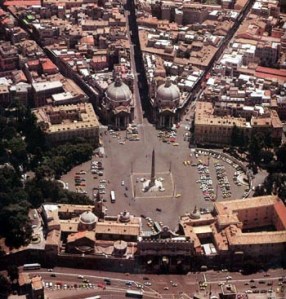
  • You can exit the park at Piazza del Popolo if you’d like, which is a big, beautiful piazza that gives way to three streets that are known as “il Tridente” – Via del Babuino on your left, Via del Corso down the middle, and Via di Ripetta on your right (when the Piazza is behind you and you’re facing the three streets)
    • Il-tridente-di-Piazza-del-Popolo
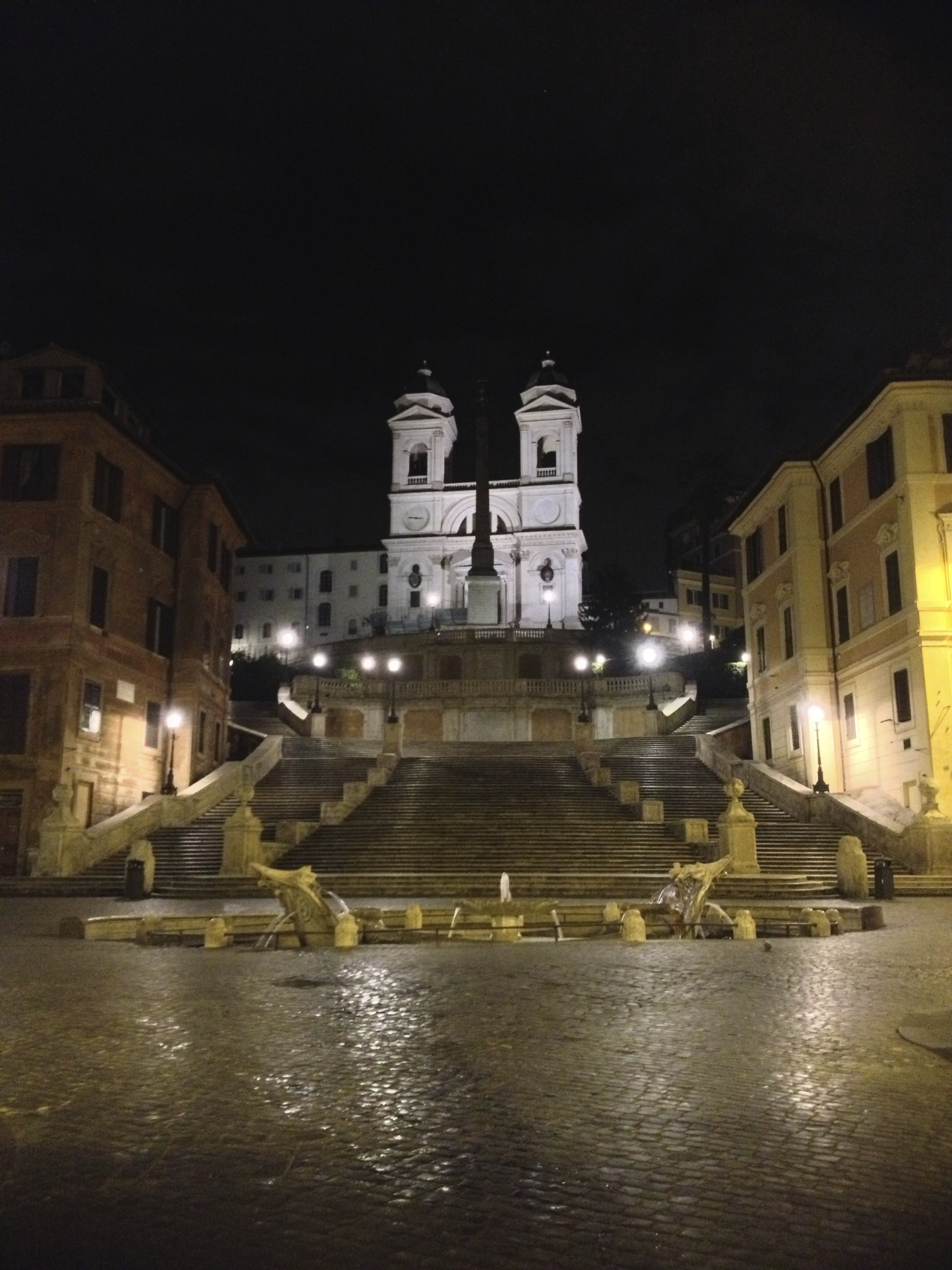
    • Via del Babuino will take you to Piazza di Spagna, where the Spanish Steps are
    • Via del Corso is excellent for shopping!
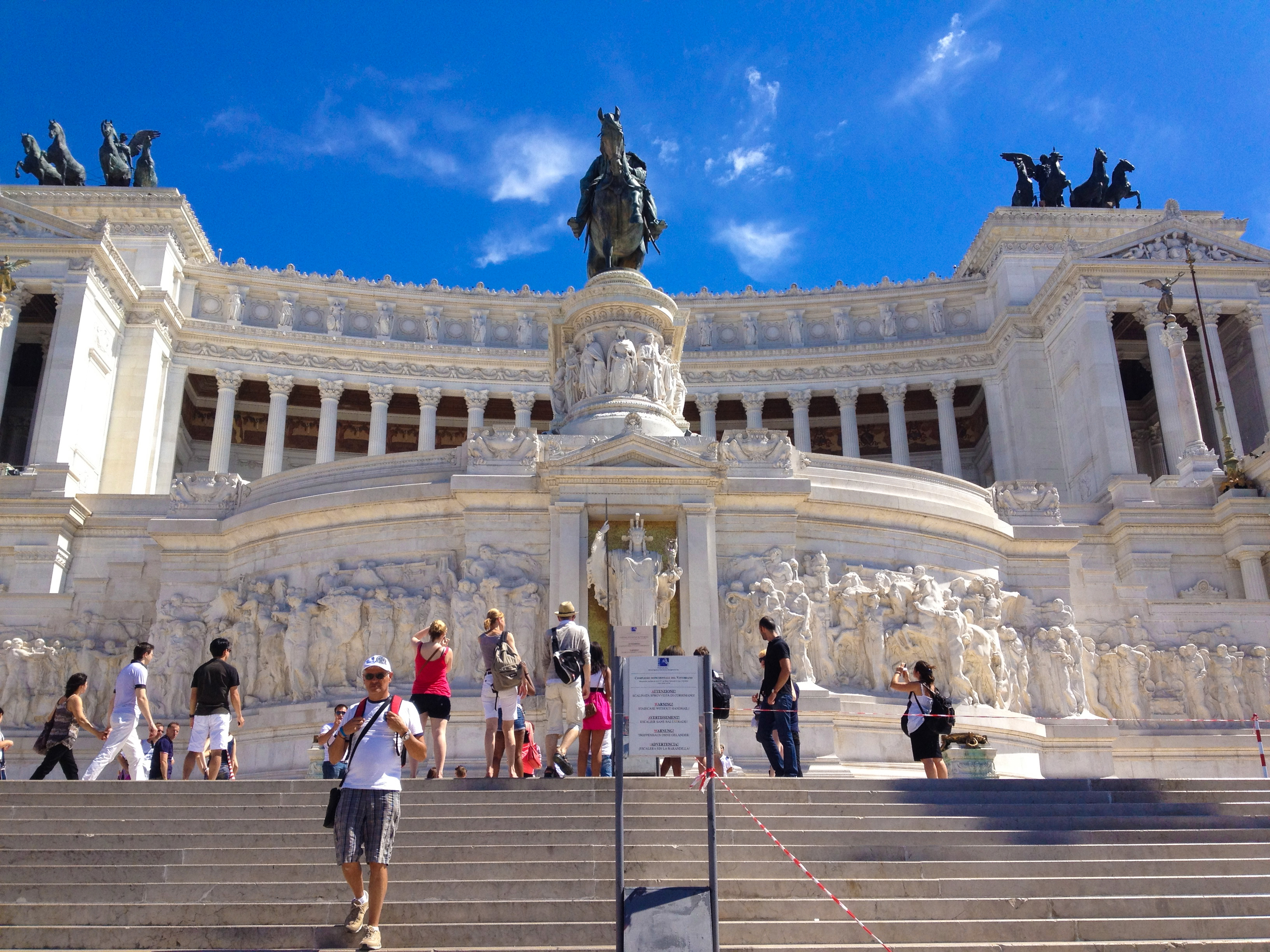
      • All the way at the opposite end of Via del Corso is Vittoriano/Monumento a Vittorio Emanuele (aka Wedding Cake Building, one of the most beautiful buildings in Rome IMO!)
      • Italy 107
      • Take the elevator to the top for incredible views of the entire city, especially the nearby ruins and Coliseum (€7 per person, totally worth it!)
      • The Coliseum and ruins/Roman Forum are right behind this building, and the Capitol buildings are also nearby (to the right when you’re looking directly at it)
    • Via di Ripetta will lead you toward the Pantheon, although it’s off on a side street (there will be signs)
      • Breathtaking structure, especially from the outside
    • La Fontana di Trevi (the Trevi Fountain) is between Via del Corso and Via del Babuino on a side street, and there will be signs for that as well
      • The Spanish Steps and Trevi Fountain are most stunning at night, when all lit up and less crowded, so try to also stop by as late as you can (while walking home from dinner, etc.)
      • IMG_6450 IMG_0818
  • The Vatican and its museums are stunning and well worth however long it may take you to get in
    • Best time to arrive is at the end of the afternoon, around 3PM, as it closes at 5:00 and is insanely busy earlier in the day (especially in the morning!)
      • Lines will be much shorter at this time, and you’ll be able to move through quicker
      • Can get there via metro on the red line (the stop is Ottaviano)
      • IMG_0841
    • If possible, visit the Papal Gardens and the Catacombs (underground, older Vatican with the tombs of past popes)
      • Note: if you get claustrophobic, the Catacombs will be difficult to walk through
    • Be sure to rub St. Peter’s foot for good luck!
    • Your knees and shoulders must be covered to enter – no tank tops, short shorts, etc.
    • The Pope hosts a Papal Audience almost every Wednesday. It’s not a full blown mass, but rather a chance to see and pray with Pope Francis
    • The Vatican is across the river, and as you’re walking back towards it you approach the Castel Sant’Angelo (it’s huge! & can’t be missed!)

Getting Around

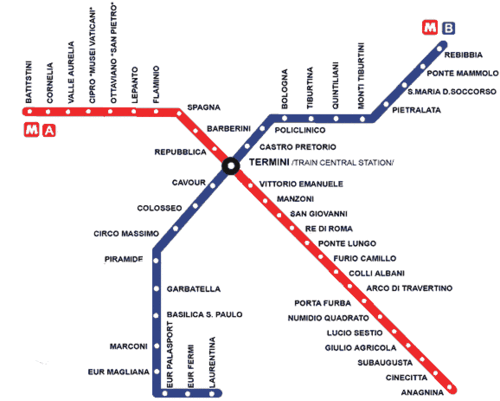
  • The metro system is extremely easy to use! There are only two lines, the red A line and the blue B line, but they’re in the process of building a third
  • Almost all stops you’ll need are on the red line, except for the Coliseum which is on the blue line
    • Most stops of your interest are named according to the attraction that’s nearby (ex: Spagna for Piazza di Spagna, Colosseo for the Coliseum)
    • There is also a tram, but it shouldn’t be necessary to use to see anything popular (unless of course you’d just like to try it!)
    • HOWEVER, everything you want to see in Rome is in walking distance! You can literally walk around the entire city to cover everything, and although it wasn’t built in a day, it can be seen on foot in just two! 😉
    • 6a013483a13a94970c014e8a1c86aa970d-500wi
  • The main station, Termini, is where you’ll arrive from the airport. It is probably THE shadiest spot in the city. Be mindful of your belongings and try to avoid staying in a hotel that’s close to the station, as its surroundings are ugly & unsafe as well

Where to Eat & Hang

  • Piazza Navona is a popular tourist spot for restaurants, but it is expensive and not super authentic
    • Beautiful to walk through, though! Definitely check it out
  • Via Veneto is huge for restaurants, but is even worse than Piazza Navona (they will rip you off in a heartbeat and the food isn’t spectacular)
  • Note: remember that there is no tax on food in Rome, nor are you required to tip anywhere in Italy. In fact, you are expected NOT to tip, as it is not customary. If taxes or tips are added to your bill, you can ask that they be removed, as there is no basis for them
  • The less Americans there are around, the better and more authentic the restaurants will be
    • Don’t bother going into a place that has a waiter outside trying to lure you in – tourist trap!
    • I’ve found that there are great authentic restaurants near the river (although not directly ON it, as they can be touristy and expensive as well)
  • Campo dei Fiori is a popular night-time spot, especially for tourists
    • It’s a piazza with tons of bars and people from all over the world
    • Always a lot of fun!
    • Wine Bar Camponeschi is right outside the piazza and is one of my favorite restaurants in Rome
      • I’ve never seen a tourist there, only Romans
      • Their carbonara sauce is the BEST!
      • The address is Piazza Farnese, 50/50a
      • Phone #: +39066874927
    • Casa & Bottega is my favorite lunch spot
      • Right across the river on your way back from the Vatican/Castel Sant’Angelo
      • The address is Via dei Coronari, 183
      • Phone #: +39066864358
  • There’s a pub crawl that leaves from the Spanish Steps every night that I personally think is amazing. It’s cheap (it at least was around €25, not sure if it’s gone up) and includes unlimited PIZZA, shots at the door of every bar, unlimited beer & wine, a T-shirt, & free entry at each stop, including the club at the end. I don’t even drink and I love it. We did this crawl almost every weekend when I studied abroad in Rome!

Side Notes and Tips

  • Italian country code (for telephone calls) is 39, so if you’re calling an Italian number, you’d dial +39 and then the number
    • You can add an international plan to your phone for $30 (Verizon), but it’s limited and automatically charges you if you go over your tiny amount of data
    • It’s cheaper to get a Vodafone SIM card once you arrive and switch your SIM out
      • Usually €30 for the card and your plan, and you’ll be able to make calls, text, & use data, and it should last your whole trip!
      • You’ll have an Italian phone number but all of your stuff will be the same (pictures, contacts, etc.)
      • They sell them at airports and in big train stations
  • US country code is 1, so you’d dial +1 and then the number of anyone you’re calling back home
  • The maps they give out at hotels are cartoon-like with photos of monuments but are very helpful! The city itself can be confusing to navigate around, but everyone speaks English and can help!
  • ATMs are called Bancomats and they are all over the city
    • It is cheaper and easier to take money directly out of your checking account this way, as exchanging cash will cost you more and you don’t want to have much cash on you unless necessary anyway
  • It is not customary to sit down for coffee in Italy
    • Instead, stand at the “bar” and drink it/have a small breakfast like a croissant
    • Bars in Italy refer to coffee shops, although many also serve alcohol as well
    • “Un caffe`” is not a regular American coffee, but rather an espresso
      • “Caffe` Americano” is American coffee (the closest thing to it, at least!)
  • As in any city, always be mindful of your belongings
    • I keep my phone and wallet tucked into my pants and under my shirt to be safe
    • Don’t accept help from anyone who approaches you at the train stations, etc.
    • Rome is not dangerous by any means, but we Americans can be easy targets!! 😉
  • Building #s come after street names in Italian addresses, and street names are found on the sides of buildings as opposed to on actual street signs like here in the US
  • There is no tipping in Italy! Though it feels so uncomfortable for us as Americans, it is NOT customary to leave tips at restaurants, in cabs, etc.
    • If you really enjoyed interacting with your server and found them to have gone above and beyond, you can certainly leave them something, but don’t feel like it has to be 20%! A couple euro coins would be plenty (honestly!)
  • Driving is on the same side of the road as us
    • Most cars are stick-shift, not automatic, so if you’re renting, be sure to specify that you want automatic and not manual!
    • Tolls can be paid in cash or credit card if your rental doesn’t have “Telepass” (their version of our EZ-Pass)
      • In many cases, you’ll pull up to a tollbooth and take a ticket. Before you exit the highway, you’ll go through another toll booth where you’ll insert your ticket and be given the price
      • Though there are illustrations to help, if you’re paying with a credit card look for “CARTE” on the signs up top to know which lane to stay in
    • You won’t see many cops on the road, but the Italians are definitely watching your speed!
      • There are cameras all over, so be sure to stay at a reasonable speed or you’ll come home to a speeding ticket in the mail! I get one every single time I’m there
    • Their signs are different than ours, so it can be confusing to determine what’s a one-way, where you can and cannot park, etc. See my previous post for details
  • You can drink/fill your water bottles from any fountain in Rome. The water is clean and SO GOOD!
  • The fountain at Piazza di Spagna was just restored, and it looks amazing! They’re still working on the actual building at Spagna but it’s worth the trip regardless
  • The Trevi Fountain, unfortunately, is still undergoing restorations 😦

I hope this helps! If you have any questions, please don’t hesitate to reach out 🙂

Lonely or Alone?

Have you ever heard the saying, “Being alone doesn’t mean you’re lonely, and being lonely doesn’t mean you’re alone”? The psych grad in me is cringing – I can’t find its source to cite it anywhere! Though it’s only been a month, working at Il Sogno has already taught me an incredible amount of information, much of which relates to the aforementioned quote.

It’s no secret that the value of personal connections is immeasurable. In fact, it has been found that social engagement is a more potent predictor of health and longevity than is our age, chronic disease, or even risk factors like smoking cigarettes. In its absence, studies confirm there is an increase in depression, blood pressure, cholesterol, heart problems, cognitive decline, and even Alzheimer’s disease. Loneliness, then, is not only depressing; it’s unhealthy.

Luckily, we have just under 90 nonnos and nonnas residing at our community. Between the caregivers, dining staff, managers, and nurses, I couldn’t guess how many employees there are; one thing we’re not is desolate. But is that enough? As my mystery saying alludes, warm bodies don’t fill voids; loneliness is not necessarily defined as the state of being alone, but rather as a lack of intimacy. There is no significant relationship between solitude and sociability.

Truthfully, our census is irrelevant. There are 45 million seniors in the US alone, yet nearly half of them feel lonesome. Each nonna at Il Sogno requires two types of assistance: emotional support and hands-on care. The latter tends to physical needs and is necessary (but not sufficient) for survival. Emotional support, however, enhances confidence, upholds respect, and nurtures value. That’s where our hearts come in.

Emotional intimacy depends primarily on trust, as well as the nature of one’s relationship. It frequently involves individuals discussing their feelings and emotions with each other in order to gain understanding and offer mutual support. It is necessary for human beings to have this form of intimacy on a regular basis for them to develop and maintain good mental health.”

There is no health without mental health. Warm bodies heal the wounds, but it’s love that lifts the spirits.

“Actually, what I need is to feel that I am still taking care of something. Something that returns love, that gives itself away without expecting anything back. Something that never, ever judges me but just accepts me for who and what I am at that particular moment. Something that is not hung-up about who I was, or who I am, or who I will be. … Something that is happy to be with me no matter where I live, or am forced to live (for my own good, of course). Something that remembers little or nothing of yesterday, but does its best to make today the best day of its life and, quite unintentionally, the best day of my life.”

– my favorite, Dr. Taylor

Passionate, successful care partners exude empathy and perseverance. We focus on the present, brighten days, and practice patience. We celebrate accomplishments, seek out guidance, and give thanks. We offer more than helping hands; we fill hearts and we feed souls. With love and positivity, we partner and enrich. Grazie a Dio, we’re neither lonely nor alone.

An American’s Plea

I’m actually embarrassed at how long it’s been since I’ve posted, especially about my loves. In my defense, in the past five weeks, I’ve left one job, started another, traveled to Europe two separate times, and flown domestically twice. On top of that, I’ve offered a workshop to train first responders on how to effectively respond to calls that involve dementia patients (newspaper article pictured below!). To say it’s been a crazy month is an understatement.

This afternoon, I attended a networking event for colleagues in the eldercare field. One conversation stuck with me most, as it touched upon something that’s been on my mind for quite some time – probably since I returned home from my first volunteer trip to Italy in 2012! A gentleman I chatted with shared his ideas and hopes to change the face of in-home care. He is striving to recruit caregivers of a higher “quality” or skill level, and to compensate them accordingly. To give you some insight (though it’s no secret): caregivers are often foreigners who have obtained either (or both) a certified nursing assistant (CNA) or certified home health aide (CHHA) license. Their pay varies, but in general it pales in comparison to the work they actually do. I swear to you, they’re superhuman. They should all be canonized as saints.

Obviously, I’m all for better training and higher wages – no one is more deserving. However, I couldn’t help but feel sad for this man as he so passionately shared his dreams with me. The issue doesn’t lie within our pool of caregivers themselves. Are some more qualified and compassionate than others? Of course, as is the case in any profession. But it’s not them; it’s us. We’re the ones who need the face-lift. Our culture needs the education, and our mindsets a makeover.

In other countries, senior citizens are worshiped. Their wisdom is celebrated and their knowledge embraced. The terms “grandma” and “old man” are endearing, not degrading, and seniors are the heads of families whose guidance is sought out. I can vouch that Italians in particular adore their elders. To care for them is a privilege – a service that is rewarding in every sense of the word.

Here? We dread growing old and conceal any signs. We talk TO nonnas like children and ABOUT them in their presence, blatantly as though they can’t understand. When one’s health and cognition decline, they’re an issue that must be dealt with. They’re a family meeting whose fate is argued amongst siblings. They are time consuming and aggravating, their condition an embarrassment. Dignity and patience are neither preserved nor expected. This is our norm, and it is absolutely heartbreaking; no wonder we seek immigrants to care for our seniors.

I’m an American, so I’m not pointing fingers; everyone’s guilty and we’re all at fault. These outlooks are learned and these behaviors are modeled. I beg you, per favorelet’s end them here. Let’s challenge the norm and remodel our mentality. At the risk of sounding cliché, let’s be the change we wish to see in the world. Believe me, you’ll beg for that change when you’re in their shoes.

veronacedargrovetimes

My Grandmother Was My Age

Despite last Thursday’s snow, ice, and horrifying plane-skidding incident at LaGuardia, we made it to Poland (almost) on schedule! We were a little delayed, but the four of us were happy to have dinner at our favorite EWR restaurant: terminal B’s McGinley’s Pub <3. We all slept most of the 8½ hour flight before arriving in Munich, where we’d missed our earlier connection but hopped on another a little while later.

Krakow, our final destination, blew me away. We landed and made it to our apartment by around 5PM on Friday, just in time to galavant around the city before sunset. Its center is spotless and incredibly charming; to me, it felt like a mix of Verona and Vienna, though inevitably laced with a more Eastern European don’t-bother-asking-anyone-for-help feel. We fell in love instantly.
The main purpose of the trip was to tour nearby concentration camps and ghettos. Chrissy and Briana are WWII buffs, and Les and I took a Holocaust class as juniors at the Mount. We’ve kept an eye on flights to Krakow for years but have never been able to find anything for under $950 or so. Warsaw is occasionally cheaper, but it’s much farther from Auschwitz and therefore wouldn’t make sense for our short weekend trips. By some act of God, however – and by “act of God” I mean a miracle called “Cyber Monday” – I unexpectedly came across flights for ~$600! I called Briana immediately (which is obviously indicative of some sort of crisis or emergency since I hate the phone), and we booked it on the spot, no hesitation. Les and Chrissy quickly followed suit. Is this what addiction feels like?! The rush of clicking “confirm booking” is undoubtedly like no other. 😉
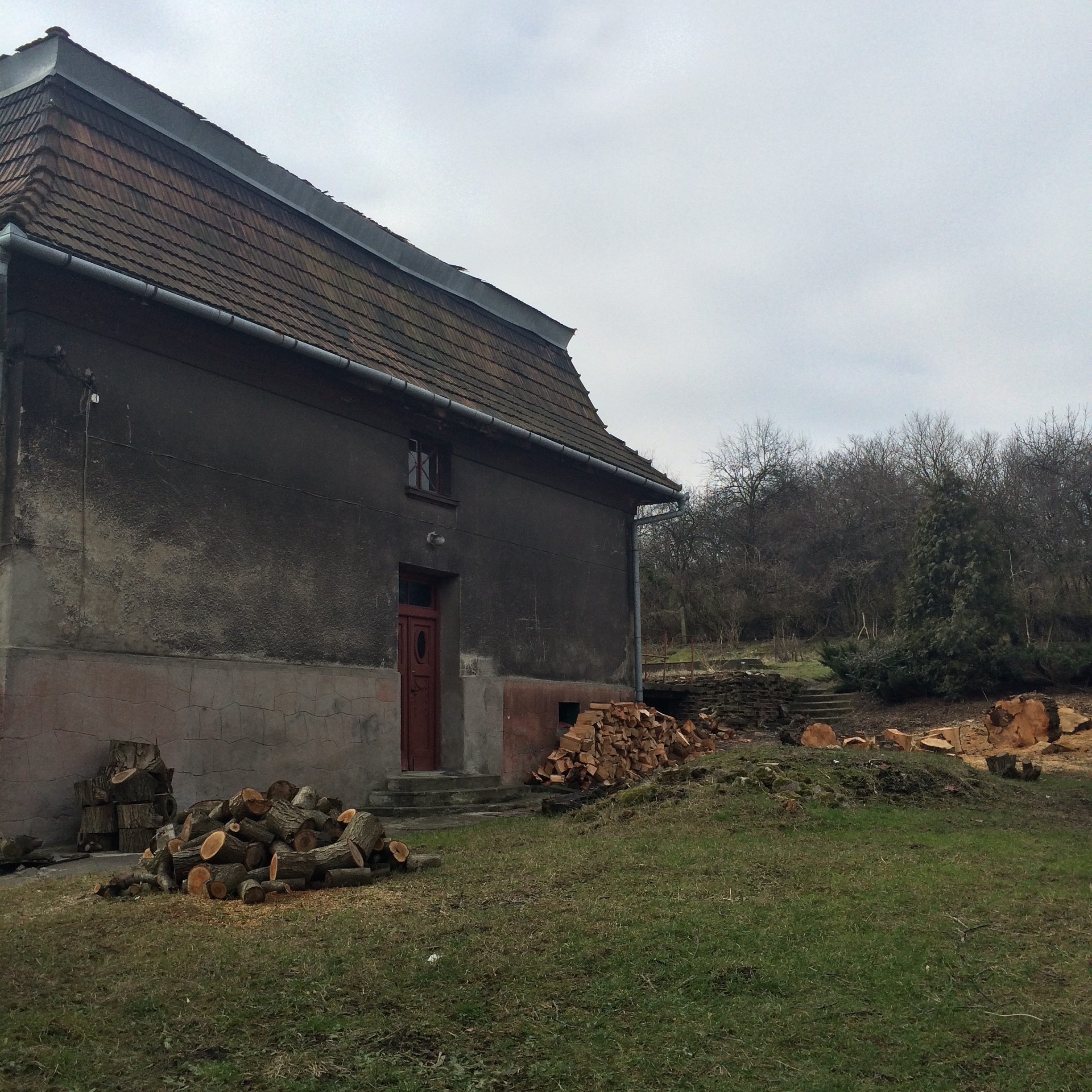
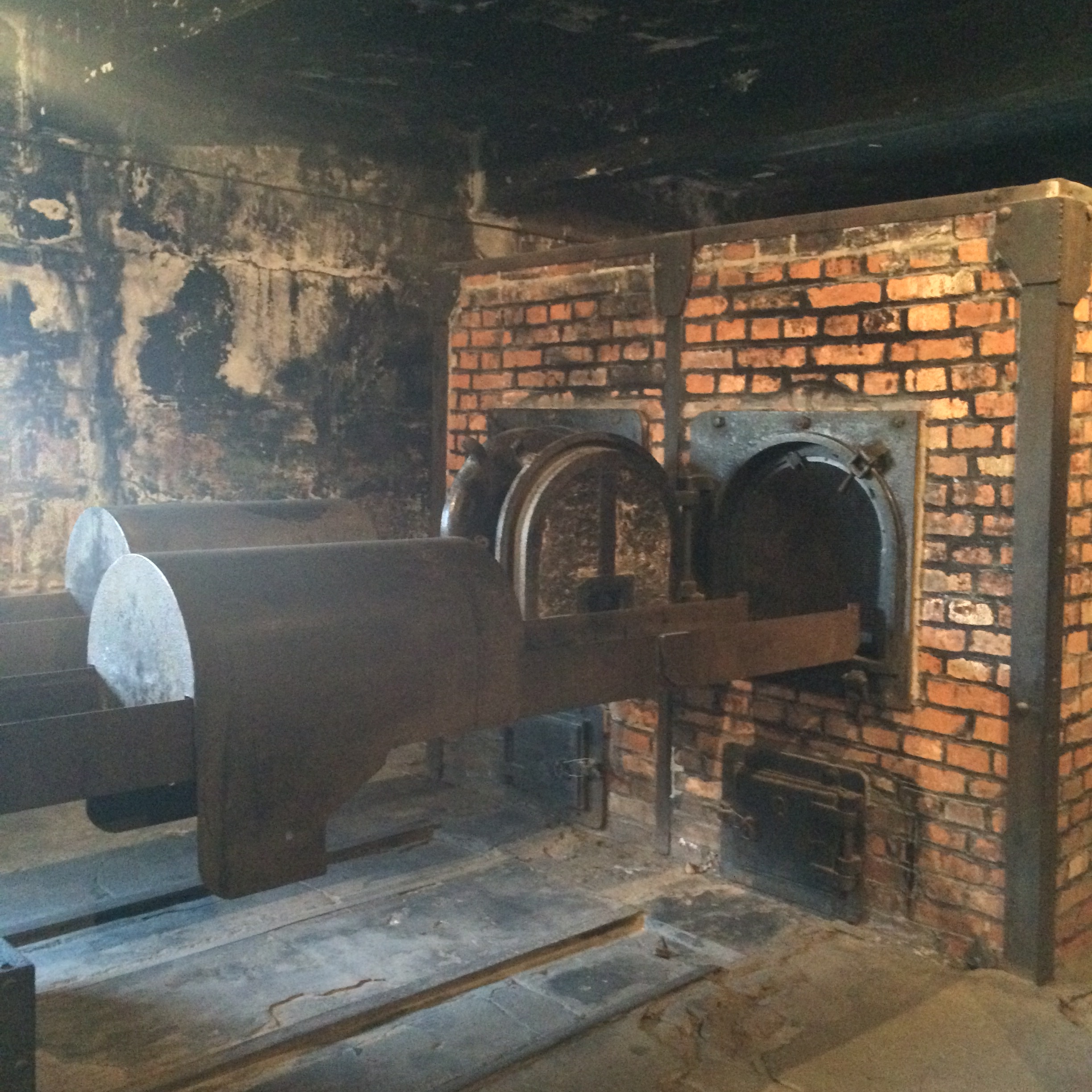
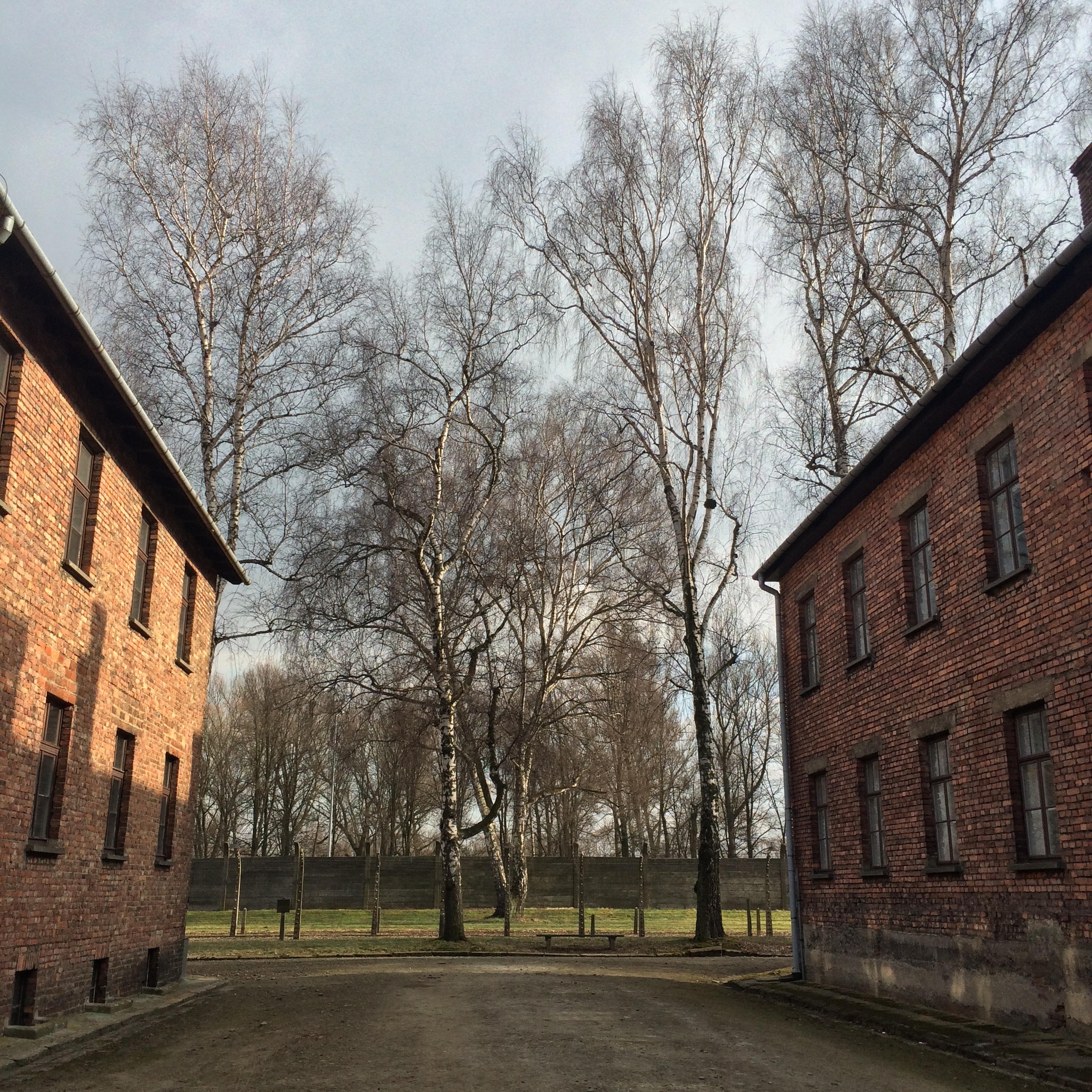
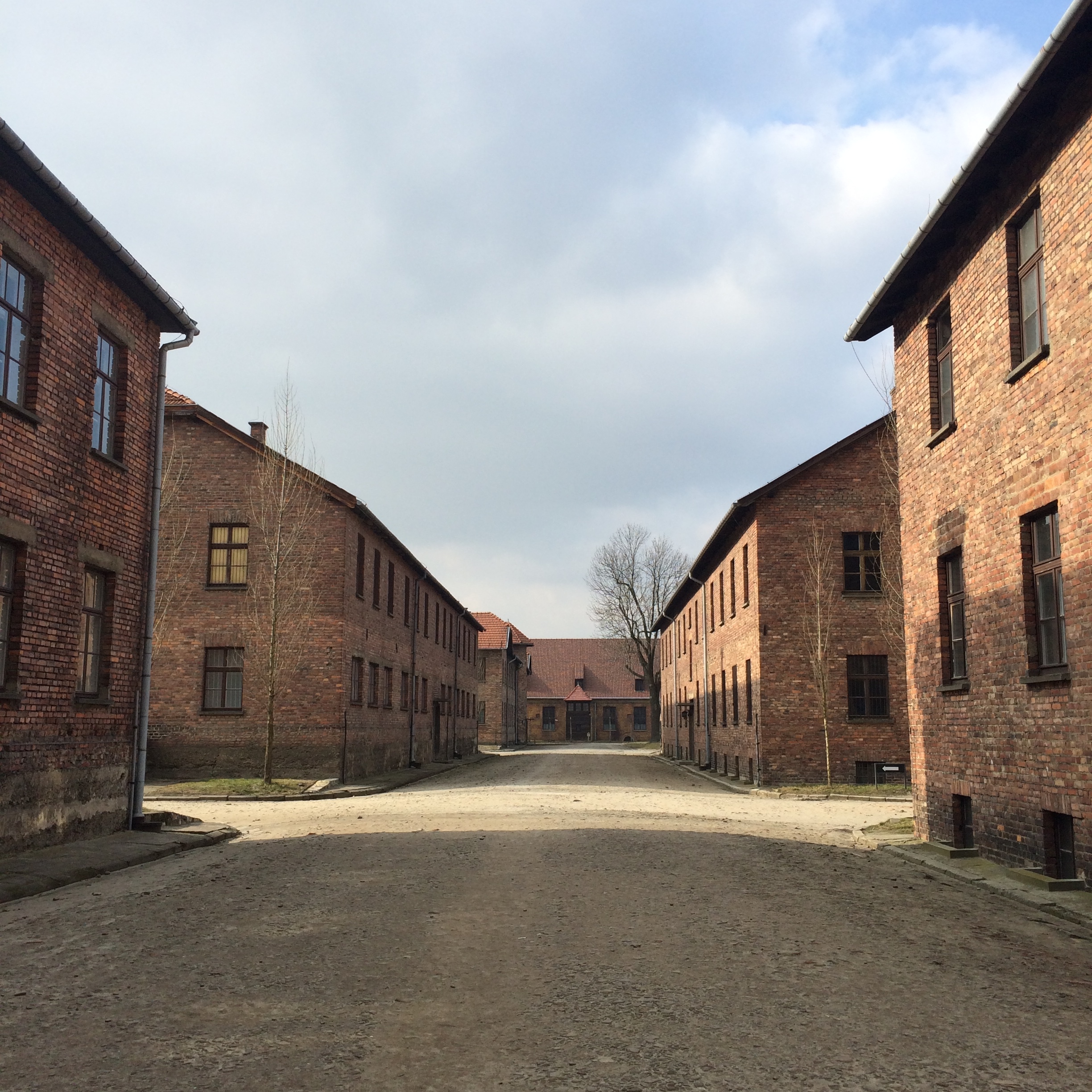
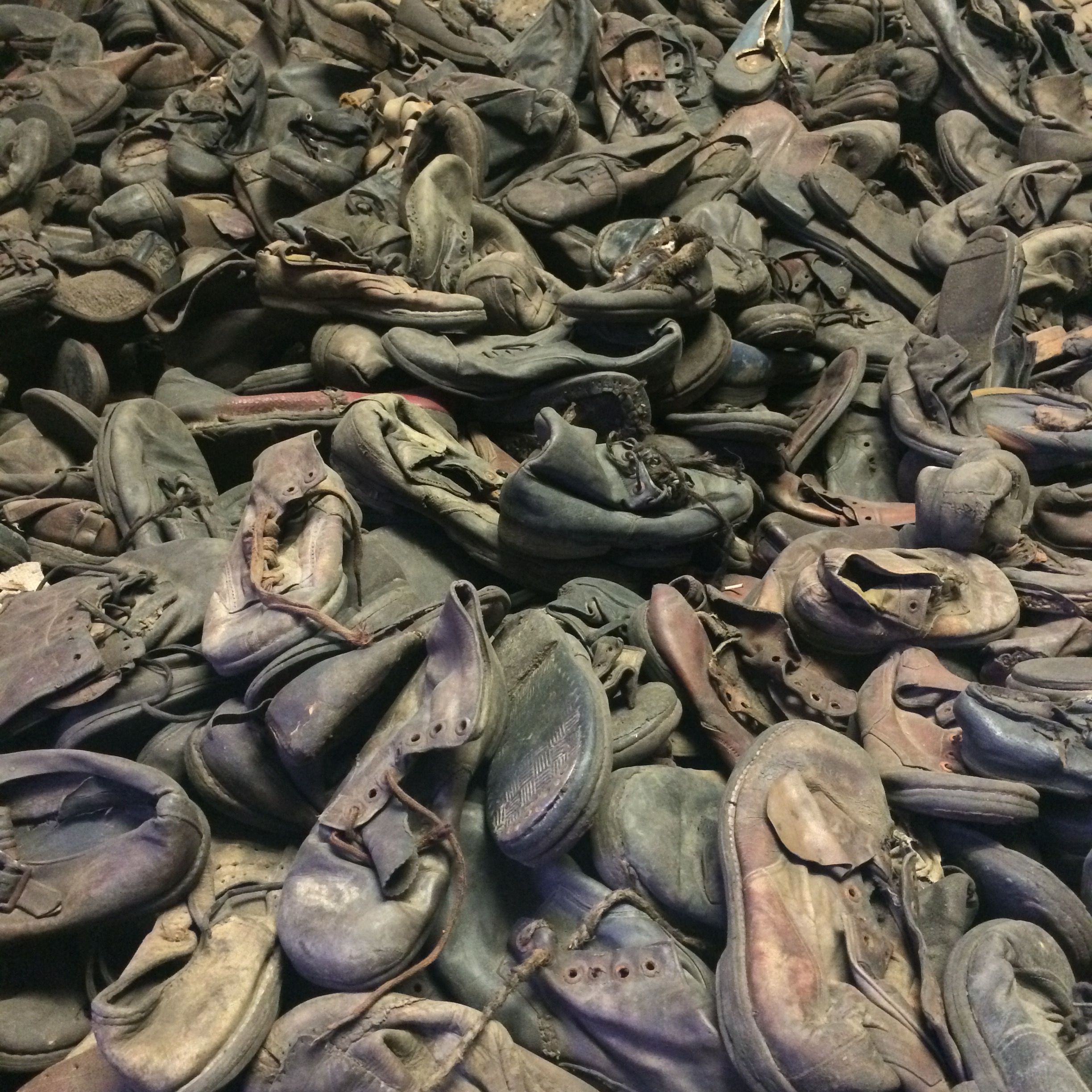
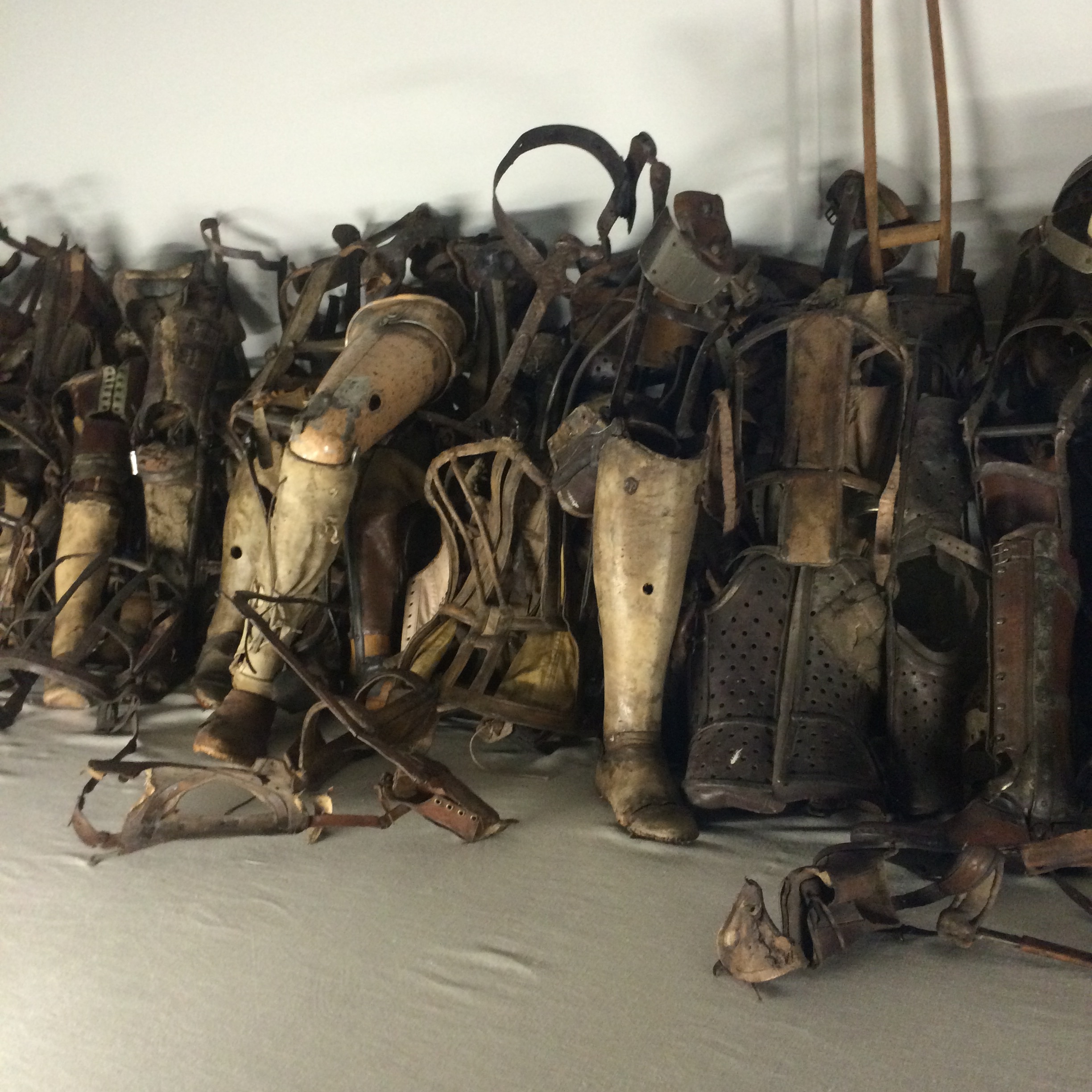
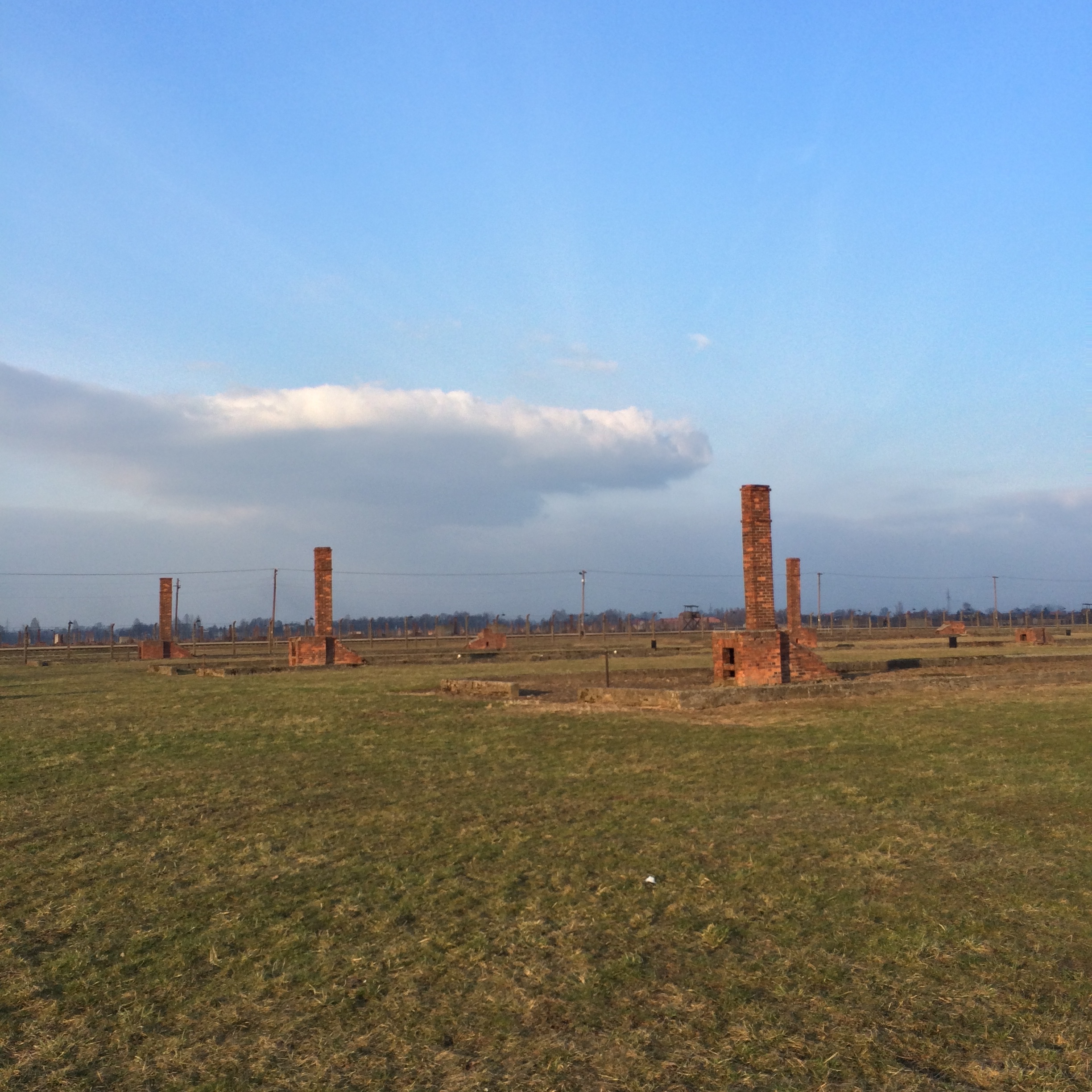
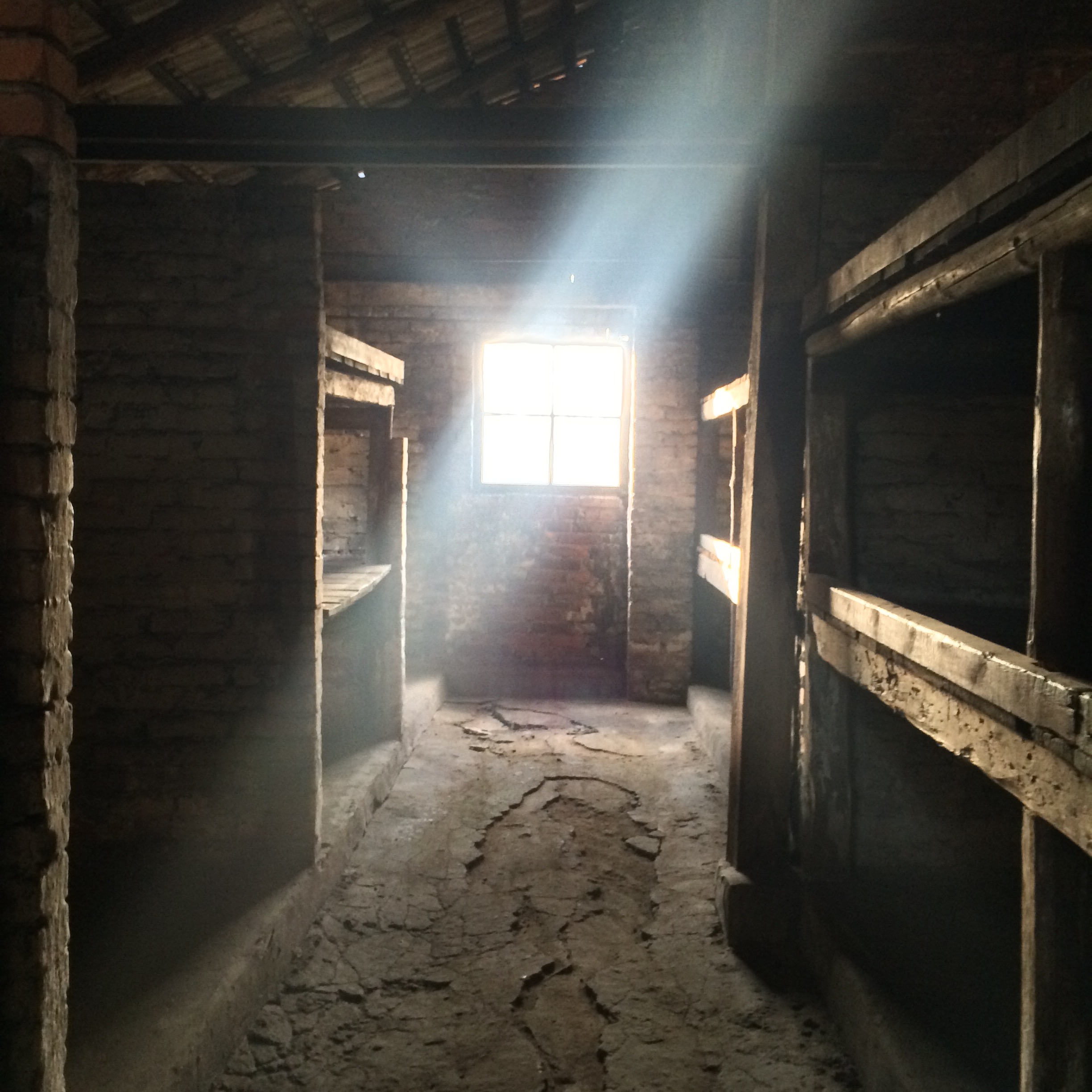
I will spare you of a history lesson and let the photos below speak for themselves. I do want to include, however, a few facets of our trip that stuck with me most:

  • When prompted, our incredible tour guide and film director Paulina shared with us the survivor story that’s had the greatest impact on her. Specifically, she talked about the neighbor of a Polish man who’d been intellectually disabled (formerly “mentally retarded”) and picked on most of his life. One day, while the two were both in front of their homes, they saw an alarming amount of black crows screaming overhead. The boy remarked, “Oh no, how sad… the birds just told me that the soldiers are coming to kill all the children of Israel.” Over a month before there was even a slight indication of what was to come, his neighbor was more confused than disturbed: “What are you talking about?” He persisted: “Yes, how horribly sad. The birds just told me, they’re coming to murder the descendants of Abraham.” Che cazzo ?
  • In Krakow alone, there were over 70,000 Jews before the Holocaust. Now, there are maybe a few thousand. The actual amount is difficult to confirm because many Jewish people celebrate their faith in private, for they are afraid history will repeat itself. Truthfully, I don’t blame them.
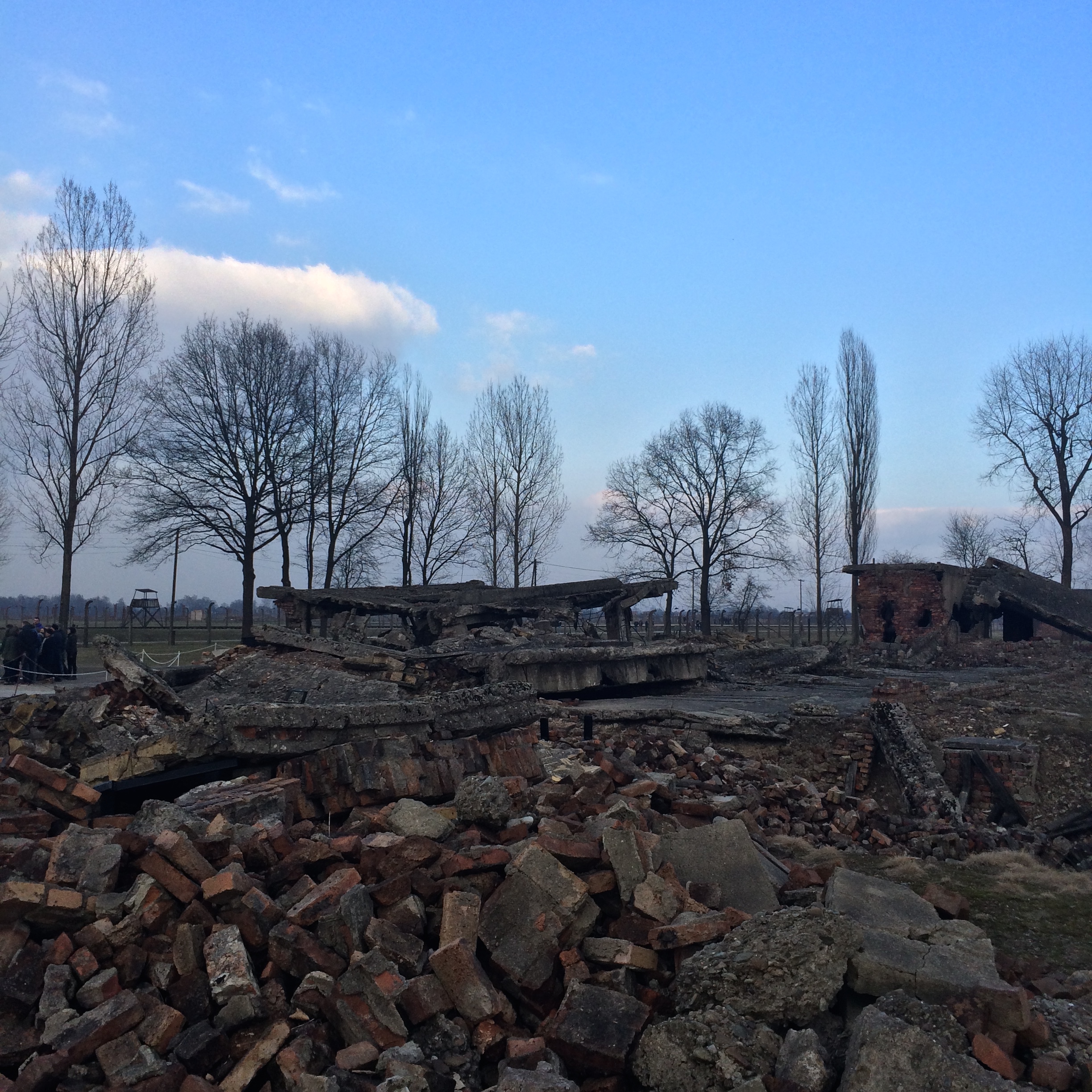
  • 2015 marks 70 years since the liberation of Auschwitz, which means that all this occurred not that f’ing long ago AT ALL. This isn’t some distant, horrific event that dates back to before Christ. The accounts haven’t been translated and interpreted by ancient scholars over the course of centuries. There were no carrier pigeons or slaves. There were televisions, cars, technology, and airplanes. This was Europe, not some barbaric, uninhabitable third-world country. The Holocaust happened in our grandparents’ lifetime; my grandmother was my age when Auschwitz was liberated.

Płaszów Camp Memorial:

Creepy Amon Goeth’s House (the man who’d shoot people from his balcony in Schindler’s List):

IMG_5613 IMG_5611_2

Auschwitz 1 Grounds & Crematorium:

IMG_5796_2 IMG_5788_2 IMG_5786_2 IMG_5733_2 IMG_5728 IMG_5723_2 IMG_5688_2 IMG_5682_2

Belongings of Auschwitz 1 Victims (shoes, prosthetics, suitcases):

IMG_5708_2   IMG_5695_2 IMG_5702_2

Auschwitz 2 (Birkenau):

IMG_5994_2 IMG_6017_2 IMG_6009_2 IMG_5984_2 IMG_5970_2  IMG_5925_2 IMG_6039_2 IMG_5850_2 IMG_5823_2

PS: The trip wasn’t completely somber and educational. We also tried Krakow’s top fun activityLost Souls Alley. It was so terrifying that Les had to use the code word to exit mid-way. One missing Ugg, three panic attacks, and eight bruised shins later, we made it to safety. Be on the lookout for night-vision footage. B)

PPS: I did extend my trip (of course), but since I gave up sweets for Lent, I opted for some sun instead of tempting myself in the gelato capital of the world. Italy, I’ll see you exactly one month from today – after Easter. ❤

IMG_6690

To Stay or Not to Stay…

I’m currently in the midst of a too-familiar dilemma. Set to take off for Poland and Germany in 8 hours, I’m feverishly adding up miles and calling airlines to possibly extend my stay in Europe. I’ve been notorious for doing this in the past, but have since stuck with weekend trips to avoid missing work or school (as I’ve written about before, I absolutely hate taking off). However… as it turns out, I’m already off next week. Truthfully, I haven’t worked since the day I left for Vienna.

This last-minute predicament pales in comparison to the one I faced in February. I’ve been meaning to post for days about Austria and my 24 short hours on the ground, but my thoughts have been preoccupied to say the least. After attending a networking event for work, I was approached and recruited by a nearby assisted living facility. Just four miles from my apartment, this new place – I’ll call it il Sogno for now – features an Alzheimer’s unit and offers considerably more patient/family interaction, tremendous room to grow, and a 401k. Davvero?! Are they reaching out to the right person?!!

No brainer, right? I wish.. I wish I hated Senior Helpers even a little bit. I wish my bosses were jerks or the girls I worked with were obnoxious. I wish I’d count down the minutes until Friday and dread waking up on Monday. This, however, was not nearly the case. I loved Senior Helpers. In the two short months I was there, I not only learned a tremendous amount, but also met some of the most incredible people I’ve ever had the pleasure of working with. I was sick over the decision to be made, and even took a week to think about it after receiving my former offer letter (the nerve! I couldn’t help it!!).

Thankfully, despite the horrifying scenarios I had imagined I’d face, my decision was met with support and understanding. Il Sogno is not a competitor but rather a potential referral source, and I was adamant about SH being their primary referral. Not because I feel guilty, but because I truly believe they’re the best of the best. I’m beyond grateful for the knowledge, insight, and experience my bosses and colleagues were able to provide me with in such a short amount of time. You truly can’t predict the paths your journey will present to you, but you do decide which ones to take. I hope this weekend’s leads to Italy

Dimmi Tutto

When living in Northern Italy this past fall, I learned a new phrase I hadn’t remembered hearing on previous trips: dimmi tutto. It translates to “tell me everything,” but apparently it isn’t meant to be taken literally. 😐 I quickly realized this after my first conversation with my future boss, who’d really only wanted to know why I’d been stalking her for two weeks (does no one in Italy answer emails?!). In other words, she was prompting me to introduce myself and explain why I had reached out. “Umm.. mi chiamo Christina Candido.. Ho 26 anni..” I’m cracking up just thinking of how awkward I was!

While dimmi tutto doesn’t require a detailed response, Italians do love to chat about anything and everything. One of the reasons I’m so drawn to the elderly is that I, too, am super chatty; I could sit with them for hours and hear their stories. Eventually, though, many of my loves with Alzheimer’s disease lose the ability to communicate verbally. For some, the process is gradual and progressive; aphasia can accompany dementia and involves confusing language impairments. While one’s intelligence remains unaffected, they may no longer be capable of finding words, reading, writing, or even of speaking aloud.

So what happens then? What happens when a nonna can’t tell me to eat another plate of food? Or when a nonno can’t articulate which button down he prefers with that hat? More importantly, what if they’re in pain? With language deteriorated and perception clouded, things become excruciatingly (no pun intended) complex. According to Teepa Snow, renowned occupational therapist and dementia specialist, those suffering from the disease can no longer identify, describe, or isolate where the distress is coming from because wiring is missing in their brains. Once unable to convey distress verbally (effectively, at least), nonverbal cues become extremely important. Listening and observing are key components to recognizing a need for help:

“Early in the disease, the person probably can communicate feelings and problems in words; later, his or her behavior articulates what words cannot. If he is yelling or striking out, this can signify that he is in pain or has an infection and needs medical attention. Wandering can suggest boredom. Tears can suggest loneliness and the need for more activity and interaction with other people. When you stop, look, and listen, the person’s behaviors communicate many things.” – A Dignified Life

When deciphering messages from nonnos and nonnas, be patient and empathetic. Really listen to them and focus on what they’re longing to tell you, as changes in “normal” behaviors or appearances can be indicative of something detrimental going on beneath the surface. Assume that agitation is a symptom of something significant, as are restlessness and anxiety. Be suspicious when your love doesn’t want to get out of bed or participate in daily activities. If it seems like something’s up, get it checked out and explain the situation. In this case, take “dimmi tutto” literally.

*The following link is a clip of Teepa offering examples of nonverbal signs of pain. She offers tips for deciphering what is said from what is actually meant when a loved one has a difficult time communicating needs. https://www.youtube.com/watch?v=9kSjHtHSJCw